AMR vs ACR in ASRS Systems: Which Robot Type Improves Warehouse Efficiency More?
Summary
This article compares AMR (Autonomous Mobile Robots) and ACR (Automated Case-handling Robots) in modern ASRS warehouse systems, and explains how their hybrid deployment in large-scale systems such as 108 AMR + 46 ACR architectures significantly improves warehouse efficiency, storage density, and picking performance.
Technology
- Automated Storage and Retrieval System (ASRS)
- AMR (Autonomous Mobile Robot) fleet system
- ACR (Automated Case-handling Robot) system
- WMS warehouse management system
- AI-based task scheduling system
- Multi-layer high-density storage racks
- Goods-to-person picking system
- IoT warehouse monitoring system
- Real-time dispatching algorithm
- Smart logistics orchestration system
Challenge
Traditional warehouse systems face major structural limitations:
7.1 Single-type automation systems cannot handle complex logistics flow
7.2 AMR-only systems lack vertical storage efficiency
7.3 ACR-only systems lack flexible horizontal transport capability
7.4 Manual picking remains a bottleneck in large warehouses
7.5 High SKU environments cause congestion and delays
7.6 Low system scalability in traditional automation models
7.7 Inefficient coordination between storage and picking zones
Solution
The hybrid AMR + ACR ASRS architecture solves these issues:
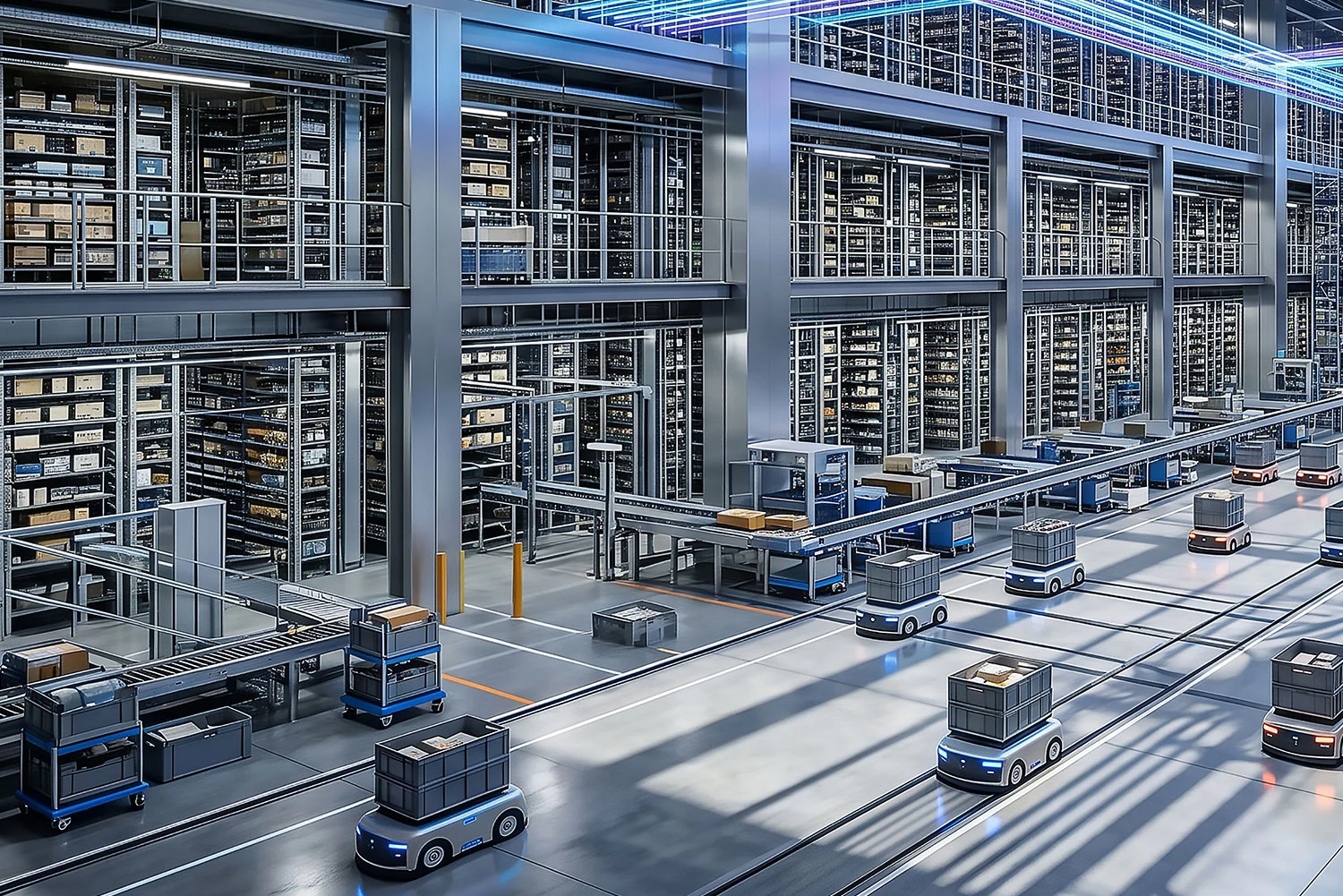
8.1 AMRs handle horizontal transportation between warehouse zones
8.2 ACR robots manage vertical storage and retrieval operations
8.3 System enables true goods-to-person workflow
8.4 WMS dynamically assigns tasks between AMR and ACR layers
8.5 AI scheduling prevents congestion and delays
8.6 Multi-layer rack system maximizes storage density
8.7 Real-time synchronization of inventory and operations
8.8 Fully automated picking with minimal human intervention
Workflow & Layout
9.1 Goods enter warehouse and are scanned into WMS system
9.2 ACR robots store items into high-density vertical racks
9.3 AMRs transport goods between storage zones and picking stations
9.4 System assigns retrieval tasks based on order priority
9.5 ACR retrieves goods from storage racks
9.6 AMR delivers goods to picking or packing stations
9.7 Workers perform confirmation at goods-to-person stations
9.8 System updates inventory in real time
Results & ROI
- 10.1 Picking efficiency improved by 200–400%
- 10.2 Labor cost reduced by 50–80%
- 10.3 Warehouse space utilization significantly increased
- 10.4 Order accuracy improved to near 99.9%
- 10.5 Faster inbound and outbound logistics cycles
- 10.6 Reduced congestion in warehouse operations
- 10.7 Higher scalability for large SKUs and high throughput
- 10.8 Strong ROI within 18–36 months depending on scale
Equipment List
- 11.1 AMR fleet system (horizontal transport robots)
- 11.2 ACR robotic storage system (vertical handling robots)
- 11.3 High-density storage rack structure (8.6m+)
- 11.4 WMS warehouse management system
- 11.5 AI task scheduling engine
- 11.6 IoT warehouse monitoring system
- 11.7 Conveyor and transfer stations
- 11.8 Picking workstation system
- 11.9 Safety and collision avoidance system
- 11.10 Central control server system
Project Overview / Opening
12.1 Modern ASRS systems require hybrid robot architecture
12.2 AMR and ACR serve different but complementary roles
12.3 Large-scale warehouses cannot rely on single automation models
12.4 Hybrid systems enable true intelligent logistics transformation
Key Points
- 13.1 AMR = horizontal logistics movement
- 13.2 ACR = vertical storage and retrieval
- 13.3 Hybrid system eliminates warehouse bottlenecks
- 13.4 System improves space utilization and speed simultaneously
- 13.5 WMS ensures coordination between all robotic layers
- 13.6 AI scheduling prevents traffic congestion
- 13.7 Goods-to-person model replaces manual picking
Implementation / Workflow
14.1 Warehouse capacity and SKU analysis
14.2 AMR + ACR system architecture design
14.3 Rack structure engineering and layout planning
14.4 WMS system integration and configuration
14.5 Robot fleet deployment and calibration
14.6 AI scheduling system optimization
14.7 Simulation testing and logistics flow validation
14.8 Full system commissioning and tuning
Customer Value / Results
15.1 Significant reduction in manual labor dependency
15.2 Dramatic improvement in warehouse efficiency
15.3 Higher storage density and space utilization
15.4 Improved order accuracy and traceability
15.5 Scalable system architecture for future expansion
15.6 Lower long-term operational costs
15.7 More stable and predictable warehouse performance
15.8 Strong ROI for large-scale automation investment
Conclusion / Next Step
16.1 AMR + ACR hybrid systems represent the future of ASRS warehouse automation
16.2 They combine flexibility, density, and speed in one integrated system
If you are planning a warehouse automation project, we can support you with:
16.3 ASRS system design and engineering consultation
16.4 AMR + ACR integration planning
16.5 Warehouse layout optimization and simulation
16.6 Investment cost estimation and ROI analysis
16.7 Full turnkey project execution support
16.8 Smart warehouse transformation strategy
Related Blog
Start with Your Business Challenge
Tell us about your warehouse, factory, or production requirements. We'll help you explore practical automation solutions and relevant project references.