How Coating Machines Power Modern Lithium Battery Manufacturing: From Electrode Coating to Separator Coating
Summary
The rapid growth of electric vehicles (EVs), energy storage systems (ESS), and consumer electronics has made lithium battery manufacturing one of the fastest-growing industrial sectors worldwide.
Among all battery production processes, coating technology is considered one of the most critical stages because it directly determines battery capacity, cycle life, energy density, safety, and overall performance.
This article explores how coating machines enable modern lithium battery production, covering cathode coating, anode coating, separator coating, Slot Die technology, coating uniformity control, and real-world EV battery factory applications.
Technology
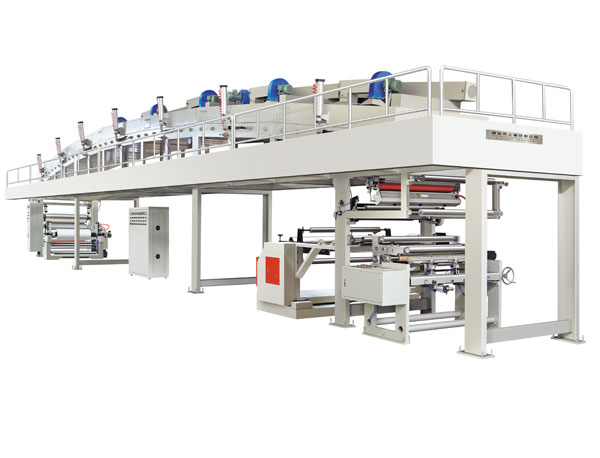
- Modern lithium battery coating lines typically integrate:
- Slot Die Coating Technology
- Continuous Roll-to-Roll Production
- Precision Slurry Feeding System
- Closed-Loop Thickness Control
- Tension Control System
- Multi-Zone Drying Oven
- CCD Vision Inspection System
- Automatic Defect Detection
- Solvent Recovery System
- MES Manufacturing Execution System
- PLC Automation Control
- High-Speed Rewinding System
- Electrode Surface Density Monitoring
- Real-Time Data Collection Platform
Challenge
Battery manufacturers face several critical coating challenges:
1. Coating Uniformity
Even minor thickness variations can affect battery performance.
2. High-Speed Production
Gigafactories require continuous production while maintaining precision.
3. Material Waste
Cathode materials contain expensive metals such as lithium, nickel, and cobalt.
4. Electrode Consistency
Variations in coating weight can reduce battery capacity.
5. Defect Control
Pinholes, streaks, agglomerates, and edge defects must be minimized.
6. Energy Density Requirements
EV manufacturers demand increasingly higher energy density batteries.
Solution
Modern battery coating systems solve these challenges through automation and precision engineering.
Key Solutions
Slot Die precision coating
Closed-loop thickness control
Automated slurry feeding
Vision inspection systems
Multi-stage drying systems
Intelligent process monitoring
MES production integration
These technologies ensure stable, repeatable, and scalable battery manufacturing.
Workflow & Layout
Typical lithium battery coating workflow:
Step 1
Raw Material Mixing
↓
Step 2
Slurry Preparation
↓
Step 3
Cathode Coating
↓
Step 4
Anode Coating
↓
Step 5
Drying Process
↓
Step 6
Calendering
↓
Step 7
Slitting
↓
Step 8
Separator Coating
↓
Step 9
Cell Assembly
↓
Step 10
Battery Formation & Testing
Results & ROI
- Battery manufacturers typically achieve:
- Production Efficiency
- +30% to +60%
- Material Waste Reduction
- 15% to 35%
- Defect Reduction
- 20% to 50%
- Labor Cost Reduction
- 20% to 40%
- Battery Consistency Improvement
- Significantly improved cycle life and performance
- ROI
- 1-3 Years
Equipment List
- Core battery coating line equipment:
- Slurry Mixing System
- Slot Die Coating Machine
- Unwinding System
- Precision Pumping Unit
- Drying Oven System
- Solvent Recovery Unit
- Web Guiding System
- Tension Control System
- Thickness Measurement System
- CCD Inspection System
- Rewinding System
- PLC Control Cabinet
- MES Interface Module
- Quality Inspection Station
Project Overview / Opening
As electric vehicles continue to reshape the transportation industry, battery manufacturing has become one of the most strategically important industrial sectors worldwide.
While battery chemistry often receives the most attention, coating technology remains one of the most critical production processes behind every high-performance lithium-ion battery.
The quality of electrode coating directly determines battery efficiency, lifespan, charging speed, and safety.
Key Points
- Cathode Coating
- Applies lithium metal oxide slurry onto aluminum foil.
- Anode Coating
- Applies graphite or silicon-based slurry onto copper foil.
- Separator Coating
- Improves thermal stability and safety performance.
- Slot Die Technology
- Industry standard for high-precision coating.
- Thickness Control
- Critical for energy density consistency.
- Quality Inspection
- Real-time monitoring reduces production defects.
- Gigafactory Scalability
- Supports large-scale EV battery production.
Implementation / Workflow
Phase 1
Battery Product Requirement Analysis
Phase 2
Coating Process Development
Phase 3
Equipment Configuration Selection
Phase 4
Factory Layout Design
Phase 5
Equipment Manufacturing
Phase 6
Installation & Commissioning
Phase 7
Trial Production
Phase 8
Mass Production Launch
Customer Value / Results
Battery manufacturers gain:
Higher Energy Density
More consistent electrode coating improves performance.
Better Battery Safety
Uniform separator coating reduces thermal risks.
Reduced Production Costs
Automation lowers labor and material waste.
Improved Product Quality
Consistent coating improves battery lifespan.
Higher Throughput
Supports large-scale EV battery production.
Competitive Advantage
Enables next-generation battery manufacturing.
Conclusion / Next Step
Coating technology is the foundation of modern lithium battery manufacturing.
From cathode coating and anode coating to separator coating, every layer inside a battery relies on precision coating systems to achieve optimal performance.
As EV demand continues to grow globally, battery manufacturers investing in advanced Slot Die coating technology, intelligent automation, and quality control systems will be best positioned to meet future market requirements.
Looking for a Battery Coating Solution?
Whether you are building a new lithium battery factory, upgrading an electrode coating line, or developing next-generation energy storage products, our engineering team can provide customized battery coating machine solutions tailored to your production goals.
Related Blog
Start with Your Business Challenge
Tell us about your warehouse, factory, or production requirements. We'll help you explore practical automation solutions and relevant project references.