How to Design a Safe Chemical Storage Warehouse with Stacker Crane ASRS System
Summary
Designing a chemical storage warehouse is fundamentally different from designing a standard logistics facility.
It requires strict consideration of hazardous material zoning, explosion-proof safety systems, heavy-load handling, and automated stacker crane ASRS integration.
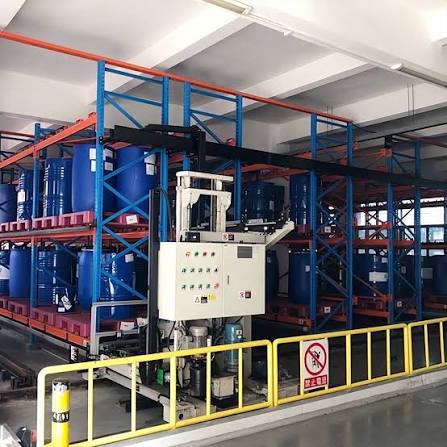
This article explains how to design a safe, compliant, and highly efficient chemical warehouse using a stacker crane-based ASRS system, covering layout principles, zoning strategy, aisle planning, and drum pallet flow design.
Technology
- A modern chemical ASRS warehouse design typically includes:
- Heavy-duty stacker crane ASRS system
- Hazardous chemical zoning architecture
- Explosion-proof electrical & control systems
- Reinforced drum pallet racking system
- WMS (Warehouse Management System)
- WCS (Warehouse Control System)
- SCADA real-time monitoring platform
- Safety sensor & gas detection systems
- Fire suppression integration system
- Automated conveyor and transfer systems
Challenge
Chemical storage warehouses face significantly higher design complexity compared to standard warehouses due to:
Flammable and hazardous material risks
Strict government and industry safety regulations
Chemical compatibility constraints
Explosion and fire hazards
Heavy drum pallet loads
Human safety exposure risks
Complex material flow requirements
Poor design can lead to serious safety incidents, operational inefficiency, and regulatory violations.
Solution
A stacker crane-based ASRS system provides a controlled, structured, and automated environment that significantly improves safety and efficiency.
Key design principles include:
Strict chemical zoning separation
Automated heavy-load handling (no manual forklift exposure)
Explosion-proof infrastructure integration
Optimized aisle design for stacker crane movement
Controlled drum pallet flow system
This transforms chemical storage into a fully engineered automated safety system.
Workflow & Layout
A safe chemical ASRS warehouse layout typically follows this structured flow:
Step 1: Inbound Receiving Zone
Chemical drums are received and:
Inspected for safety compliance
Scanned into WMS system
Classified by hazard level
Step 2: Safety Classification & Zoning
Materials are assigned to zones based on:
Chemical compatibility
Flammability level
Storage temperature requirements
Regulatory classification
Step 3: ASRS Input Station
Drums are transferred into automated handling systems via:
Conveyor systems
Lifting platforms
Safety-isolated transfer stations
Step 4: Stacker Crane Storage Operation
Stacker cranes perform:
Vertical lifting of heavy drum pallets
Precise aisle navigation
Automated placement into reinforced racks
Step 5: High-Density Storage Execution
The system optimizes:
Vertical space utilization
Chemical separation distance
Risk-based storage grouping
Step 6: Automated Retrieval & Dispatch
Stacker cranes retrieve goods and:
Transfer to outbound zones
Maintain safety-controlled movement paths
Ensure stable load handling
Results & ROI
- Operational Performance:
- Fully automated hazardous material handling
- Stable 24/7 warehouse operation
- Reduced dependency on manual forklifts
- Safety Improvements:
- Significant reduction in human exposure risk
- Controlled chemical zoning enforcement
- Lower accident probability in storage operations
- Efficiency Gains:
- Higher storage density vs manual warehouses
- Faster inbound/outbound processing
- Reduced operational downtime
- ROI Timeline:
- Typical return period:
- 👉 18–36 months depending on scale and utilization
Equipment List
- Core Hardware:
- Heavy-duty stacker crane ASRS system
- Reinforced chemical drum pallet racks
- Explosion-proof conveyor systems
- Automated lifting and transfer platforms
- Fire-resistant structural components
- Control Systems:
- WMS warehouse management system
- WCS real-time control system
- SCADA monitoring and visualization platform
- Chemical tracking database system
- Safety Systems:
- Gas detection sensors
- Explosion-proof electrical systems
- Fire suppression systems
- Emergency shutdown systems
- Safety zoning access control systems
Project Overview / Opening
Chemical warehouse design is not simply a logistics problem—it is a multi-disciplinary engineering challenge involving safety, automation, and industrial compliance.
A stacker crane ASRS system enables:
Controlled storage environments
Automated hazardous handling
High-density yet safe warehouse layouts
Full system-level risk management
Key Points
- 1️⃣ Hazardous Warehouse Layout Design
- Key principles:
- Separate hazardous categories into independent zones
- Minimize cross-contamination risk
- Ensure emergency access pathways
- Optimize material flow direction
- 2️⃣ Chemical Zoning + Safety Distance Design
- Design rules include:
- Flammable materials must be isolated
- Incompatible chemicals cannot share storage zones
- Safety distance buffers between categories
- Dedicated ventilation and fire control zones
- 3️⃣ Stacker Crane Aisle Planning
- Aisle design must consider:
- Crane turning radius and movement precision
- Load weight stability requirements
- Redundancy for emergency operation
- Optimization for storage density vs accessibility
- 4️⃣ Drum Pallet Flow Design
- Material flow includes:
- Inbound → inspection → zoning → storage → retrieval → outbound
- Fully automated movement via ASRS
- No manual forklift interference in hazardous zones
- 5️⃣ Explosion-Proof Warehouse Requirements
- Critical safety systems include:
- Explosion-proof electrical systems
- Anti-spark mechanical design
- Gas leakage detection
- Fire suppression integration
- Emergency shutdown automation
Implementation / Workflow
Phase 1: Safety Requirement Analysis (2–3 weeks)
Chemical classification
Regulatory compliance review
Risk assessment
Phase 2: System Design (2–4 weeks)
Warehouse zoning layout
Aisle and crane design
Material flow simulation
Phase 3: Engineering Integration (4–8 weeks)
Structural system construction
Automation system integration
Safety system deployment
Phase 4: Installation (2–4 weeks)
Equipment installation
System calibration
Safety validation testing
Phase 5: Commissioning (1–2 weeks)
Load testing
Safety simulation
Final system approval
Customer Value / Results
Operational Value:
Fully automated hazardous warehouse operation
Stable and predictable material flow
Reduced human intervention
Safety Value:
Significant reduction in industrial accidents
Controlled chemical environment
Regulatory compliance assurance
Financial Value:
Reduced long-term operational cost
Lower accident-related losses
Improved warehouse utilization efficiency
Conclusion / Next Step
Designing a safe chemical storage warehouse requires far more than equipment selection—it requires a system-level engineering approach combining safety, automation, and industrial compliance.
A stacker crane ASRS system enables:
✓ Safe hazardous material handling
✓ Optimized zoning architecture
✓ High-density storage with controlled risk
✓ Automated drum pallet flow
✓ Explosion-proof industrial operation
If you are planning a chemical warehouse project, we can help design a complete ASRS layout, simulate safety zoning, and build a scalable automation system tailored to your operational requirements.
Related Blog
Start with Your Business Challenge
Tell us about your warehouse, factory, or production requirements. We'll help you explore practical automation solutions and relevant project references.