Manual vs Automated Aluminum Extrusion Line: Which One Is More Efficient and Profitable?
Summary
This article compares manual aluminum extrusion production lines with fully automated systems, focusing on efficiency, cost, labor, quality consistency, and long-term profitability.
It helps manufacturers evaluate whether upgrading to an automated extrusion system is necessary for improving production competitiveness and factory performance.
Technology
- Industrial extrusion process automation system
- Manual extrusion production workflow
- PLC-controlled automated extrusion line
- CNC cutting and handling systems
- Automated quenching and cooling system
- Servo straightening and traction system
- AI-based quality inspection system
- IoT production monitoring system
- MES / ERP integration platform
- Digital factory management system
Challenge
Traditional aluminum extrusion factories face key limitations with manual systems:
High labor dependency across production stages
Inconsistent product quality and precision
Limited production capacity and scalability
High energy waste due to inefficient processes
Frequent human errors in operation and handling
Difficult process standardization
Poor real-time production visibility
These limitations reduce competitiveness in global manufacturing markets.
Solution
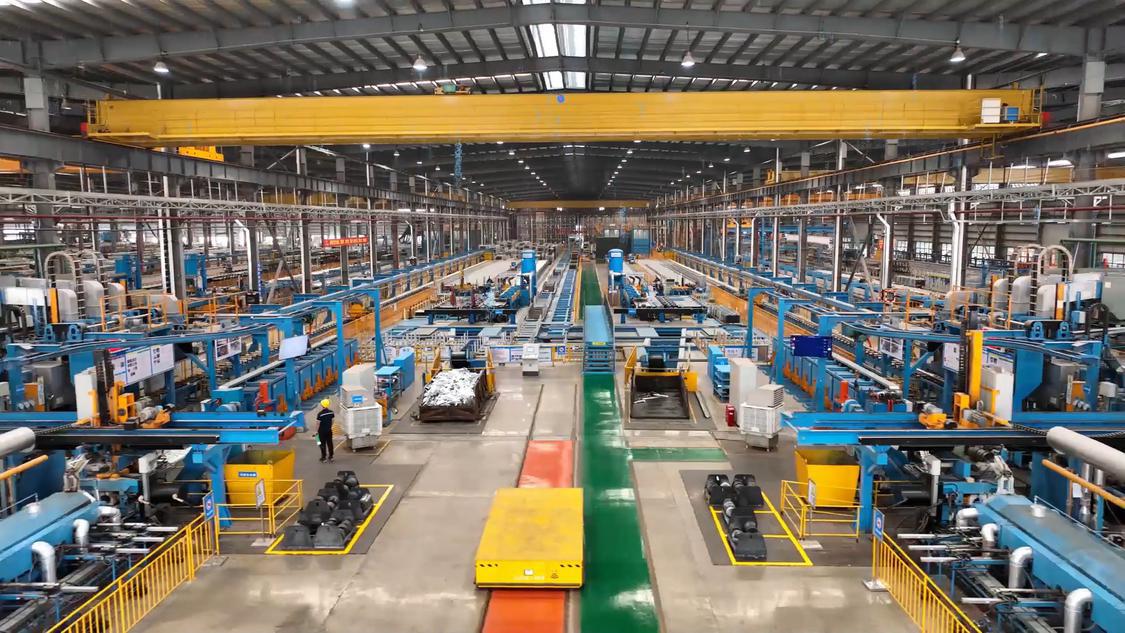
Automated aluminum extrusion systems solve these problems by introducing:
Fully automated continuous production workflow
Intelligent PLC-controlled system architecture
Automated material handling and transfer
Precision-controlled extrusion and cooling system
CNC cutting and dimension control
Real-time monitoring and data collection
Integrated quality inspection system
Smart factory MES integration
This transforms extrusion production into a stable, high-efficiency system.
Workflow & Layout
1. Manual System Workflow:
Manual ingot handling
Manual furnace loading
Operator-controlled extrusion
Manual cooling and transfer
Manual cutting and inspection
Manual sorting and packaging
2. Automated System Workflow:
Automated ingot feeding
Intelligent furnace temperature control
PLC-controlled extrusion process
Automated quenching system
Servo straightening and CNC cutting
AI inspection and sorting system
Results & ROI
- Production efficiency increased by 30–80%
- Labor cost reduced significantly
- Energy consumption reduced by 20–30%
- Product consistency greatly improved
- Scrap rate reduced substantially
- Equipment utilization improved
- Faster production cycle time
- ROI typically achieved within 12–24 months
Equipment List
- Induction heating furnace system
- Hydraulic extrusion press
- CNC flying saw cutting system
- Servo traction system
- Automated straightening system
- Quenching cooling system
- Conveyor transfer system
- AI vision inspection system
- PLC control system
- Industrial IoT monitoring platform
Project Overview / Opening
Aluminum extrusion production is undergoing a major transformation from manual operation to fully automated intelligent manufacturing systems.
This comparison highlights why automation is becoming the dominant trend in modern industrial aluminum processing.
Key Points
- Automation significantly improves production efficiency
- Manual systems have higher labor and error costs
- Quality consistency is a key advantage of automation
- Energy efficiency improves with smart control systems
- Automated systems scale better for large production volumes
- Digital monitoring enables full process transparency
- Long-term profitability favors automated systems
Implementation / Workflow
Implementation of an automated extrusion upgrade includes:
Factory assessment and process analysis
Production bottleneck identification
Automation system design planning
Equipment selection and configuration
Control system integration (PLC/MES)
Installation and mechanical setup
Testing and calibration
Full production transition
Customer Value / Results
This comparison-driven upgrade approach delivers:
Clear decision-making for factory owners
Higher production efficiency and stability
Reduced long-term operational costs
Improved product quality consistency
Scalable manufacturing capacity
Lower defect and scrap rates
Strong ROI from automation investment
Future-ready smart factory foundation
Conclusion / Next Step
The gap between manual and automated aluminum extrusion lines is becoming increasingly significant in modern manufacturing.
Factories that adopt automation early gain long-term advantages in efficiency, cost control, and global competitiveness.
If you are planning an aluminum extrusion factory upgrade, we can support you with:
Automation feasibility analysis
System design and engineering
Cost and ROI evaluation
Full project execution support
Related Blog
Start with Your Business Challenge
Tell us about your warehouse, factory, or production requirements. We'll help you explore practical automation solutions and relevant project references.