Tomato Paste & Canned Tomato Production Line | Fully Automated Food Processing, Filling, Packaging & ASRS System
Summary
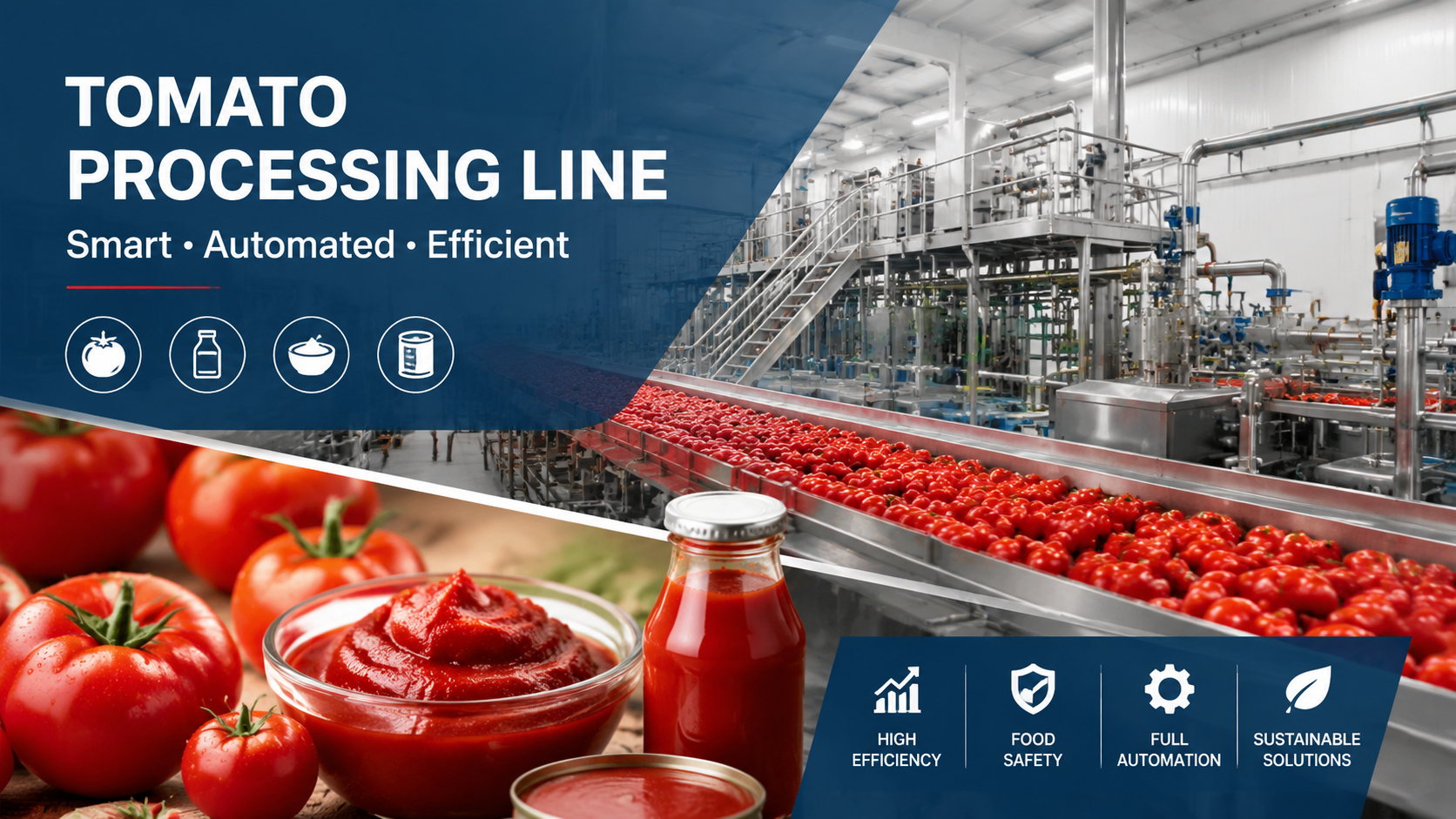
This case study presents a fully automated tomato processing production line covering fresh tomato washing, sorting, pulping, concentration, sterilization, filling, sealing, labeling, packaging, palletizing, and automated warehouse integration.
The system is designed for high-volume food manufacturing plants producing tomato paste, ketchup, canned tomatoes, and other tomato-based products with strict hygiene and continuous production requirements.
Technology
- Industrial food processing system
- Automated washing and sorting system
- Pulping and separation technology (skin & seed removal)
- Vacuum evaporation concentration system
- Continuous sterilization and thermal control system
- Automatic can/bottle filling and sealing line
- Retort sterilization system
- Cooling and drying conveyor system
- Automatic labeling and coding system
- Weight checking and quality inspection system
- Cartoning and palletizing automation
- ASRS automated warehouse integration system
Challenge
Traditional tomato processing factories face several challenges:
High manual labor dependency in washing and sorting
Inconsistent product quality due to unstable processing conditions
Food safety and hygiene control difficulties
Inefficient sterilization and temperature management
Low production continuity and bottlenecks
Limited automation in packaging and logistics
Inefficient warehouse and inventory management
These issues limit scalability and global competitiveness in food manufacturing.
Solution
A fully automated tomato processing system integrates the entire production chain:
Continuous washing, sorting, and preparation system
Automated pulping and refining process
Controlled evaporation and concentration system
Sterilization and aseptic filling technology
Fully automated packaging and labeling line
Intelligent quality inspection system
Robotic palletizing system
ASRS automated warehouse integration
This ensures stable, hygienic, and continuous food production.
Workflow & Layout
Fresh tomatoes are received and washed automatically
Sorting system removes defective raw materials
Crushing and pulping system extracts tomato juice
Separation system removes skin and seeds
Evaporation system concentrates tomato paste
Sterilization system ensures food safety
Filling system packs product into cans or bottles
Sealing and cooling system stabilizes packaging
Labeling, coding, and inspection system completes packaging
Cartoning and palletizing system prepares shipment
ASRS warehouse system stores finished products
Results & ROI
- Production efficiency significantly increased
- Labor costs reduced across entire production chain
- Food safety and hygiene standards improved
- Continuous 24/7 production capability achieved
- Packaging accuracy and consistency improved
- Warehouse logistics fully automated
- Reduced contamination risk
- Improved overall supply chain efficiency
Equipment List
- Tomato washing and sorting system
- Crushing and pulping equipment
- Separation and refining system
- Vacuum evaporation concentration system
- Sterilization and retort system
- Automatic filling and sealing machines
- Cooling and drying conveyors
- Labeling and coding machines
- Weight inspection system
- Cartoning and palletizing robots
- ASRS automated warehouse system
- Conveyor and material handling system
Project Overview / Opening
This project demonstrates a fully integrated tomato processing and packaging production line designed for high-efficiency food manufacturing.
The system combines food processing technology, automation control, and intelligent logistics to achieve end-to-end production automation.
Key Points
- Full-process automation from raw material to warehouse
- Strict hygiene and food safety control design
- Continuous production with stable temperature management
- Integrated packaging and labeling automation
- Robotics-based palletizing system
- Seamless ASRS warehouse integration
- High scalability for large food factories
Implementation / Workflow
Implementation includes:
Production capacity and product specification analysis
Process flow design (washing to warehouse)
Equipment selection and system configuration
Hygiene and safety compliance design
Automation integration (PLC/MES/SCADA)
Packaging and logistics system setup
ASRS warehouse integration
System testing and commissioning
Customer Value / Results
This system delivers strong industrial and commercial value:
Higher production efficiency and throughput
Lower labor dependency
Improved food safety compliance
Stable product quality across batches
Reduced operational cost
Fully automated logistics and warehousing
Scalable food manufacturing system
Strong ROI for large-scale food factories
Conclusion / Next Step
Fully automated tomato processing lines represent the future of industrial food manufacturing, integrating production, packaging, and warehouse automation into a single intelligent system.
If you are planning a food processing factory or upgrading an existing production line, we can support you with:
Turnkey food production line design
Automation system integration
Packaging and filling line planning
ASRS warehouse integration
Cost and ROI analysis
Full project execution support
Related Blog
Start with Your Business Challenge
Tell us about your warehouse, factory, or production requirements. We'll help you explore practical automation solutions and relevant project references.