5 Key Steps to Successfully Implement an Automated Motor Assembly Line in Your Factory
Summary
Implementing an automated motor assembly line is one of the most significant capital investments a manufacturing operation can make—and one of the most complex. This guide presents a practical five-step framework for successful implementation, drawing on real-world deployment data, industry best practices, and lessons learned from manufacturers who have navigated the transition from manual to automated assembly. The framework covers assessment and planning, technology selection, integration and commissioning, production ramp-up, and continuous improvement. With the automatic motor assembly line market valued at USD 5.22 billion in 2025 and projected to reach USD 7.56 billion by 2032, and nearly 50% of manufacturers reporting challenges in automation project planning, the need for a structured implementation approach has never been more critical. This article provides manufacturing leaders with actionable guidance to avoid common pitfalls, manage implementation risks, and achieve the throughput, quality, and cost benefits that automation promises.
Technology
- Automated motor assembly lines integrate multiple advanced technologies into cohesive production systems designed for precision
- speed
- and consistency. The core technology stack includes servo-driven assembly stations with torque-controlled fastening
- vision-guided positioning systems for component alignment
- and inline testing stations that perform electrical
- mechanical
- and functional verification at each production stage.
- Modern automated assembly lines typically incorporate collaborative robotics
- vision inspection systems with AI-assisted defect detection
- and manufacturing execution systems that coordinate workflow across stations. Digital twin technology allows offline simulation and optimization of production processes before physical implementation
- reducing commissioning time and risk. Internet of Things sensors provide real-time monitoring of equipment performance
- enabling predictive maintenance and reducing unplanned downtime. Industry 4.0 technologies including IoT sensors
- AI and machine vision
- and digital twins are reshaping the manufacturing landscape by streamlining assembly processes
- improving product quality
- and boosting overall efficiency.
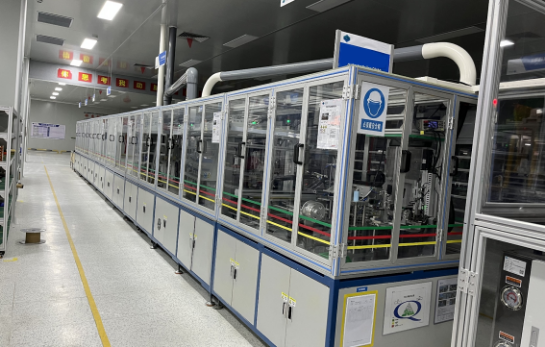
- A complete automated motor assembly line typically includes stator assembly sections
- rotor assembly sections
- and motor assembly and packaging sections
- with approximately 18 machines employing a hybrid system of conveyor lines and robotic handling. The technology enables what industry analysts describe as connected
- data-driven operations that improve efficiency
- quality
- and reliability while reducing unplanned downtime.
Challenge
Implementing an automated motor assembly line is a complex undertaking that challenges even experienced manufacturing organizations. The automatic motor assembly line market was valued at USD 5.22 billion in 2025 and is projected to reach USD 7.56 billion by 2032, reflecting widespread recognition that automation is essential for competitiveness. Yet nearly 50% of manufacturers report challenges in automation project planning, and seven in ten manufacturers have automated 50% or less of their core operations.
The challenges are multifaceted. Modern automated lines are rarely simple builds. A single project can involve robots, vision systems, tightening solutions, screwfeeding equipment, and multiple software layers for monitoring and control. Each addition increases the number of integration points and the likelihood of compatibility issues. Projects depending on several suppliers can resemble a jigsaw puzzle where every piece comes from a different box, with each system arriving with its own interface, programming logic, data formats, and support team.
Manufacturers face additional barriers including inconsistent data quality, unplanned downtime, and the challenge of retraining teams and managing organizational change. Around 22% of manufacturers cite retraining teams and change management as barriers to adopting new automation approaches. Production data remains fragmented across systems, manual exception handling breaks the automation loop, and planning cycles remain batch-driven rather than event-driven. The transition from manual to automated assembly is further complicated by investment costs, safety requirements, and the difficulty of justifying automation for low-volume products.
One of the most common mistakes in automation is prioritizing speed before stability. Fast timelines feel good during purchasing discussions and fast demos create confidence, but the process should be treated more like relocating part of your manufacturing operation. Projects that rush through planning and design often encounter significant problems during commissioning and ramp-up, leading to delays, cost overruns, and performance that falls short of what the line was designed to deliver.
Solution
The solution to these implementation challenges is a structured, phased approach that addresses each stage of the automation project lifecycle. Drawing on industry best practices and real-world deployment data, the following five-step framework provides manufacturing leaders with a practical roadmap for successful implementation.
Step 1: Assessment and Planning. The first step involves evaluating the strengths and weaknesses of the existing assembly line. This includes mapping the workflow to document each stage and identify bottlenecks or inefficiencies, evaluating technology readiness to determine if current equipment supports digital upgrades or if new machinery will be needed, and setting clear objectives such as reducing cycle time, improving accuracy, or increasing output. The practical outcome is a clear understanding of the assembly process, enabling targeted upgrades.
Step 2: Technology Selection. The second step selects Industry 4.0 technologies that align with the assembly line's requirements and objectives. Key technologies for assembly include collaborative robots for repetitive tasks like screwing, welding, or packaging; IoT sensors for monitoring machine performance and ensuring real-time data sharing; AI and machine vision for detecting assembly defects and ensuring alignment; and digital twins for creating virtual replicas to simulate changes and optimize processes. The practical outcome is a tailored technology stack that addresses specific pain points in the assembly process.
Step 3: Integration and Commissioning. The third step involves upgrading equipment and establishing connectivity. This requires ensuring machines are IoT-enabled or can be retrofitted with sensors, installing a robust industrial network for seamless communication between devices, and adopting edge computing for localized data processing to reduce latency. Virtual commissioning using simulation-based validation of automation systems before deployment in the real environment can accelerate deployment, improve reliability, and give manufacturers confidence that the line will operate efficiently from day one. Early testing is an effective way to reduce project risk, helping teams validate processes before they are locked in and shed light on integration issues while they are still manageable.
Step 4: Production Ramp-Up. The fourth step focuses on deploying robotic systems to automate repetitive tasks, enabling predictive maintenance using IoT data to prevent equipment failures, and utilizing big data analytics to identify inefficiencies and optimize workflows. The practical outcome is a smarter assembly process with automated systems and continuous performance insights. Training the workforce is essential during this phase, as the transition to automation requires skilled operators capable of operating and maintaining new technologies.
Step 5: Continuous Improvement. The final step establishes ongoing processes for monitoring performance, collecting and analyzing production data, and identifying opportunities for further optimization. This includes regular maintenance, performance monitoring, and continuous improvement initiatives based on production experience and evolving requirements.
Workflow & Layout
The implementation workflow follows a structured sequence designed to minimize disruption and maximize the likelihood of success. The workflow encompasses the five phases described above, with typical project timelines ranging from 12 to 24 months for comprehensive deployments.
Phase 1: Assessment and Planning. This phase begins with a thorough evaluation of current production processes, including labor costs and availability, defect rates and quality costs, throughput and cycle times, and safety incident data. The assessment establishes the foundation for the system design and provides the baseline against which results will be measured. Key activities include mapping the current workflow, identifying high-impact repetitive bottlenecks, and defining clear automation goals for throughput, quality, and cost reduction.
Phase 2: Technology Selection and System Design. The production line layout and workflow sequence are designed based on product specifications and throughput targets. Equipment specifications are developed, and interfaces between assembly, testing, and packaging modules are defined. The design phase must account for real-world manufacturing conditions, including part inconsistencies, high-volume output, robotic integration, and future scalability. Suppliers are selected based on how well their solutions fit together, ensuring integration becomes smoother, compatibility issues decrease, and responsibilities are easier to manage.
Phase 3: Integration and Commissioning. Automation equipment is procured and integrated into the production line. PLC, HMI, and MES connectivity are configured. Production control software is developed and tested. Virtual commissioning using simulation tools validates system performance before physical deployment, reducing ramp-up time and minimizing downtime. Early and iterative testing helps teams validate processes and identify integration issues while they are still manageable. The physical layout typically follows a linear flow with assembly stations arranged sequentially. Buffer zones between stations accommodate minor upstream interruptions without stopping the entire line.
Phase 4: Production Ramp-Up. Operators and maintenance personnel receive comprehensive training. Initial production is monitored for quality and throughput. Processes are optimized based on real production data. A hybrid approach blending manual labor into otherwise automated lines can be a cost-effective compromise that still supports high quality and traceability through embedded sensors and inspection steps.
Phase 5: Handover and Continuous Improvement. Operational documentation and procedures are transferred. Ongoing technical support and maintenance guidance are provided. Cross-functional alignment across engineering, production, and supply chain teams is essential to capture the efficiency and quality benefits. Regular performance reviews and continuous improvement initiatives ensure the line continues to deliver value as production requirements evolve.
Results & ROI
- The results from successful automation implementations demonstrate the compelling case for following a structured implementation approach. Real-world case studies provide concrete evidence of what is achievable.
- Case Study: EPS Motor Assembly Line. A global leading automotive motion control technology company implemented a complete automated assembly line solution for EPS motors. The production line includes stator assembly
- rotor assembly
- and motor assembly and packaging sections
- with approximately 18 machines employing a hybrid system of conveyor lines and robotic handling. The line features modular design supporting rapid switching between three different EPS motor models
- with a single machine changeover taking no more than 20 minutes. Performance results include a line cycle time of 29 seconds per unit
- changeover time of 20 minutes
- yield rate of 98%
- utilization rate of 90%
- and operators reduced to just one for unloading and packaging plus three to four for offline material feeding. The integrated control system enables full-line data collection and traceability.
- Case Study: Engine Assembly Station Automation. Patti Engineering completed several projects converting manual engine assembly stations into automated stations for a major automotive manufacturer. Each automated solution took approximately five weeks from kickoff to commissioning and achieved a first-year return on investment of over 170%
- with payback periods under five months.
- Industry-Wide Results. Smart factory transformations are delivering dramatic results
- with overall equipment effectiveness increasing by 20% and new model introduction costs reduced by 35%. Manufacturing efficiency has increased by 30%
- model changeover time in body shops has been cut by 67%
- and investment in new product manufacturing has been reduced by 30%. Assembly line robots are projected to reach USD 26.6 billion by 2032
- growing at an 11.1% CAGR. These results demonstrate that successful implementation
- guided by a structured framework
- delivers substantial and measurable returns.
Equipment List
- The equipment configuration for automated motor assembly lines varies by application
- but typically includes the following core components.
- Assembly Equipment. Servo presses with closed-loop force-displacement control provide precise joining operations. Transducerized tightening systems with traceable data ensure consistent fastening. Automated screw feeding systems deliver fasteners with reliable timing and orientation. Precision dispensing systems apply adhesives
- coatings
- and thermal paste with consistent volume and placement. Robotic pick-and-place units handle component positioning and assembly with high repeatability.
- Inspection and Testing. Vision inspection systems with AI-assisted defect detection provide quality control capabilities far beyond manual inspection. Automated optical inspection platforms verify dimensional accuracy and surface quality. In-circuit testing stations perform electrical verification at multiple production stages. End-of-line functional testers validate complete motor performance before packaging.
- Material Handling. Conveyor systems transport products through the production sequence. Vibratory bowl feeders supply components to assembly stations with consistent orientation. Pallet-based transfer systems enable flexible product routing and buffering between stations.
- Software and Control. PLC and HMI systems provide machine-level control and operator interface. MES software coordinates production workflow across stations. SCADA systems enable real-time monitoring of equipment performance and production metrics. The control system should support full-process data traceability
- recording process parameters and material batch information.
Project Overview / Opening
The journey from manual assembly to automated motor production is one of the most significant transformations a manufacturing operation can undertake. It is also one of the most complex. The automatic motor assembly line market was valued at USD 5.22 billion in 2025 and is projected to reach USD 7.56 billion by 2032, reflecting a fundamental recognition among manufacturers that automation is not optional—it is essential for competitiveness.
Yet the path to successful automation is littered with failed attempts and expensive reminders of what went wrong. Seven in ten manufacturers report automating 50% or less of their core operations. Nearly half of manufacturers report challenges in automation project planning. The barrier to success is rarely the technology itself—it is the approach to implementation.
This guide presents a practical five-step framework for implementing an automated motor assembly line, drawing on real-world deployment data, industry best practices, and lessons learned from manufacturers who have successfully navigated the transition. The framework covers assessment and planning, technology selection, integration and commissioning, production ramp-up, and continuous improvement. It addresses the common pitfalls that derail automation projects and provides actionable guidance for manufacturing leaders seeking to capture the throughput, quality, and cost benefits that automation promises.
The stakes are high. Automation projects that fail deliver not only financial losses but also organizational disruption, damaged credibility, and lost competitive position. Projects that succeed, by contrast, deliver transformative benefits that position manufacturers for long-term success. The difference between success and failure often comes down to the quality of the implementation approach.
Key Points
- The key points from this implementation guide provide manufacturing leaders with essential insights for successful automation projects.
- Start with Thorough Assessment. Begin by evaluating the strengths and weaknesses of your existing assembly line. Map the workflow to document each stage and identify bottlenecks or inefficiencies. Evaluate technology readiness to determine if current equipment supports digital upgrades. Set clear objectives such as reducing cycle time, improving accuracy, or increasing output.
- Select Technologies That Align. Choose Industry 4.0 technologies that align with your assembly line's requirements and objectives. Key technologies include collaborative robots, IoT sensors, AI and machine vision, and digital twins. Select suppliers whose technologies, integration approach, and support structure help you build a cohesive line.
- Test Early and Often. Early testing is an effective way to reduce project risk. When a line is built from multiple complex technologies, iterative testing helps teams validate processes before they are locked in and shed light on integration issues while they are still manageable.
- Prioritize Stability Over Speed. One of the most common mistakes in automation is prioritizing speed before stability. Fast timelines feel good during purchasing discussions, but the process should be treated more like relocating part of your manufacturing operation.
- Train Your Workforce. The transition to automation requires a skilled workforce capable of operating and maintaining new technologies. Provide hands-on training and ensure teams are prepared for the changes ahead.
- Build for Flexibility. Design production lines that support modularity and scalability for future upgrades. Modular design enables rapid switching between product models and supports future expansion.
- Enable Full Traceability. Implement control systems that record process parameters and material batch information, enabling full traceability throughout the production process. Error-proof and fail-safe designs ensure production safety and correct operation.
Implementation / Workflow
Successful implementation of automated motor assembly lines follows a structured process designed to maximize ROI and minimize risk. The implementation workflow encompasses five phases, with total project timelines typically ranging from 12 to 24 months for comprehensive deployments.
Phase 1: Assessment and Planning. The first phase establishes the foundation for the automation investment. This includes collecting accurate pre-implementation data on current labor costs (fully-loaded), defect rates and quality costs, throughput and cycle times, and safety incident records. The assessment must use fully-loaded labor costs, not just direct wage rates, to avoid understating returns by 30-60%. Key activities include mapping the current workflow to identify high-impact repetitive bottlenecks that are prime candidates for automation.
Phase 2: Technology Selection and System Design. The production line layout and workflow sequence are designed based on product specifications and throughput targets. Equipment specifications are developed, and interfaces between assembly, testing, and packaging modules are defined. The design phase must account for real-world manufacturing conditions, including part inconsistencies, high-volume output, robotic integration, and future scalability. Suppliers should be evaluated based on proven experience in system integration and the ability to deliver complete HMI and SCADA interfaces. A staged engagement model helps minimize risk and maximize ROI.
Phase 3: Integration and Commissioning. Automation equipment is procured and integrated into the production line. PLC, HMI, and MES connectivity are configured. Production control software is developed and tested. Virtual commissioning using simulation-based validation of automation systems before deployment in the real environment can accelerate deployment, improve reliability, and reduce ramp-up time. Early and iterative testing helps teams validate processes and identify integration issues while they are still manageable.
Phase 4: Production Ramp-Up. Operators and maintenance personnel receive comprehensive training. Initial production is monitored for quality and throughput. Processes are optimized based on real production data. A hybrid approach blending manual labor into otherwise automated lines can be a cost-effective compromise that still supports high quality and traceability through embedded sensors and inspection steps. Training is essential during this phase, as the transition to automation requires skilled operators capable of operating and maintaining new technologies.
Phase 5: Handover and Continuous Improvement. Operational documentation and procedures are transferred. Ongoing technical support and maintenance guidance are provided. Regular performance reviews and continuous improvement initiatives ensure the line continues to deliver value as production requirements evolve. The control system should support full-process data traceability, recording process parameters and material batch information.
Customer Value / Results
The value delivered by automated motor assembly lines extends across operational, financial, and strategic dimensions, creating lasting competitive advantage for manufacturers who follow a structured implementation approach.
Operational Value. Automation transforms assembly from a labor-intensive constraint into a seamless production process. Throughput increases of 200-300% are common in motor assembly applications. The elimination of manual handling reduces variability and improves workflow consistency. Production monitoring becomes real-time and data-driven, enabling proactive decision-making and continuous improvement. Model changeover time can be reduced by 67%, enabling faster response to changing product requirements. Error-proof and fail-safe designs ensure production safety and correct operation of each process step.
Financial Value. The financial returns from automation are substantial and measurable. Labor costs are reduced significantly, with an automated motor assembly line requiring only 3 people to assist in production compared with 30-40 people for manual assembly. Quality-related costs—scrap, rework, and warranty claims—fall significantly as defect rates drop. Manufacturing efficiency increases by 30% or more. Overall equipment effectiveness improves by 20%. Energy consumption can be reduced by 35%.
Strategic Value. Automation positions manufacturers for long-term success in an increasingly competitive environment. Scalability improves as production volume can increase without proportional increases in labor. Flexibility enables rapid response to changing product requirements. The data collected supports ongoing process optimization and continuous improvement. Modular design supports replication across other production lines or overseas factories. For manufacturers serving the automotive sector, the ability to demonstrate Industry 4.0 capabilities is increasingly important for securing contracts with major OEMs.
Workforce Value. Automation improves working conditions by reducing exposure to repetitive motion, heavy lifting, hazardous materials, and dangerous equipment. This creates a healthier and safer work environment, improves morale, and makes physically demanding jobs easier to retain and staff over time.
Conclusion / Next Step
The implementation of an automated motor assembly line is one of the most significant investments a manufacturing operation can make—and one of the most complex. Yet the evidence from successful deployments is clear: a structured, phased approach delivers substantial and measurable returns. The five-step framework presented in this guide—assessment and planning, technology selection, integration and commissioning, production ramp-up, and continuous improvement—provides manufacturing leaders with a practical roadmap for navigating the transition from manual to automated assembly.
The stakes are high. Automation projects that fail deliver not only financial losses but also organizational disruption and lost competitive position. Projects that succeed deliver transformative benefits that position manufacturers for long-term success. The difference between success and failure often comes down to the quality of the implementation approach. Early testing, careful supplier selection, workforce training, and a focus on stability over speed are essential elements of successful implementation.
For manufacturers currently relying on manual assembly or operating with disconnected production equipment, the question is not whether to automate but when and how to do so effectively. The first step is to assess your current production processes. The assessment should include evaluation of labor costs and availability, defect rates and quality costs, throughput and cycle times, and safety incident data. This assessment will provide the foundation for developing an effective automation business case and implementation plan.
Following the assessment, the next steps include defining automation goals for throughput, quality, and cost reduction, engaging with experienced automation partners who understand both the technical requirements and the industry-specific challenges of motor and automotive electronics assembly, and building a rigorous implementation plan that follows the five-step framework.
If you are planning a factory automation upgrade for motor assembly, automotive electronics production, or related manufacturing applications, 13ASRS can help evaluate your project, design the solution, and estimate the investment required. Visit https://13asrs.com/ or subscribe to @13machine on YouTube for smart factory projects, automated production lines, and industrial automation case studies.
Related Blog
Start with Your Business Challenge
Tell us about your warehouse, factory, or production requirements. We'll help you explore practical automation solutions and relevant project references.