ACR vs AMR vs Stacker Crane: Which Warehouse Automation System Is Best?
Summary
Choosing the right warehouse automation technology is one of the most critical decisions in modern logistics design.
The three most commonly compared systems are ACR (Autonomous Case/Rack Robots), AMR (Autonomous Mobile Robots), and Stacker Crane ASRS systems.
Each technology has distinct advantages in terms of storage density, flexibility, speed, and cost efficiency.
This guide provides a clear comparison to help manufacturers and logistics operators select the most suitable automation strategy for their warehouse operations.
Technology
- Core technologies covered in this comparison:
- ACR (Autonomous Case/Rack Robots)
- AMR (Autonomous Mobile Robots)
- Stacker Crane ASRS Systems
- WMS (Warehouse Management System)
- WCS (Warehouse Control System)
- Multi-zone warehouse architecture
- Robotic fleet coordination systems
- High-density racking systems
- Conveyor and buffer integration systems
- Real-time inventory tracking systems
Challenge
Most companies struggle to choose the right warehouse automation system because each technology appears to solve similar problems.
However, selecting the wrong system can lead to:
Low warehouse utilization efficiency
High operational cost
Limited scalability
Bottleneck formation in high-volume operations
Overinvestment in unnecessary capabilities
A clear technical comparison is essential before making investment decisions.
Solution
Instead of focusing on individual machine specifications, warehouse automation should be evaluated based on system-level performance:
Storage density requirement
Order fulfillment speed
SKU complexity
Flexibility needs
Budget constraints
Future expansion plans
Each technology plays a different role in solving these operational challenges.
Workflow & Layout
Typical warehouse system flow (applicable to all three systems):
Receiving → Storage → Picking → Buffer → Outbound
However, execution differs by technology:
ACR: bin-level automated storage and retrieval inside racks
AMR: horizontal transport between zones
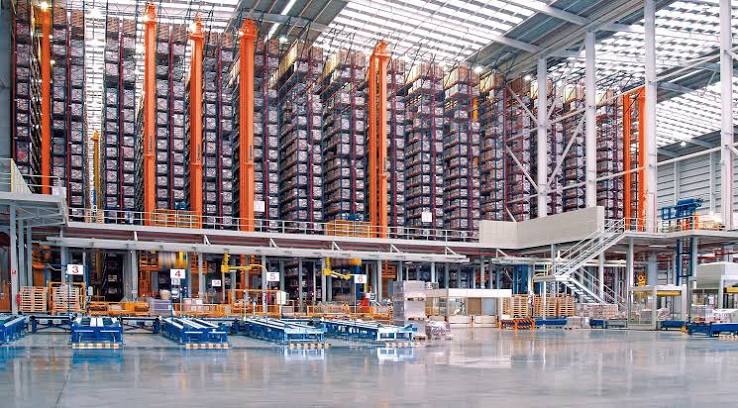
Stacker Crane: aisle-based vertical storage retrieval system
Each system affects layout design and workflow structure differently.
Results & ROI
- Typical performance comparison:
- Storage Density:
- ACR: High
- AMR: Medium
- Stacker Crane: Very High
- Flexibility:
- ACR: High
- AMR: Very High
- Stacker Crane: Low to Medium
- Speed / Throughput:
- ACR: High (scalable)
- AMR: Medium to High
- Stacker Crane: High (stable but limited flexibility)
- Cost Efficiency:
- AMR: Low to Medium initial cost
- ACR: Medium to High investment
- Stacker Crane: High infrastructure cost
Equipment List
- ACR System Includes:
- Autonomous storage robots
- High-density racking system
- WCS control platform
- AMR System Includes:
- Mobile transport robots
- Dynamic routing system
- Zone-to-zone logistics network
- Stacker Crane System Includes:
- Rail-mounted crane systems
- Fixed aisle storage racks
- Automated retrieval mechanism
Project Overview / Opening
Modern warehouse automation is no longer a one-technology decision.
Instead, most high-performance warehouses use hybrid automation strategies to balance storage density, flexibility, and throughput.
Understanding the strengths and limitations of each system is essential before designing a warehouse architecture.
Key Points
- 1️⃣ ACR System Overview
- Strengths:
- High-density storage capability
- Flexible SKU handling
- Scalable architecture
- Limitations:
- Requires system coordination
- Medium-to-high investment level
- Best for:
- E-commerce warehouses
- High SKU environments
- Medium to high throughput operations
- 2️⃣ AMR System Overview
- Strengths:
- Extremely flexible routing
- Easy to scale
- Low infrastructure dependency
- Limitations:
- Lower storage density impact
- Requires strong system coordination for efficiency
- Best for:
- Dynamic warehouse environments
- Multi-zone logistics centers
- Flexible fulfillment operations
- 3️⃣ Stacker Crane System Overview
- Strengths:
- Extremely high storage density
- Stable and predictable operation
- Suitable for large batch storage
- Limitations:
- Low flexibility
- High infrastructure rigidity
- Difficult expansion after installation
- Best for:
- Cold storage warehouses
- Bulk storage environments
- Low SKU high volume operations
- 4️⃣ Cost Comparison Overview
- AMR systems: Lowest entry cost, scalable
- ACR systems: Balanced cost vs performance
- Stacker crane systems: High infrastructure investment
- 5️⃣ Hybrid System Advantage
- Modern high-performance warehouses increasingly adopt hybrid systems:
- ACR + AMR combination
- AMR + Stacker Crane integration
- Full hybrid ASRS architecture
- Key advantages:
- Balanced storage + flexibility + speed
- Reduced system bottlenecks
- Higher scalability
- Better ROI performance
- 👉 This hybrid architecture is used in advanced systems like the 33 ACR + 18 AMR mega warehouse case.
Implementation / Workflow
Phase 1: Requirement Analysis (2–3 weeks)
SKU structure evaluation
Throughput requirements
Storage density target definition
Phase 2: System Selection (2–4 weeks)
Technology comparison
Hybrid feasibility analysis
Cost estimation
Phase 3: System Design (4–8 weeks)
Layout design
Robot allocation strategy
Workflow planning
Phase 4: Installation (2–4 weeks)
Hardware deployment
System integration
Phase 5: Commissioning (1–2 weeks)
Testing and optimization
Performance tuning
Customer Value / Results
Operational Value:
Improved warehouse efficiency
Better system stability
Reduced bottlenecks
Optimized storage utilization
Strategic Value:
Better technology selection decisions
Future-proof warehouse design
Scalable automation architecture
Reduced investment risk
Financial Value:
Lower total lifecycle cost
Improved ROI predictability
Reduced operational inefficiencies
Conclusion / Next Step
There is no single “best” warehouse automation system.
The optimal choice depends on:
✓ Storage density requirements
✓ Warehouse flexibility needs
✓ Throughput targets
✓ Budget constraints
✓ Future expansion plans
In most modern logistics operations, hybrid systems combining ACR and AMR technologies provide the best balance between performance and scalability.
If you are planning a warehouse automation project, we can help evaluate system options, compare costs, and design a customized ASRS architecture based on your operational needs.
Related Blog
Start with Your Business Challenge
Tell us about your warehouse, factory, or production requirements. We'll help you explore practical automation solutions and relevant project references.