ASRS Warehouse Cost Breakdown: How Much Does a 108 AMR + 46 ACR System Really Cost?
Summary
This article provides a detailed cost breakdown of a large-scale ASRS warehouse system using 108 AMRs and 46 ACR robots, explaining total investment range ($800K–$3M+), system components, and ROI structure for industrial automation projects.
Technology
- Automated Storage and Retrieval System (ASRS)
- AMR fleet automation system (108 units)
- ACR robotic storage system (46 units)
- WMS warehouse management system
- AI warehouse scheduling system
- High-density storage rack system
- Conveyor and material handling system
- IoT warehouse monitoring system
- Digital twin simulation system
- PLC industrial control system
Challenge
Companies planning ASRS warehouse investment often face uncertainty:
7.1 Lack of clear cost structure breakdown
7.2 Difficulty estimating total project investment
7.3 Hidden costs in software and integration
7.4 Unclear ROI expectations for automation systems
7.5 Misalignment between warehouse size and system design
7.6 Overinvestment or underinvestment risk
7.7 Lack of benchmark pricing for large-scale ASRS systems
Solution
A structured cost model for ASRS systems includes:
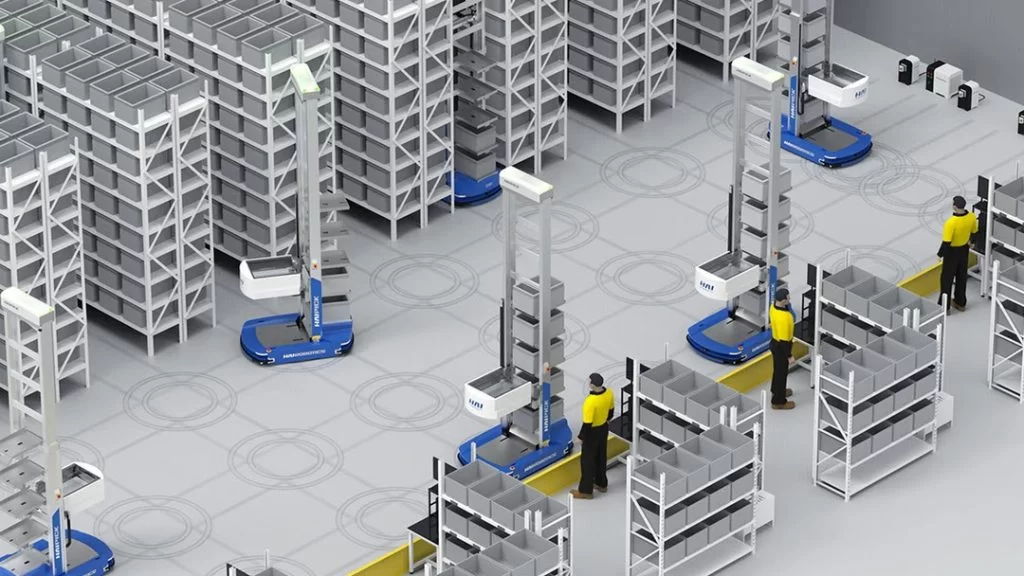
8.1 AMR fleet system for horizontal logistics movement
8.2 ACR robotic system for vertical storage operations
8.3 High-density rack infrastructure
8.4 WMS + AI software system integration
8.5 Conveyor and transport automation system
8.6 Installation, commissioning, and engineering services
8.7 Simulation-based design optimization
8.8 Scalable modular system architecture
Workflow & Layout
9.1 Goods flow analysis determines system scale
9.2 AMR quantity calculated based on horizontal throughput
9.3 ACR quantity based on vertical storage demand
9.4 Rack system designed according to SKU density
9.5 WMS software cost based on complexity level
9.6 Integration cost depends on factory connectivity
9.7 Installation includes testing and commissioning
9.8 Final system optimization ensures ROI performance
Results & ROI
- 10.1 Total investment range: $800
- 000 – $3
- 000
- 000+
- 10.2 ROI typically achieved within 18–36 months
- 10.3 Labor cost reduced by 50–80%
- 10.4 Warehouse efficiency increased by 200–400%
- 10.5 Storage utilization significantly improved
- 10.6 Operational cost significantly reduced
- 10.7 Faster order fulfillment and throughput
- 10.8 Long-term scalable automation investment
Equipment List
- 11.1 AMR fleet system (108 units) – major cost driver
- 11.2 ACR robotic system (46 units) – high-density automation cost
- 11.3 High-bay rack system (8.6m structure)
- 11.4 WMS warehouse management system
- 11.5 AI scheduling and optimization software
- 11.6 Conveyor and transfer system
- 11.7 IoT monitoring and sensor system
- 11.8 Installation and engineering labor cost
- 11.9 Simulation and digital twin system
- 11.10 Commissioning and training cost
Project Overview / Opening
12.1 ASRS warehouse systems require multi-layer investment planning
12.2 Cost depends on automation depth and warehouse scale
12.3 AMR + ACR hybrid systems offer flexible scalability
12.4 Proper design reduces unnecessary capital waste
Key Points
- 13.1 AMR cost is driven by fleet size and navigation system
- 13.2 ACR cost depends on vertical storage density requirements
- 13.3 Software systems significantly impact total cost
- 13.4 Rack structure is a major infrastructure investment
- 13.5 Integration complexity increases project cost
- 13.6 Simulation reduces financial risk before deployment
- 13.7 ROI depends on labor replacement ratio
Implementation / Workflow
14.1 Warehouse scale and SKU analysis
14.2 Throughput requirement definition
14.3 AMR + ACR system configuration design
14.4 Rack system engineering planning
14.5 Software architecture selection (WMS/MES)
14.6 Cost estimation modeling
14.7 Simulation-based validation
14.8 Final investment approval and project execution
Customer Value / Results
15.1 Transparent cost structure for decision making
15.2 Reduced risk of overinvestment in automation
15.3 Clear ROI expectation (18–36 months)
15.4 Optimized system sizing based on real demand
15.5 Improved capital efficiency in warehouse investment
15.6 Scalable design for future expansion
15.7 Better financial planning for large projects
15.8 Strong long-term operational savings
Conclusion / Next Step
16.1 ASRS warehouse cost depends on system architecture and automation depth
16.2 AMR + ACR hybrid systems offer the best balance of flexibility and ROI
If you are planning a warehouse automation investment, we can support you with:
16.3 ASRS cost estimation and financial modeling
16.4 AMR + ACR system design optimization
16.5 Warehouse layout and capacity planning
16.6 ROI analysis and investment feasibility study
16.7 Simulation-based cost validation
16.8 Turnkey ASRS project delivery
Related Blog
Start with Your Business Challenge
Tell us about your warehouse, factory, or production requirements. We'll help you explore practical automation solutions and relevant project references.