Tomato Processing Plant Cost Guide 2026: How Much Does a Fully Automated Production Line Cost?
Summary
This article provides a detailed cost breakdown of building a fully automated tomato processing plant, including equipment investment, factory setup, automation systems, and long-term operational costs.
It is designed for investors, food manufacturers, and factory planners who are evaluating the financial feasibility of tomato paste, ketchup, and canned tomato production projects.
Technology
- Industrial food processing system
- Automated tomato washing and sorting system
- Crushing and pulping production system
- Vacuum evaporation and concentration technology
- Aseptic filling and sealing system
- Sterilization (retort) processing system
- Automatic packaging and palletizing system
- PLC / SCADA industrial control system
- MES smart factory production system
- ASRS automated warehouse system
- IoT-based production monitoring system
Challenge
Investors and food manufacturers often face uncertainty when planning a tomato processing plant:
Lack of transparent cost breakdown for full production systems
Difficulty estimating total investment (equipment + factory + automation)
Unclear ROI and payback period
Risk of overinvestment or underinvestment
Hidden costs in installation and integration
Uncertainty in scalability and production capacity planning
Lack of benchmark data from real industrial projects
These challenges make project planning high-risk without system-level guidance.
Solution
A fully automated tomato processing plant cost structure includes:
Core processing equipment investment
Automation and control system integration
Packaging and logistics system setup
Factory layout and infrastructure planning
ASRS warehouse integration (optional high-end system)
Engineering, installation, and commissioning costs
Energy optimization and smart factory systems
This structured approach allows accurate budgeting and ROI forecasting.
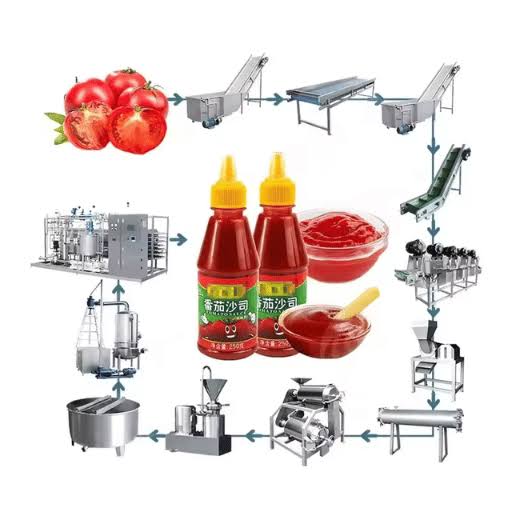
Workflow & Layout
Raw material receiving and washing system setup cost
Crushing and pulping system investment
Evaporation and sterilization system cost
Aseptic filling and sealing line investment
Packaging and labeling automation system
Palletizing and logistics system setup
ASRS warehouse automation (optional expansion module)
Central control system (PLC + MES + IoT) integration
Results & ROI
- Total production efficiency significantly increased
- Labor cost reduced by 40–70%
- Production capacity scalable with automation level
- ROI typically achieved in 18–36 months
- Energy consumption optimized in modern systems
- Reduced waste and production loss
- Higher product consistency and market competitiveness
- Faster payback compared to semi-automated systems
Equipment List
- Tomato washing and sorting system
- Crushing and pulping equipment
- Vacuum evaporation system
- Sterilization and retort system
- Aseptic filling machine
- Automatic sealing and labeling line
- Packaging and cartoning system
- Palletizing robots
- PLC / SCADA control system
- ASRS warehouse system (optional)
Project Overview / Opening
Building a tomato processing plant requires a clear understanding of total investment structure, not just equipment cost.
A fully automated system integrates processing, packaging, and logistics into a single production ecosystem that defines long-term profitability.
Key Points
- Cost depends on automation level and capacity
- Equipment is only part of total investment
- Packaging and logistics automation significantly impact ROI
- ASRS integration increases capital cost but reduces long-term labor cost
- Smart factory systems improve operational efficiency
- Proper planning reduces hidden engineering costs
- System design directly affects long-term profitability
Implementation / Workflow
Plant cost planning and implementation includes:
Production capacity planning (tons/day)
Process flow design and system selection
Equipment configuration and quotation analysis
Factory layout and infrastructure planning
Automation system integration design
Installation and commissioning cost estimation
Logistics and warehouse planning (optional ASRS)
Final ROI and investment validation
Customer Value / Results
This cost analysis delivers high-value decision support:
Clear investment breakdown for each system
Reduced risk of overinvestment
Accurate ROI estimation before project launch
Better financing and investment planning
Scalable factory development roadmap
Improved project feasibility evaluation
Stronger investor confidence
Faster decision-making for factory construction
Conclusion / Next Step
A tomato processing plant is a large-scale industrial investment that requires precise cost planning and system-level design.
Understanding the full cost structure helps investors build more efficient, scalable, and profitable food manufacturing operations.
If you are planning a food factory investment, we can support you with:
Full plant cost estimation
Turnkey production line design
Automation system planning
ROI and feasibility analysis
ASRS warehouse integration design
Complete project execution support
Related Blog
Start with Your Business Challenge
Tell us about your warehouse, factory, or production requirements. We'll help you explore practical automation solutions and relevant project references.