5 Warehouse Bottlenecks That an Integrated ASRS System Can Eliminate
Summary
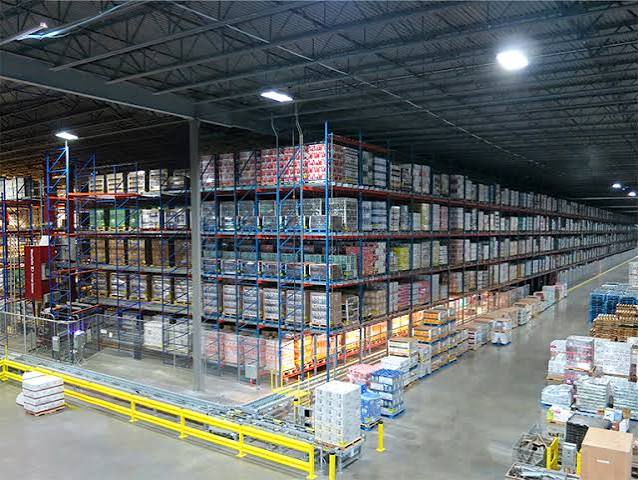
Warehouse bottlenecks are one of the biggest obstacles preventing manufacturers, logistics providers, and distribution centers from achieving higher productivity. While many companies invest in larger warehouses or hire more operators, the real issue often lies in inefficient material flow rather than insufficient space or labor.
Common problems such as forklift congestion, excessive walking distances, inventory inaccuracies, repetitive manual handling, and low throughput create delays throughout the supply chain. These inefficiencies increase operating costs, reduce order fulfillment speed, and limit business growth.
An integrated ASRS solution combining AMR (Autonomous Mobile Robots), RGV (Rail Guided Vehicles), Stacker Crane ASRS, Warehouse Management System (WMS), and Warehouse Control System (WCS) eliminates these bottlenecks by transforming disconnected warehouse activities into one intelligent, automated logistics system.
This article analyzes five of the most common warehouse bottlenecks, explains why they occur, and demonstrates how integrated automation solves each challenge while delivering measurable improvements in efficiency, accuracy, and return on investment.
Technology
- A complete warehouse automation solution integrates specialized technologies that work together seamlessly.
- Intelligent Transportation:
- ① Autonomous Mobile Robots (AMR)
- ② Rail Guided Vehicles (RGV)
- ③ Automatic Conveyor Systems
- ④ Transfer Stations
- Automated Storage:
- ① Stacker Crane ASRS
- ② High-Density Storage Racks
- ③ Automated Pallet & Bin Handling
- ④ Intelligent Location Allocation
- Intelligent Control:
- ① Warehouse Management System (WMS)
- ② Warehouse Control System (WCS)
- ③ Robot Fleet Scheduling
- ④ SCADA Visualization
- Smart Factory Integration:
- ① ERP Integration
- ② MES Integration
- ③ RFID & Barcode Tracking
- ④ AI Scheduling Algorithms
- ⑤ Real-Time Data Analytics
Challenge
Even highly modern warehouses often struggle with operational bottlenecks that reduce overall productivity.
The most common problems include:
① Forklift traffic congestion.
② Operators walking long distances.
③ Inventory inaccuracies.
④ Labor-intensive material handling.
⑤ Limited warehouse throughput.
These bottlenecks are interconnected. Solving only one rarely produces significant improvements because the entire warehouse operates as one logistics ecosystem.
Solution
Integrated warehouse automation eliminates bottlenecks by assigning each transportation and storage task to the most suitable technology.
Production
↓
AMR Transportation
↓
Buffer Zone
↓
RGV High-Speed Transfer
↓
Stacker Crane Storage
↓
WMS/WCS Intelligent Scheduling
↓
Automated Retrieval
↓
Shipping
Each technology performs its specialized function while WMS and WCS coordinate every movement in real time.
Workflow & Layout
1. Forklift Congestion
The Problem
Forklifts are the backbone of many traditional warehouses, but they also create one of the largest operational bottlenecks.
Common issues include:
• Traffic congestion.
• Waiting at intersections.
• Operator scheduling conflicts.
• Safety risks.
• Equipment idle time.
As warehouse traffic increases, forklift efficiency actually decreases.
Why It Happens
Forklifts perform every transportation task:
Production
↓
Warehouse
↓
Storage
↓
Picking
↓
Shipping
Multiple vehicles share the same routes, causing congestion throughout the facility.
Automation Solution
AMR
Autonomous Mobile Robots replace forklift transportation between production and warehouse areas.
Benefits:
① Dynamic route planning.
② Obstacle avoidance.
③ Automatic task allocation.
④ 24/7 operation.
⑤ Reduced warehouse traffic.
RGV
RGVs operate on dedicated rail systems.
Advantages include:
• High-speed transportation.
• No traffic congestion.
• Stable material flow.
• Predictable routing.
Stacker Crane
Instead of forklifts entering storage aisles, stacker cranes perform automated storage and retrieval.
This completely eliminates forklift traffic inside high-density storage areas.
Result
Typical improvements include:
• Up to 90% reduction in forklift traffic
• Higher warehouse safety
• Faster transportation cycles
• Continuous material flow
2. Long Walking Distance
The Problem
Warehouse personnel often spend more time walking than picking products.
Large warehouses require operators to travel hundreds of meters for each order.
This creates:
• Low productivity.
• Worker fatigue.
• Longer fulfillment times.
• Higher labor costs.
Automation Solution
AMR
AMRs transport goods instead of people.
Workers remain at ergonomic workstations while robots perform transportation.
RGV
RGVs rapidly transfer inventory between warehouse zones.
Operators no longer walk across large facilities.
Stacker Crane
The crane retrieves products automatically from storage locations.
Workers never enter storage aisles.
Result
Typical improvements include:
• Walking distance reduced by 80–95%
• Faster order picking
• Lower labor intensity
• Improved workplace ergonomics
3. Inventory Errors
The Problem
Manual inventory management often results in:
• Incorrect stock counts.
• Lost pallets.
• Misplaced products.
• Shipping errors.
• Production shortages.
Inventory discrepancies create expensive downstream problems throughout manufacturing and distribution.
Automation Solution
AMR
Every transportation task is digitally recorded.
Each product is identified automatically before movement begins.
RGV
Materials follow predefined transportation routes, eliminating accidental misplacement.
Stacker Crane
Storage locations are assigned automatically by the WMS.
Every inbound and outbound movement updates inventory in real time.
Result
Integrated automation typically delivers:
• Up to 99.9% inventory accuracy
• Complete product traceability
• Reduced shipping mistakes
• Better inventory visibility
4. Manual Material Handling
The Problem
Manual handling creates:
• Heavy lifting.
• Repetitive motion injuries.
• Product damage.
• Labor shortages.
• Inconsistent operating quality.
These issues become increasingly serious as warehouse volumes grow.
Automation Solution
AMR
AMRs automatically transport materials between production and warehouse zones.
RGV
RGVs move pallets continuously without operator intervention.
Stacker Crane
The crane performs all vertical storage and retrieval operations automatically.
Human intervention becomes limited to supervision and exception handling.
Result
Companies typically achieve:
• 70–90% reduction in manual handling
• Lower injury risk
• Improved operational consistency
• Better workforce utilization
5. Low Warehouse Throughput
The Problem
Many warehouses cannot process increasing order volumes because material movement depends on labor availability.
Bottlenecks appear during:
• Receiving.
• Internal transportation.
• Storage.
• Picking.
• Shipping.
As order volumes increase, throughput eventually reaches its operational limit.
Automation Solution
AMR
AMRs continuously transport goods without waiting for operators.
RGV
RGVs maintain high-speed material flow between warehouse zones.
Stacker Crane
Multiple cranes perform simultaneous storage and retrieval operations with precise positioning and consistent cycle times.
Integrated Scheduling
WMS and WCS coordinate:
① Robot assignments.
② Transportation priorities.
③ Storage allocation.
④ Retrieval sequencing.
⑤ Equipment balancing.
Every subsystem operates as one synchronized logistics network.
Result
Typical performance improvements include:
• Warehouse throughput increased by 200–300%
• Faster order fulfillment
• Reduced equipment idle time
• Higher warehouse utilization
Results & ROI
- 1. Bottleneck Comparison
- Warehouse Bottleneck Traditional Warehouse Integrated ASRS Solution
- Forklift Congestion Heavy traffic AMR + RGV
- Walking Distance Long Goods move automatically
- Inventory Errors Frequent Real-time WMS
- Manual Handling Labor intensive Automated transport & storage
- Throughput Limited High-speed intelligent flow
- 2. Equipment Responsibility
- Technology Primary Role
- AMR Flexible transportation
- RGV High-speed transfer
- Stacker Crane Automated storage & retrieval
- WMS Inventory management
- WCS Equipment coordination
- Each technology solves a different bottleneck
- and together they create a fully optimized warehouse.
- 3. Typical Operational Improvements
- After implementing an integrated ASRS system
- companies commonly experience:
- • Warehouse throughput increased by up to 300%
- • Forklift traffic reduced by 80–90%
- • Manual handling reduced by 70–90%
- • Inventory accuracy reaching 99.9%
- • Order fulfillment speed improved by 2–5×
- Performance varies according to warehouse size
- SKU complexity
- and operational requirements.
- 4. Long-Term Operational Benefits
- Beyond immediate productivity gains
- eliminating warehouse bottlenecks delivers long-term advantages:
- ① Lower labor dependency.
- ② Better warehouse scalability.
- ③ More stable production scheduling.
- ④ Higher customer satisfaction.
- ⑤ Lower operating costs.
- Warehouse automation removes constraints that would otherwise limit future business growth.
- 5. Return on Investment
- Because integrated automation improves efficiency across transportation
- storage
- inventory management
- and order fulfillment simultaneously
- many warehouses achieve an ROI within 18–36 months.
- Savings come from reduced labor
- fewer operational errors
- lower equipment costs
- improved space utilization
- and increased throughput rather than from a single improvement area.
Equipment List
- Transportation:
- ① Autonomous Mobile Robots (AMR)
- ② Rail Guided Vehicles (RGV)
- ③ Conveyor Systems
- ④ Transfer Stations
- Storage:
- ① Stacker Crane ASRS
- ② High-Density Storage Racks
- ③ Automatic Buffer Systems
- Software:
- ① Warehouse Management System (WMS)
- ② Warehouse Control System (WCS)
- ③ SCADA Monitoring
- ④ ERP Integration
- Safety Systems:
- ① Laser Safety Scanners
- ② Safety PLC
- ③ Emergency Stop Systems
- ④ Fire Protection Integration
Project Overview / Opening
This integrated ASRS solution demonstrates how intelligent warehouse automation removes the most common operational bottlenecks by combining AMRs, RGVs, stacker cranes, WMS, and WCS into one coordinated logistics platform.
Instead of optimizing isolated warehouse processes, the system synchronizes transportation, storage, inventory management, and order fulfillment into a continuous material flow. The result is a warehouse that operates with higher efficiency, greater accuracy, improved safety, and significantly stronger scalability.
Key Points
- ① Warehouse Bottlenecks Are Usually System Problems
- Most delays originate from disconnected workflows rather than individual pieces of equipment. Optimizing the entire logistics process delivers much greater benefits than improving isolated tasks.
- ② Each Automation Technology Solves a Different Challenge
- AMRs eliminate flexible transport bottlenecks, RGVs accelerate high-volume transfers, and stacker cranes maximize storage efficiency. Together they create a balanced, high-performance warehouse.
- ③ Software Is the Intelligence Behind the Automation
- WMS and WCS coordinate every robot, transfer vehicle, and storage operation in real time, ensuring optimal task scheduling, inventory accuracy, and equipment utilization.
- ④ Eliminating Bottlenecks Improves the Entire Supply Chain
- Reducing delays inside the warehouse shortens production lead times, speeds customer deliveries, and strengthens overall supply chain responsiveness.
- ⑤ Integrated Automation Supports Sustainable Growth
- As order volumes increase, additional AMRs, RGVs, storage aisles, or stacker cranes can be added without redesigning the warehouse, allowing the system to scale with future business expansion.
Implementation / Workflow
Phase ① Warehouse Bottleneck Assessment (1–2 Weeks)
Identify operational constraints, analyze material flow, and define improvement targets.
Phase ② System Design & Optimization (2–4 Weeks)
Develop warehouse layouts, transportation routes, storage strategies, and automation architecture.
Phase ③ Equipment Manufacturing (8–16 Weeks)
Manufacture AMRs, RGVs, stacker cranes, racking systems, and intelligent control hardware.
Phase ④ Installation & Integration (4–10 Weeks)
Install equipment and integrate WMS, WCS, ERP, and SCADA into a unified control platform.
Phase ⑤ Commissioning & Performance Optimization (2–4 Weeks)
Validate throughput, optimize scheduling algorithms, train operators, and prepare the warehouse for stable production.
Customer Value / Results
Operational Value:
① Eliminate warehouse bottlenecks.
② Increase throughput.
③ Improve inventory accuracy.
④ Reduce manual handling.
⑤ Enable continuous 24/7 operations.
Financial Value:
① Lower labor costs.
② Reduced forklift operating expenses.
③ Better warehouse utilization.
④ Faster inventory turnover.
⑤ Stronger return on investment.
Strategic Value:
① Support smart factory initiatives.
② Build scalable logistics infrastructure.
③ Enhance supply chain resilience.
④ Improve customer service performance.
⑤ Prepare warehouses for long-term digital transformation.
Conclusion / Next Step
Warehouse bottlenecks rarely result from a single piece of equipment. They arise when transportation, storage, inventory management, and order fulfillment operate independently instead of as one coordinated system.
By integrating AMRs for flexible transport, RGVs for high-speed material transfer, stacker crane ASRS for automated storage, and WMS/WCS for intelligent control, companies can systematically eliminate forklift congestion, excessive walking, inventory errors, manual handling, and throughput limitations.
Rather than solving isolated warehouse problems, an integrated ASRS creates a connected logistics ecosystem that delivers higher productivity, lower operating costs, greater inventory accuracy, and scalable performance, making it one of the most valuable investments for manufacturers, e-commerce fulfillment centers, and modern distribution facilities seeking long-term operational excellence.
Related Blog
Start with Your Business Challenge
Tell us about your warehouse, factory, or production requirements. We'll help you explore practical automation solutions and relevant project references.