AMR Fleet Management System: How 108 Robots Are Coordinated in Real-Time
Summary
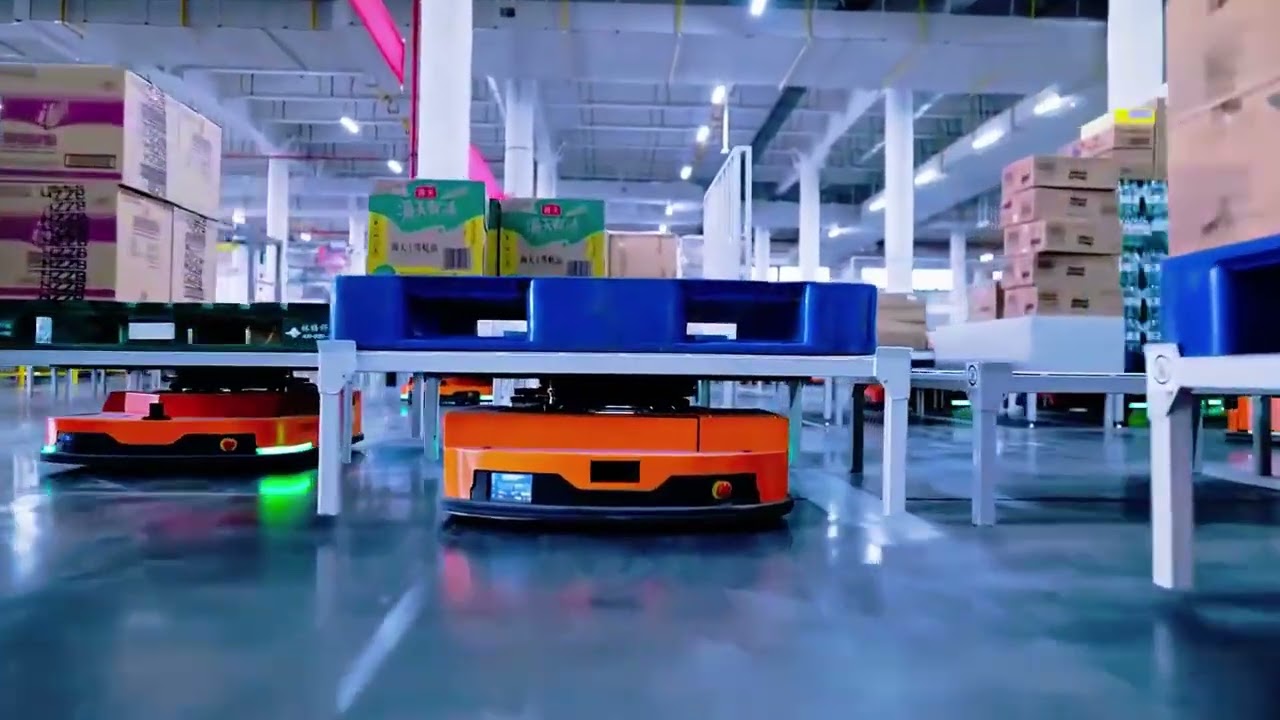
This article explains how an AMR fleet management system coordinates 108 autonomous mobile robots in real time within a large-scale ASRS warehouse, using AI-based path planning, congestion control, and multi-robot collaboration algorithms to maximize efficiency and safety.
Technology
- Automated Storage and Retrieval System (ASRS)
- AMR (Autonomous Mobile Robot) fleet system
- Fleet Management System (FMS)
- AI path planning algorithm
- Multi-robot coordination control system
- Real-time task scheduling engine
- Obstacle avoidance system (LiDAR + vision sensors)
- WMS warehouse management system
- IoT real-time monitoring network
- Congestion control algorithm (traffic optimization layer)
Challenge
Large-scale AMR warehouse systems face critical operational challenges:
7.1 High robot density causes traffic congestion
7.2 Conflicting task assignments between multiple robots
7.3 Inefficient routing in dynamic warehouse environments
7.4 Delays caused by path blocking and collisions
7.5 Lack of real-time coordination across 100+ robots
7.6 Uneven workload distribution among AMRs
7.7 Difficulty scaling from small fleets to large fleets
Solution
The AMR Fleet Management System solves these challenges through:
8.1 Central AI-based fleet control platform
8.2 Real-time task allocation for all 108 robots
8.3 Dynamic path planning and rerouting system
8.4 Multi-layer congestion control algorithm
8.5 Zone-based traffic management architecture
8.6 Predictive collision avoidance system
8.7 Load balancing across robot fleet
8.8 Continuous system optimization via AI learning
Workflow & Layout
9.1 WMS generates warehouse tasks in real time
9.2 Fleet system assigns tasks to nearest AMR
9.3 AI calculates optimal route for each robot
9.4 Robots navigate using LiDAR + vision sensors
9.5 Congestion control system prevents traffic overlap
9.6 ACR delivers goods to AMR pickup points
9.7 AMR transports goods to picking stations
9.8 System updates real-time status for all operations
Results & ROI
- 10.1 108 robots coordinated in real-time without collision
- 10.2 Warehouse throughput significantly increased
- 10.3 200–400% improvement in picking efficiency
- 10.4 Reduced idle time of robots and stations
- 10.5 Lower congestion and operational delays
- 10.6 Improved scalability for large fleet systems
- 10.7 Higher system stability under peak load
- 10.8 Strong ROI through labor and time reduction
Equipment List
- 11.1 AMR autonomous mobile robot fleet (108 units)
- 11.2 Fleet management system (FMS) software
- 11.3 AI path planning engine
- 11.4 LiDAR navigation system
- 11.5 Vision-based obstacle detection system
- 11.6 WMS warehouse management system
- 11.7 Real-time task scheduling server
- 11.8 IoT monitoring and tracking system
- 11.9 Network communication infrastructure
- 11.10 Congestion control algorithm module
Project Overview / Opening
12.1 Modern warehouses rely on intelligent robot coordination
12.2 Large-scale AMR fleets require centralized control systems
12.3 Real-time decision-making is critical for efficiency
12.4 Fleet management is the brain of ASRS robot systems
Key Points
- 13.1 AMR fleet system = central brain of warehouse robotics
- 13.2 AI path planning prevents collisions and delays
- 13.3 Congestion control ensures smooth traffic flow
- 13.4 Task allocation is dynamic and real-time
- 13.5 Multi-robot coordination improves scalability
- 13.6 WMS + FMS integration is essential
- 13.7 System adapts to changing warehouse conditions
Implementation / Workflow
14.1 Warehouse traffic simulation and analysis
14.2 AMR fleet sizing and deployment planning
14.3 Fleet management system architecture setup
14.4 AI path planning configuration
14.5 Zone-based warehouse mapping
14.6 WMS integration with fleet system
14.7 Congestion control calibration
14.8 Full system testing and optimization
Customer Value / Results
15.1 Seamless coordination of 108 robots in real time
15.2 Significant reduction in warehouse congestion
15.3 Higher throughput and operational speed
15.4 Improved system reliability and stability
15.5 Scalable architecture for future expansion
15.6 Lower operational and labor costs
15.7 Increased automation maturity level
15.8 Strong long-term ROI for smart warehouse investment
Conclusion / Next Step
16.1 AMR fleet management is the core intelligence layer of modern ASRS systems
16.2 Without it, large-scale robot coordination is impossible
If you are planning an automated warehouse project, we can support you with:
16.3 AMR fleet system design and simulation
16.4 AI path planning and congestion control optimization
16.5 ASRS warehouse architecture planning
16.6 WMS + FMS integration design
16.7 Robot fleet sizing and ROI analysis
16.8 Turnkey smart warehouse implementation
Related Blog
Start with Your Business Challenge
Tell us about your warehouse, factory, or production requirements. We'll help you explore practical automation solutions and relevant project references.