AMR vs RGV vs Stacker Crane: What Does Each Robot Actually Do in an Automated Warehouse?
Summary
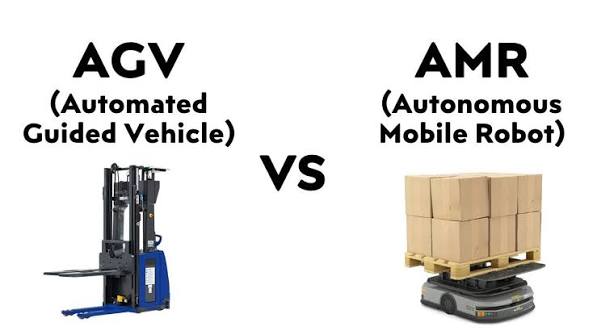
As warehouse automation continues to evolve, buyers are often overwhelmed by the growing number of material handling technologies available. Among the most commonly discussed solutions are Autonomous Mobile Robots (AMR), Rail Guided Vehicles (RGV), and Stacker Crane ASRS systems. While all three are designed to automate material movement, they perform fundamentally different roles and should not be viewed as competing technologies.
Many companies ask questions such as:
Should I choose AMR or RGV?
Is a stacker crane better than AMR?
Can AMRs replace ASRS systems?
Which solution provides the best ROI?
The reality is that these technologies are designed to complement one another rather than replace each other. AMRs excel at flexible transportation, RGVs deliver high-speed fixed-route transfers, and stacker cranes maximize storage density through automated storage and retrieval.
This guide compares their working principles, investment costs, operational advantages, application scenarios, and explains why combining all three technologies creates one of the most efficient warehouse automation architectures available today.
Technology
- A modern intelligent warehouse typically integrates three core automation technologies.
- Flexible Transportation:
- ① Autonomous Mobile Robots (AMR)
- • Free-navigation mobile robots
- • Laser SLAM / QR navigation
- • Dynamic path planning
- • Automatic obstacle avoidance
- High-Speed Transfer:
- ② Rail Guided Vehicle (RGV)
- • Fixed rail transportation
- • High-speed shuttle operation
- • Continuous repetitive movement
- • Heavy-load capability
- Automated Storage:
- ③ Stacker Crane ASRS
- • High-rise storage automation
- • Automatic storage & retrieval
- • High-density warehouse operation
- • Precision positioning
- Intelligent Control Platform:
- ① Warehouse Management System (WMS)
- ② Warehouse Control System (WCS)
- ③ SCADA Visualization
- ④ ERP Integration
Challenge
One of the biggest misconceptions in warehouse automation is assuming that AMRs, RGVs, and stacker cranes perform the same function.
This misunderstanding often leads to poor investment decisions.
Common examples include:
① Purchasing only AMRs for a warehouse that requires high-density storage.
② Installing RGV systems where flexible transportation is needed.
③ Selecting stacker cranes without considering production-to-warehouse transportation.
④ Expecting one technology to solve every logistics challenge.
⑤ Comparing equipment solely on purchase price instead of total operational performance.
Successful warehouse automation depends on assigning the right technology to the right task.
Solution
Rather than asking "Which robot is best?", warehouse planners should ask:
Which equipment is best for transportation?
Which equipment is best for storage?
Which equipment is best for throughput?
Which equipment offers the greatest flexibility?
The optimal solution is usually a layered architecture:
Production
↓
AMR Transportation
↓
RGV Transfer
↓
Stacker Crane Storage
↓
Automated Retrieval
↓
Shipping
Each technology specializes in one stage of material flow, resulting in maximum efficiency and scalability.
Workflow & Layout
Step ① AMR Collects Finished Goods
Finished products leave the production line.
AMRs automatically receive transportation tasks from the WCS and travel to the production area.
Advantages include:
• Flexible routing
• No guide rails
• Easy layout modification
• Multiple pickup points
Step ② AMR Delivers to Buffer Area
Instead of traveling deep into warehouse aisles, AMRs transport goods to a centralized transfer station.
The buffer area balances production speed and warehouse capacity while reducing traffic congestion.
Step ③ RGV Takes Over Transportation
Once materials arrive at the buffer zone, RGV systems assume responsibility.
RGVs operate along fixed rails to deliver materials quickly between warehouse sections.
Compared with mobile robots, RGVs provide:
• Higher speed
• Higher repeatability
• Greater payload capacity
• Continuous operation
Step ④ Stacker Crane Stores Inventory
After transfer, stacker cranes automatically move products into high-rise storage locations.
The WMS determines the optimal storage position based on:
• SKU type
• Inventory turnover
• Picking frequency
• Space utilization
Step ⑤ Retrieval & Outbound
When customer orders are released, the stacker crane retrieves inventory.
RGV transfers pallets back to the outbound area.
AMRs deliver products to production lines or shipping stations.
Every movement is automatically coordinated by the WMS and WCS.
Results & ROI
- Technical Comparison:
- Item AMR RGV Stacker Crane
- Primary Function Flexible Transport Fixed Transfer Automated Storage
- Navigation Laser SLAM Rail Guided Rail Guided
- Flexibility ★★★★★ ★★☆☆☆ ★☆☆☆☆
- Transportation Speed ★★★★☆ ★★★★★ ★★★☆☆
- Storage Density ★☆☆☆☆ ★☆☆☆☆ ★★★★★
- Scalability ★★★★★ ★★★☆☆ ★★★★☆
- Automation Level High High Very High
- Investment Comparison:
- System Typical Investment
- Small AMR Fleet USD $80K–500K
- RGV Transfer System USD $100K–800K
- Stacker Crane ASRS USD $300K–5M+
- Actual investment depends on warehouse size
- throughput requirements
- storage capacity
- and software integration.
- Operating Cost Comparison:
- AMRs generally require lower infrastructure investment but higher fleet management.
- RGVs offer lower operating costs for repetitive transportation tasks.
- Stacker cranes provide the greatest long-term savings by maximizing storage density and reducing manual handling.
- Productivity Comparison:
- Compared with manual warehouse operations:
- • AMRs significantly reduce walking distance.
- • RGVs eliminate repetitive transportation delays.
- • Stacker cranes maximize storage utilization while improving inventory accuracy.
- When integrated together
- these technologies can dramatically increase warehouse throughput while reducing labor requirements.
Equipment List
- Transportation:
- ① Autonomous Mobile Robots (AMR)
- ② Rail Guided Vehicle (RGV)
- ③ Automatic Conveyor System
- ④ Transfer Stations
- Storage:
- ① High-Rise Stacker Crane
- ② ASRS Rack System
- ③ Buffer Storage Modules
- Software:
- ① WMS
- ② WCS
- ③ SCADA
- ④ ERP Interface
- Safety:
- ① Laser Safety Scanner
- ② Safety PLC
- ③ Emergency Stop System
- ④ Collision Avoidance Sensors
Project Overview / Opening
Modern warehouse automation is no longer dependent on a single piece of equipment. Instead, high-performance logistics facilities combine multiple automation technologies, each optimized for a specific operational task.
AMRs provide flexible transportation between production and warehouse areas. RGV systems ensure rapid material transfer across fixed routes, while stacker cranes automate high-density storage and retrieval.
Together, these technologies create an intelligent warehouse capable of operating continuously with greater speed, accuracy, and efficiency than traditional manual operations.
Key Points
- ① AMR Is Best for Flexible Transportation
- AMRs operate without fixed infrastructure, making them ideal for facilities where layouts change frequently or transportation routes are dynamic.
- ② RGV Excels at High-Frequency Transfers
- For repetitive, point-to-point transportation with predictable routes, RGV systems offer superior speed, stability, and payload capacity.
- ③ Stacker Cranes Maximize Storage Density
- Stacker cranes are purpose-built for automated storage and retrieval in high-rise warehouses, delivering exceptional space utilization and inventory control.
- ④ These Technologies Are Complementary
- AMRs, RGVs, and stacker cranes are not direct competitors. Each addresses a different stage of warehouse operations, and combining them creates a more balanced, efficient, and scalable automation system.
- ⑤ Software Unifies the Entire System
- WMS and WCS coordinate task allocation, traffic management, inventory tracking, and equipment scheduling, ensuring all devices operate as one intelligent warehouse ecosystem.
Implementation / Workflow
Phase ① Operational Assessment (1–2 Weeks)
Analyze product characteristics, throughput requirements, warehouse layout, and future expansion plans.
Phase ② System Architecture Design (2–4 Weeks)
Define the roles of AMRs, RGVs, stacker cranes, storage racks, and warehouse software.
Phase ③ Equipment Manufacturing (8–16 Weeks)
Produce robots, transfer systems, cranes, storage infrastructure, and control systems.
Phase ④ Installation & Integration (4–10 Weeks)
Install hardware and integrate WMS, WCS, ERP, and SCADA platforms.
Phase ⑤ Commissioning & Optimization (2–4 Weeks)
Validate system performance, optimize workflows, train operators, and prepare for full-scale production.
Customer Value / Results
Operational Benefits:
① Intelligent end-to-end material flow
② Reduced warehouse congestion
③ Higher storage density
④ Faster order fulfillment
⑤ Continuous 24/7 operation
Financial Benefits:
① Lower labor costs
② Reduced forklift fleet investment
③ Higher warehouse utilization
④ Lower operational expenses
⑤ Faster return on investment
Strategic Benefits:
① Flexible future expansion
② Scalable automation architecture
③ Enhanced supply chain resilience
④ Improved inventory visibility
⑤ Foundation for smart manufacturing and digital logistics
Conclusion / Next Step
There is no single "best" warehouse robot. The right choice depends on the specific role each technology is expected to perform within the overall logistics process.
AMRs are ideal for flexible transportation, RGVs excel in high-speed fixed-route transfers, and stacker cranes provide unmatched high-density storage and retrieval. When these systems are integrated under a unified WMS/WCS control platform, they create a highly efficient, scalable, and future-ready warehouse capable of supporting manufacturing plants, distribution centers, e-commerce fulfillment operations, and industrial logistics hubs.
For organizations planning a new automation project, the most successful approach is not choosing one technology over another, but designing a complete workflow where each system performs the task it does best. Our engineering team can assist with technology selection, warehouse layout planning, throughput simulation, equipment configuration, and turnkey ASRS solution design, ensuring your investment delivers maximum operational performance and long-term ROI.
Related Blog
Start with Your Business Challenge
Tell us about your warehouse, factory, or production requirements. We'll help you explore practical automation solutions and relevant project references.