CTU vs AMR vs ASRS: Which Goods-to-Person System Is Best for Warehouses?
Summary
In modern warehouse automation, three major technologies dominate the Goods-to-Person (GTP) landscape:
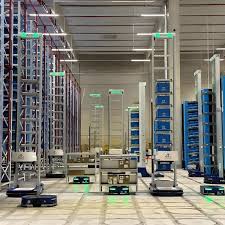
CTU (Case Transfer Unit) systems
AMR (Autonomous Mobile Robot) systems
ASRS (Automated Storage and Retrieval System) stacker crane systems
Each system has different strengths in cost, flexibility, storage density, speed, and scalability.
This article provides a technical and investment-level comparison to help decision-makers choose the best automation strategy based on real operational requirements rather than marketing claims.
Technology
- 1️⃣ CTU (Case Transfer Unit)
- Robot-to-shelf shuttle system
- High-density rack-based picking
- Goods-to-person logic
- Ideal for high SKU and medium throughput
- 2️⃣ AMR (Autonomous Mobile Robot)
- Free-roaming mobile robots
- Flexible path navigation
- Easy warehouse retrofit
- Suitable for dynamic layouts
- 3️⃣ ASRS (Automated Storage & Retrieval System)
- Stacker crane-based vertical storage system
- Rail-guided high precision automation
- High-density and high-throughput design
- Ideal for large-scale industrial warehouses
Challenge
Warehouse operators face increasing difficulty selecting the right automation system due to:
Overlapping vendor claims
Different performance metrics (speed vs density vs flexibility)
Lack of standardized comparison models
Misalignment between system design and business needs
Choosing the wrong system can result in:
Excessive CAPEX
Poor ROI performance
Limited scalability
Operational inefficiencies
Solution
A structured comparison based on four key dimensions:
Storage density
Flexibility
Throughput speed
Total cost of ownership (TCO)
This allows companies to match automation technology with:
👉 warehouse size
👉 SKU complexity
👉 order volume
👉 growth strategy
Workflow & Layout
👉CTU Workflow
Robots retrieve bins from shelving
Deliver directly to picking station
High-density static rack design
👉AMR Workflow
Robots navigate freely across warehouse
Pick goods from shelves or stations
Flexible dynamic routing system
👉ASRS Workflow
Stack crane retrieves pallets or bins
Fixed rail system ensures precision
High-rise storage optimization
Results & ROI
- 1️⃣ Storage Density Comparison
- ASRS → ⭐⭐⭐⭐⭐ (highest density)
- CTU → ⭐⭐⭐⭐
- AMR → ⭐⭐ (lowest due to aisle space requirement)
- 2️⃣ Flexibility Comparison
- AMR → ⭐⭐⭐⭐⭐ (highest flexibility)
- CTU → ⭐⭐⭐
- ASRS → ⭐⭐ (fixed infrastructure)
- 3️⃣ Throughput Speed
- ASRS → very high (industrial scale)
- CTU → high (goods-to-person optimized)
- AMR → medium (depends on traffic conditions)
- 4️⃣Best Use Case Scenarios
- 👉AMR Best For:
- Small to medium warehouses
- Flexible layouts
- Fast deployment needs
- 👉CTU Best For:
- High SKU e-commerce
- Medium-high throughput fulfillment
- Balanced cost-performance projects
- 👉ASRS Best For:
- Large-scale industrial logistics
- High-density storage requirements
- Chemical
- manufacturing
- and bulk operations
Equipment List
- 👉CTU System:
- Case transfer robots
- High-density racks
- Picking stations
- 👉AMR System:
- Autonomous mobile robots
- Charging stations
- Flexible shelving systems
- 👉ASRS System:
- Stacker cranes
- Industrial racking systems
- Conveyor integration systems
Project Overview / Opening
Goods-to-person automation is no longer a single-technology decision.
Modern warehouses must choose between flexibility (AMR), density (ASRS), and balanced performance (CTU) depending on business goals.
This comparison helps eliminate guesswork and aligns automation strategy with operational reality.
Key Points
- 1️⃣ Storage Density vs Flexibility vs Speed
- Each system optimizes a different core dimension:
- ASRS → density
- AMR → flexibility
- CTU → balanced performance
- 2️⃣ Cost Comparison Logic
- Cost increases with:
- Infrastructure complexity
- Automation depth
- Throughput requirements
- 3️⃣ Hybrid System Advantage
- Many modern warehouses combine:
- ASRS for bulk storage
- CTU for picking
- AMR for transport
- 4️⃣ When to Choose Each System
- AMR → fast deployment + flexible layouts
- CTU → e-commerce fulfillment centers
- ASRS → large-scale industrial logistics
- 5️⃣ Long-Term ROI Consideration
- Best ROI depends on:
- Warehouse scale
- SKU structure
- Order frequency
Implementation / Workflow
Phase 1: Operational Assessment (2–3 weeks)
SKU and order analysis
Warehouse profiling
Phase 2: System Design (2–4 weeks)
Technology selection
Layout planning
Phase 3: Engineering Integration (4–8 weeks)
System installation
Software integration (WMS/WCS)
Phase 4: Deployment (2–4 weeks)
Testing and commissioning
Performance tuning
Phase 5: Optimization (1–2 weeks)
Throughput balancing
Efficiency tuning
Customer Value / Results
Operational Value:
Optimized warehouse performance
Improved order fulfillment speed
Scalable automation architecture
Financial Value:
Reduced long-term operational cost
Improved ROI alignment
Better CAPEX efficiency
Strategic Value:
Future-proof warehouse design
Technology scalability
Competitive logistics advantage
Conclusion / Next Step
There is no universal “best” system between CTU, AMR, and ASRS.
Instead, the optimal choice depends on:
✓ warehouse size
✓ SKU complexity
✓ throughput requirements
✓ investment strategy
In most large-scale logistics environments, a hybrid system combining CTU + ASRS + AMR delivers the best overall performance.
If you are planning a warehouse automation project, we can help design a tailored system architecture and provide a full ROI simulation for CTU, AMR, or ASRS-based solutions.
Related Blog
Start with Your Business Challenge
Tell us about your warehouse, factory, or production requirements. We'll help you explore practical automation solutions and relevant project references.