ASRS Warehouse ROI Analysis: Why Automation Pays Back Faster Than Traditional Warehousing
Summary
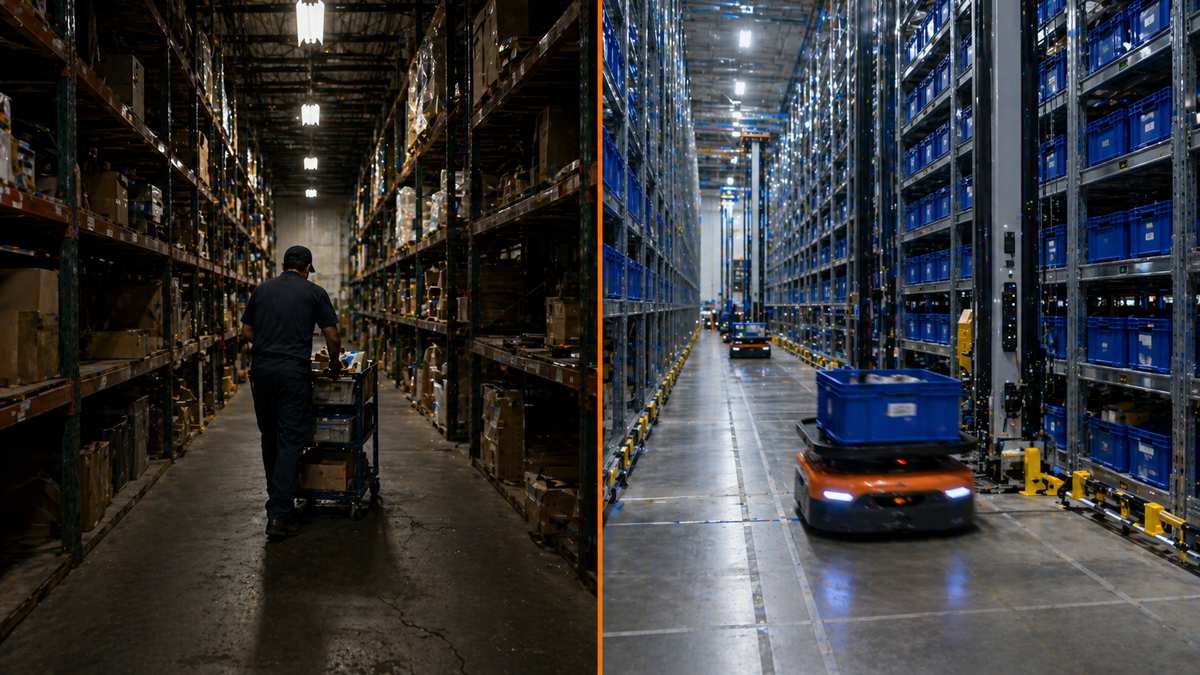
This article provides a structured ROI analysis of ASRS warehouse automation systems, explaining why automated warehouses achieve faster payback (18–36 months) compared to traditional manual warehouses through labor savings, space optimization, and operational efficiency improvements.
Technology
- Automated Storage and Retrieval System (ASRS)
- AMR autonomous mobile robot system
- ACR automated storage and retrieval robots
- WMS warehouse management system
- AI logistics optimization engine
- High-density warehouse racking system
- Goods-to-person picking system
- IoT warehouse monitoring system
- Digital twin simulation platform
- Fleet management system (FMS)
Challenge
Traditional warehouse operations suffer from low ROI efficiency due to:
7.1 High labor dependency and rising wages
7.2 Inefficient use of warehouse space
7.3 Slow order fulfillment cycles
7.4 High error rates in manual operations
7.5 Limited scalability for business growth
7.6 High operational overhead costs
7.7 Lack of automation-driven productivity gains
Solution
ASRS automation improves ROI through:
8.1 Labor cost elimination via robotic systems
8.2 Space optimization using high-density storage
8.3 Faster throughput with AI-driven logistics
8.4 Reduced operational errors and losses
8.5 Scalable automation architecture
8.6 Real-time inventory visibility
8.7 Optimized warehouse workflow design
8.8 System-wide efficiency integration
Workflow & Layout
9.1 Labor savings from reduced manual picking
9.2 Space savings from vertical storage optimization
9.3 Speed gains from AMR + ACR automation
9.4 Reduced error cost from automated tracking
9.5 Lower energy and operational overhead
9.6 Improved order fulfillment cycle time
9.7 Increased throughput per square meter
9.8 Combined effect leads to accelerated payback period
Results & ROI
- 10.1 Typical payback period: 18–36 months
- 10.2 Labor cost reduced by 50–85%
- 10.3 Warehouse efficiency increased by 200–400%
- 10.4 Storage capacity increased by 2–5x
- 10.5 Order accuracy improved to 99.9%
- 10.6 Operational downtime significantly reduced
- 10.7 Higher scalability with same footprint
- 10.8 Long-term ROI significantly higher than manual systems
Equipment List
- 11.1 Labor cost reduction (largest savings factor)
- 11.2 Space optimization savings (land + facility cost)
- 11.3 Efficiency gain (throughput increase)
- 11.4 Error reduction savings (inventory + damage loss)
- 11.5 Energy optimization via automation systems
- 11.6 Maintenance cost vs manual labor cost comparison
- 11.7 Software + system amortization
- 11.8 Long-term scalability value
Project Overview / Opening
12.1 ROI is the most important factor in ASRS investment decisions
12.2 Automation must be evaluated beyond equipment cost
12.3 True value comes from system-level optimization
12.4 ASRS provides multi-dimensional financial benefits
Key Points
- 13.1 AMR fleet system = central brain of warehouse robotics
- 13.2 AI path planning prevents collisions and delays
- 13.3 Congestion control ensures smooth traffic flow
- 13.4 Task allocation is dynamic and real-time
- 13.5 Multi-robot coordination improves scalability
- 13.6 WMS + FMS integration is essential
- 13.7 System adapts to changing warehouse conditions
Implementation / Workflow
14.1 Warehouse baseline cost analysis
14.2 Labor structure evaluation
14.3 Space utilization assessment
14.4 ASRS system design simulation
14.5 AMR + ACR configuration planning
14.6 ROI modeling and scenario simulation
14.7 Investment optimization planning
14.8 Final system deployment strategy
Customer Value / Results
15.1 Faster ROI compared to traditional warehouses
15.2 Significant reduction in operational cost
15.3 Increased warehouse productivity and output
15.4 Better capital efficiency for investors
15.5 Reduced long-term labor dependency
15.6 Higher warehouse scalability
15.7 Improved business competitiveness
15.8 Stable long-term financial returns
Conclusion / Next Step
16.1 ASRS systems deliver measurable and predictable ROI advantages
16.2 Automation is no longer a cost, but a productivity investment
If you are planning a warehouse automation project, we can support you with:
16.3 ROI analysis and investment feasibility study
16.4 ASRS system design and engineering planning
16.5 AMR + ACR configuration optimization
16.6 Warehouse layout and throughput simulation
16.7 Cost-benefit modeling for automation projects
16.8 Turnkey ASRS implementation solutions
Related Blog
Start with Your Business Challenge
Tell us about your warehouse, factory, or production requirements. We'll help you explore practical automation solutions and relevant project references.