Can ASRS Reduce Labor Risk in Chemical Warehouses by 70%?
Summary
Chemical warehouses are among the highest-risk working environments in industrial logistics due to heavy loads, hazardous materials, and frequent forklift operations.
Labor-related accidents often result from manual handling errors, fatigue, limited visibility, and unstable load movement.
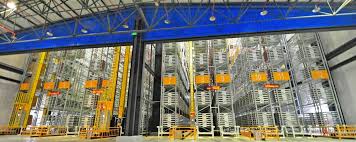
Modern ASRS (Automated Storage and Retrieval Systems)—especially stacker crane-based systems—can significantly reduce human involvement in hazardous zones, achieving up to 70% reduction in labor-related risk exposure.
This article explains how automation reduces labor injuries, replaces forklifts, and transforms chemical warehouse safety economics.
Technology
- A safety-focused chemical ASRS system typically includes:
- Heavy-duty stacker crane automation system
- WMS (Warehouse Management System)
- WCS (Warehouse Control System)
- SCADA real-time monitoring platform
- Reinforced chemical drum racking system
- Conveyor-based automated transfer system
- Safety interlock and emergency shutdown system
- Load weight and stability sensors
- Explosion-proof electrical infrastructure
- Hazard zone isolation system
Challenge
Chemical warehouses involve multiple high-risk operational factors:
Manual forklift operation in hazardous zones
Heavy chemical drum handling (200–1000kg loads)
Limited visibility in narrow aisles
Operator fatigue and human error
Exposure to toxic or flammable substances
High accident probability during peak operations
These factors lead to:
Workplace injuries
Equipment damage
Chemical leakage incidents
Regulatory penalties
High insurance costs
Solution
ASRS systems eliminate direct human involvement in hazardous zones by fully automating:
Storage
Retrieval
Transport
Inventory management
This reduces labor risk by replacing:
👉 manual forklift operations
👉 physical heavy lifting
👉 hazardous zone entry
with:
✔ automated stacker crane systems
✔ controlled robotic movement
✔ centralized WMS/WCS control
Workflow & Layout
Step 1: Inbound Receiving
Chemical drums are:
Scanned into WMS
Classified by hazard level
Routed into controlled storage workflow
Step 2: Automated Transfer
Drums are transferred via:
Conveyor systems
Automated lifting stations
No forklift entry required in core hazard zones.
Step 3: Stacker Crane Storage
Stacker crane performs:
Vertical lifting of heavy loads
Precision rack placement
Controlled movement under safety sensors
Step 4: Storage Optimization
System ensures:
Safe chemical separation
Load stability tracking
High-density storage utilization
Step 5: Automated Retrieval
When needed:
WMS triggers retrieval
Stack crane executes movement
AMR/conveyor transfers output
Step 6: Outbound Dispatch
Fully automated dispatch process minimizes manual handling exposure.
Results & ROI
- 1️⃣ Labor Risk Reduction (Up to 70%)
- ASRS reduces labor risk through:
- Removal of forklift operators in hazard zones
- Reduced manual handling of heavy drums
- Elimination of repetitive lifting tasks
- Lower exposure to chemical environments
- 2️⃣ Forklift Replacement Strategy
- Traditional forklift operations are replaced by:
- Stacker crane vertical handling
- Automated transport systems
- Fixed-path robotic logistics
- Result:
- 👉 fewer operators needed
- 👉 lower accident probability
- 👉 higher operational stability
- 3️⃣ Manpower vs Robot Operation Comparison
- Manual System:
- High dependency on trained operators
- Variable performance based on skill
- Fatigue-related risk increase
- Higher accident probability
- ASRS System:
- Stable automated execution
- 24/7 continuous operation
- Consistent performance
- Minimal human exposure
- 4️⃣ ROI of Safety Automation
- Safety-driven ROI includes:
- Reduced injury compensation costs
- Lower insurance premiums
- Reduced downtime from incidents
- Improved compliance efficiency
- Typical ROI period:
- 👉 18–36 months depending on scale
- 5️⃣ Operational Efficiency Gains
- 200–400% improvement in handling efficiency
- Reduced bottlenecks in peak operations
- Stable throughput under high load
Equipment List
- Core Hardware:
- Heavy-duty stacker crane system
- Chemical drum racking system
- Automated conveyor transfer system
- Safety isolation infrastructure
- Load stabilization platforms
- Control Systems:
- WMS warehouse management system
- WCS execution control system
- SCADA monitoring system
- Real-time inventory tracking system
- Safety Systems:
- Gas detection sensors
- Emergency shutdown system
- Explosion-proof electrical design
- Anti-collision safety modules
- Hazard zone access control system
Project Overview / Opening
Labor risk in chemical warehouses is not only an operational issue—it is a core safety and financial liability factor.
ASRS automation transforms warehouse operations by removing human exposure from hazardous environments and replacing it with controlled robotic systems.
This shift fundamentally changes how chemical logistics safety is managed.
Key Points
- 1️⃣ Labor Injury Reduction
- Key reductions include:
- Forklift collision injuries
- Manual lifting injuries
- Chemical exposure risks
- Fatigue-related accidents
- 2️⃣ Hazardous Material Handling Automation
- Automation ensures:
- No direct human contact in storage zones
- Controlled chemical movement paths
- Standardized handling procedures
- 3️⃣ Forklift Replacement Strategy
- Stacker crane ASRS systems replace:
- Manual lifting operations
- Forklift aisle navigation
- High-risk transport tasks
- 4️⃣ Safety Automation ROI
- Safety automation provides:
- Direct cost savings from fewer accidents
- Indirect savings from reduced downtime
- Long-term insurance cost reduction
- 5️⃣ Manpower vs Robot Operation
- Automation delivers:
- Higher consistency
- Lower variability
- Reduced dependency on human labor market
Implementation / Workflow
Phase 1: Risk Assessment (2–3 weeks)
Labor risk mapping
Chemical hazard evaluation
Phase 2: System Design (2–4 weeks)
Automation layout planning
Workflow optimization
Phase 3: Engineering Integration (4–8 weeks)
ASRS system installation
Software integration (WMS/WCS/SCADA)
Phase 4: Deployment (2–4 weeks)
System installation
Safety calibration
Phase 5: Commissioning (1–2 weeks)
Safety testing
Operational validation
Customer Value / Results
Operational Value:
Significant reduction in labor dependency
Stable automated warehouse operation
Reduced human exposure to risk
Safety Value:
Up to 70% reduction in labor-related risk
Fewer workplace accidents
Improved compliance with safety standards
Financial Value:
Lower insurance and compensation costs
Reduced downtime from incidents
Improved long-term operational efficiency
Conclusion / Next Step
ASRS systems fundamentally transform chemical warehouse safety by eliminating the highest-risk factor: human exposure in hazardous environments.
With proper implementation, companies can achieve:
✓ Up to 70% labor risk reduction
✓ Full forklift replacement in hazardous zones
✓ Higher operational stability
✓ Strong ROI through safety and efficiency gains
If you are evaluating chemical warehouse safety automation, we can help design a tailored ASRS system that reduces risk, improves compliance, and optimizes long-term operational cost.
Related Blog
Start with Your Business Challenge
Tell us about your warehouse, factory, or production requirements. We'll help you explore practical automation solutions and relevant project references.