CTU Warehouse Workflow Explained: From Storage to Picking to Dispatch
Summary
Understanding how a CTU (Case Transfer Unit) Goods-to-Person warehouse system works is essential for evaluating automation feasibility and operational efficiency.
This article provides a complete step-by-step explanation of the CTU workflow—from incoming storage to robotic retrieval, goods-to-person picking, and final dispatch.
It is designed for engineers, logistics planners, and decision-makers seeking a clear operational blueprint of modern warehouse automation.
Technology
- A CTU warehouse workflow is built on a tightly integrated automation stack:
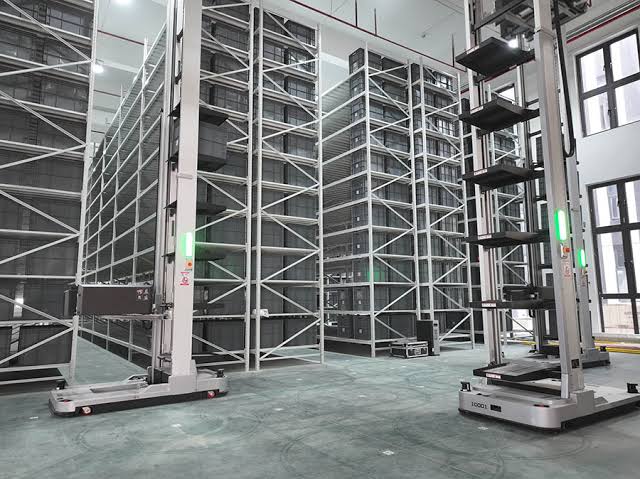
- CTU robotic shuttle system
- High-density storage rack architecture
- Goods-to-person picking stations
- WMS (Warehouse Management System)
- WCS (Warehouse Control System)
- SCADA real-time monitoring platform
- Barcode / RFID identification system
- Intelligent task scheduling engine
- Conveyor and buffer transfer systems
- Safety and collision detection systems
Challenge
Traditional warehouse workflows suffer from:
Inefficient manual movement between storage zones
Long walking distances for picking staff
High dependency on human coordination
Slow order processing cycles
Increased error rates during peak operations
These inefficiencies limit throughput and scalability.
Solution
CTU systems restructure warehouse operations into a fully automated Goods-to-Person workflow, where:
👉 robots retrieve goods and deliver them directly to operators
This eliminates:
Walking time
Manual searching
Unstructured picking paths
And replaces them with a digitally controlled, high-efficiency flow system.
Workflow & Layout
Step 1: Inbound Storage Process
Goods arrive at receiving dock
Items are scanned and registered in WMS
System assigns optimal storage location
CTU robots transport goods into storage racks
Step 2: High-Density Storage Operation
Goods are stored in multi-level rack systems
CTU robots organize SKUs based on demand frequency
Storage density is maximized without reducing accessibility
Step 3: Intelligent Task Allocation
WMS generates picking orders
WCS assigns tasks to CTU robot fleet
System balances workload across multiple stations
Step 4: Goods-to-Person Picking Process
CTU retrieves required bins or cases
Goods are delivered directly to picking stations
Operators perform fast, system-guided picking
Barcode/RFID verification ensures accuracy
Step 5: Packing & Dispatch Preparation
Completed orders move to packing stations
Items are consolidated and labeled
System updates inventory in real time
Step 6: Outbound Dispatch Flow
Orders are transferred to shipping zone
Conveyor or buffer systems organize shipments
Dispatch is executed based on delivery priority
Results & ROI
- 1️⃣ End-to-End Workflow Efficiency
- CTU systems create a continuous flow:
- Storage → Retrieval → Picking → Packing → Dispatch
- No manual interruption points
- Fully synchronized system operation
- 2️⃣ Time Reduction Impact
- Compared to manual warehouses:
- 👉 Up to 70% reduction in order processing time
- 3️⃣ Labor Efficiency Improvement
- CTU systems reduce labor dependency by:
- Eliminating walking and searching tasks
- Reducing picker workload
- Centralizing operations at workstations
- 4️⃣ Throughput Optimization
- System throughput increases through:
- Parallel robot operation
- Multi-station picking design
- Intelligent scheduling algorithms
- 5️⃣ Operational Stability
- CTU workflow ensures:
- Consistent 24/7 operation
- Reduced human error variability
- Predictable fulfillment performance
Equipment List
- Core Hardware:
- CTU robotic shuttle fleet
- High-density storage rack system
- Goods-to-person picking stations
- Conveyor and buffer systems
- Software Systems:
- WMS warehouse management system
- WCS control system
- SCADA monitoring platform
- AI task scheduling engine
- Safety Systems:
- Collision detection sensors
- Emergency stop systems
- Light curtain protection
- System diagnostics tools
Project Overview / Opening
The CTU warehouse workflow represents a fundamental shift from manual logistics operations to fully automated, software-controlled fulfillment systems.
Instead of human-driven movement, the entire warehouse operates as a coordinated robotic ecosystem.
Key Points
- 1️⃣ End-to-End Automation Flow
- CTU systems automate:
- Storage
- Retrieval
- Picking
- Dispatch coordination
- 2️⃣ Goods-to-Person Principle
- Core logic:
- 👉 goods move to people, not people to goods
- 3️⃣ System Coordination Layer
- WMS/WCS ensures:
- Task scheduling
- Robot coordination
- Inventory accuracy
- 4️⃣ Continuous Workflow Design
- No idle time between stages due to:
- Parallel robot operation
- Buffer optimization
- Real-time scheduling
- 5️⃣ Scalability Advantage
- Workflow expands by:
- Adding robots
- Increasing stations
- Expanding rack systems
Implementation / Workflow
Phase 1: Workflow Analysis (2–3 weeks)
Current process mapping
Bottleneck identification
Phase 2: System Design (2–4 weeks)
Layout planning
Workflow architecture design
Phase 3: Engineering Integration (4–8 weeks)
Hardware installation
Software deployment
Phase 4: System Commissioning (2–4 weeks)
Testing and calibration
Performance validation
Phase 5: Optimization (1–2 weeks)
Throughput tuning
Workflow balancing
Customer Value / Results
Operational Value:
Fully automated warehouse workflow
Faster order processing
Higher operational consistency
Financial Value:
Reduced labor dependency
Lower cost per order
Improved ROI efficiency
Strategic Value:
Scalable logistics architecture
Future-proof automation system
Competitive fulfillment advantage
Conclusion / Next Step
The CTU warehouse workflow transforms traditional logistics into a fully integrated Goods-to-Person automation system.
Key outcomes:
✓ End-to-end automated process flow
✓ Significant reduction in manual handling
✓ High-speed, scalable fulfillment operations
✓ Stable and predictable warehouse performance
For companies planning automation upgrades, understanding this workflow is the first step toward designing a high-efficiency CTU system tailored to operational needs.
We can further help you map your current warehouse process into a CTU workflow simulation and ROI model.
Related Blog
Start with Your Business Challenge
Tell us about your warehouse, factory, or production requirements. We'll help you explore practical automation solutions and relevant project references.