How Much Does a CTU Goods-to-Person Warehouse Cost in 2026?
Summary
CTU (Case Transfer Unit) Goods-to-Person systems are one of the fastest-growing warehouse automation solutions for e-commerce, retail distribution, pharmaceutical, and high-SKU logistics operations.
However, the most important question for decision-makers is:
👉 How much does a CTU warehouse actually cost in 2026?
This article breaks down the full CAPEX structure, system pricing ranges, cost drivers, ROI logic, and hidden costs, helping investors and warehouse planners understand real-world investment levels for CTU automation projects.
Technology
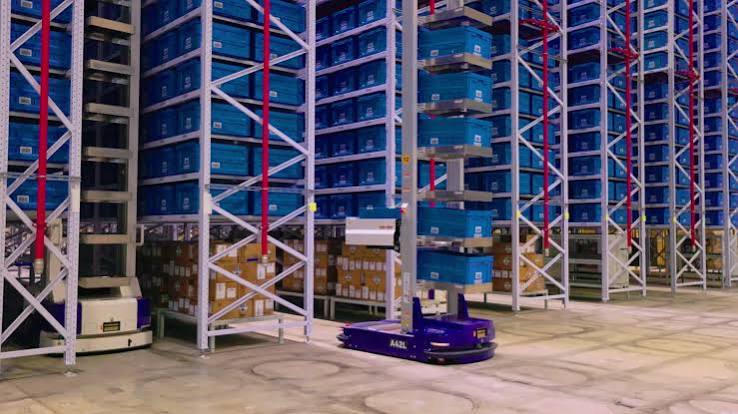
- A CTU Goods-to-Person warehouse system typically includes:
- CTU robotic shuttle units
- High-density storage rack system
- Picking workstations (ergonomic stations)
- WMS (Warehouse Management System)
- WCS (Warehouse Control System)
- SCADA monitoring platform
- Conveyor or buffer transfer system
- Barcode / RFID identification system
- Safety sensors and light curtain systems
- Intelligent task scheduling software
Challenge
Companies evaluating CTU automation often face several key uncertainties:
No clear benchmark for total system cost
Difficulty understanding CAPEX structure
Hidden integration and commissioning costs
Uncertainty about ROI timeline
Lack of comparison with traditional manual warehouses
As a result, many projects are delayed due to investment ambiguity rather than technical limitations.
Solution
A CTU Goods-to-Person system provides a modular and scalable automation investment model, allowing companies to adjust:
Storage density
Robot quantity
Workstation numbers
Throughput capacity
This enables flexible investment ranges from small-scale automation to fully industrial logistics centers.
Workflow & Layout
CTU warehouse cost is directly influenced by system workflow design:
Step 1: Inbound Processing
Goods received and scanned into WMS
Data entry into inventory system
Initial storage assignment
Step 2: Storage System Operation
CTU robots store goods in high-density racks
System optimizes SKU placement
Space utilization is maximized
Step 3: Order Processing
WMS generates picking tasks
CTU retrieves required storage units
Goods delivered to picking station
Step 4: Goods-to-Person Picking
Operator picks directly at workstation
System verifies accuracy in real-time
Orders are completed efficiently
Step 5: Outbound Logistics
Completed orders transferred to shipping
System updates inventory automatically
Results & ROI
- 1️⃣ CTU System Cost Range (2026 Benchmark)
- CTU warehouse investment typically falls into:
- Small scale system: $50
- 000 – $300
- 000
- Mid-scale warehouse: $300
- 000 – $1.5M
- Large distribution center: $1.5M – $5M+
- 2️⃣ CAPEX Breakdown Structure
- Typical investment distribution:
- 35–45% → CTU robots & mechanical system
- 25–35% → Storage rack system
- 15–25% → Software (WMS/WCS/SCADA)
- 10–20% → Installation & commissioning
- 3️⃣ Key Cost Drivers
- CTU warehouse cost is mainly affected by:
- SKU complexity
- Storage density requirement
- Throughput per hour
- Number of workstations
- Automation depth (partial vs full automation)
- 4️⃣ Hidden Costs
- Often underestimated cost elements include:
- System integration with ERP/WMS
- Site electrical & infrastructure upgrades
- Commissioning and debugging period
- Operator training and system tuning
- 5️⃣ ROI & Payback Period
- CTU systems typically achieve:
- 👉 18–36 months payback period
- ROI is driven by:
- Labor reduction (up to 60–80%)
- Efficiency improvement (200–400%)
- Reduced picking errors
- Higher warehouse space utilization
Equipment List
- Core Hardware:
- CTU robotic shuttle system
- High-density shelving racks
- Picking workstation modules
- Conveyor or buffer systems
- Software Systems:
- WMS warehouse management system
- WCS control system
- SCADA monitoring platform
- Order optimization engine
- Safety Systems:
- Light curtain protection systems
- Emergency stop modules
- Collision detection sensors
- System diagnostics tools
Project Overview / Opening
CTU Goods-to-Person systems represent a modern approach to warehouse automation where robots replace human walking and manual picking inefficiencies.
Instead of workers traveling through aisles, automation brings goods directly to operators, significantly reducing labor cost and increasing throughput efficiency.
Key Points
- 1️⃣ What Defines CTU Warehouse Cost?
- Cost is determined by:
- Automation scale
- SKU density
- System speed requirements
- 2️⃣ Modular Investment Model
- CTU systems can scale gradually:
- Start small
- Expand robot fleet
- Increase rack density
- 3️⃣ Cost vs Efficiency Tradeoff
- Higher investment leads to:
- Faster ROI
- Higher throughput
- Lower labor dependency
- 4️⃣ Suitability by Industry
- Best suited for:
- E-commerce fulfillment
- Pharmaceutical distribution
- Retail logistics
- High SKU warehouses
- 5️⃣ Long-Term Cost Advantage
- Compared to manual warehouses:
- Lower labor dependency
- Stable operational cost
- Scalable architecture
Implementation / Workflow
Phase 1: Business Requirement Analysis (2–3 weeks)
SKU structure evaluation
Throughput estimation
Phase 2: System Design (2–4 weeks)
Layout planning
CTU capacity design
Phase 3: Engineering Integration (4–8 weeks)
Hardware installation
Software deployment
Phase 4: System Deployment (2–4 weeks)
Commissioning
Debugging and optimization
Phase 5: Final Optimization (1–2 weeks)
Performance tuning
Throughput validation
Customer Value / Results
Operational Value:
High-density storage utilization
Faster order fulfillment
Reduced manual labor dependency
Financial Value:
Predictable CAPEX investment model
Lower long-term labor cost
Strong ROI within 18–36 months
Strategic Value:
Scalable automation architecture
Future-ready warehouse design
Competitive logistics advantage
Conclusion / Next Step
CTU Goods-to-Person warehouse systems represent a highly scalable automation investment model for modern logistics operations.
Although initial CAPEX varies depending on system size, the long-term benefits include:
✓ Significant labor cost reduction
✓ High efficiency improvement
✓ Strong ROI within 18–36 months
✓ Scalable warehouse expansion capability
For companies evaluating warehouse automation investment, CTU systems offer one of the most balanced solutions between cost, scalability, and operational performance.
If you are planning a CTU warehouse project, we can help design a tailored system layout and provide a detailed CAPEX and ROI simulation based on your operational requirements.
Related Blog
Start with Your Business Challenge
Tell us about your warehouse, factory, or production requirements. We'll help you explore practical automation solutions and relevant project references.