Heavy Load ASRS System: How to Handle 1 Ton Chemical Drums Safely
Summary
Handling 1-ton chemical drums or industrial pallet loads is one of the most demanding challenges in warehouse automation.
Traditional forklift systems struggle with load instability, operator risk, and safety compliance when dealing with such heavy hazardous materials.
A heavy-load ASRS (Automated Storage and Retrieval System) using stacker crane technology provides a fully engineered solution that ensures precision lifting, structural stability, and zero human exposure in high-risk zones.
This article explains how industrial-grade ASRS systems safely manage extreme loads such as 1-ton chemical drums, focusing on engineering structure, safety systems, and automation logic.
Technology
- A heavy-load ASRS system for chemical drum handling typically includes:
- High-capacity stacker crane (1–3 ton load class)
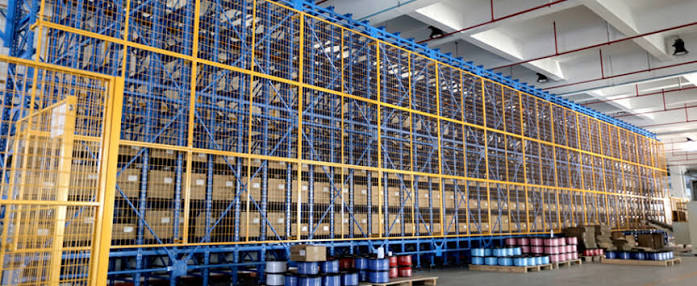
- Reinforced industrial racking structure
- Load stabilization lifting mechanism
- WMS (Warehouse Management System)
- WCS (Warehouse Control System)
- SCADA real-time monitoring platform
- Industrial-grade pallet reinforcement system
- Multi-point safety sensor array
- Anti-sway crane control system
- Explosion-proof and industrial safety configuration
Challenge
Handling 1-ton chemical drums presents extreme operational risks:
High inertia and unstable load movement
Forklift tipping or imbalance risk
Increased stopping distance and inertia control issues
Structural stress on racking systems
Human safety exposure in hazardous zones
Chemical leakage risk during impact
Traditional warehouse systems are not designed for continuous heavy-load automation under safety constraints.
Solution
A heavy-load ASRS system solves these challenges through:
Fixed-rail stacker crane movement for precision control
Fully automated lifting and placement operations
Structural reinforcement of storage racks
Sensor-driven load stability correction
Centralized WMS/WCS execution control
This creates a controlled industrial environment where human error is eliminated from heavy-load operations.
Workflow & Layout
Step 1: Inbound Heavy Load Receiving
1-ton chemical drums are:
Received at reinforced unloading stations
Scanned and registered into WMS
Verified for weight and safety classification
Step 2: Buffer Zone Stabilization
Before ASRS entry:
Loads are stabilized on heavy-duty pallets
Weight distribution is verified
Safety clearance checks are performed
Step 3: Automated Stacker Crane Pickup
The stacker crane:
Engages reinforced pallet interface
Lifts load using synchronized lifting motors
Activates anti-sway control system
Step 4: Precision Vertical & Horizontal Movement
System ensures:
Controlled acceleration and deceleration
Real-time load balance adjustment
Rail-guided movement stability
Step 5: High-Strength Rack Placement
Loads are stored in:
Reinforced steel rack structures
Predefined high-load storage zones
Optimized weight distribution layers
Step 6: Automated Retrieval Process
When needed:
WMS triggers retrieval command
Stacker crane executes safe extraction
Load is transferred to outbound system
Step 7: Outbound Heavy Load Dispatch
Final stage includes:
Conveyor transfer or lift-down system
Safety verification check
Shipping or production transfer
Results & ROI
- Safety Improvements:
- Elimination of forklift-related heavy-load accidents
- Reduced human exposure to 1-ton hazardous materials
- Improved load stability during transport
- Operational Efficiency:
- Continuous 24/7 heavy-load operation capability
- Stable high-capacity throughput
- Reduced downtime due to manual handling errors
- Engineering Efficiency:
- 200–400% improvement in heavy-load handling efficiency
- Optimized storage density for heavy pallets
- Reduced structural stress via engineered distribution
- ROI Impact:
- Heavy-load ASRS systems significantly reduce:
- Labor costs
- Accident-related losses
- Equipment damage costs
- Insurance liabilities
- Typical ROI period:
- 👉 18–36 months depending on scale and utilization
Equipment List
- Core Mechanical Systems:
- Heavy-duty stacker crane (1–3 ton class)
- Reinforced steel pallet racking system
- Anti-sway lifting mechanism
- Industrial conveyor transfer system
- Control Systems:
- WMS warehouse management system
- WCS execution control system
- SCADA monitoring platform
- Load tracking database system
- Safety Systems:
- Multi-point load sensors
- Emergency braking system
- Overload protection system
- Structural stress monitoring system
- Explosion-proof electrical components
Project Overview / Opening
Heavy-load chemical drum handling is one of the most complex challenges in industrial automation.
It requires integration of:
Structural engineering
Motion control systems
Safety monitoring technologies
Industrial logistics logic
A stacker crane ASRS system provides a unified solution that replaces manual handling with precision-controlled robotic lifting systems.
Key Points
- 1️⃣ Heavy Load Automation Engineering
- Key design principles include:
- High-torque lifting motors
- Reinforced structural steel design
- Precision motion control algorithms
- 2️⃣ Crane Lifting Stability System
- Stability is ensured through:
- Anti-sway control technology
- Multi-axis motion compensation
- Real-time load balancing
- 3️⃣ Pallet Reinforcement Design
- Heavy loads require:
- Reinforced steel pallets
- Load distribution optimization
- Shock-resistant structural design
- 4️⃣ Safety Sensor System
- Includes:
- Weight overload detection
- Position accuracy sensors
- Collision prevention systems
- Emergency stop integration
- 5️⃣ Industrial-Grade ASRS Structure
- System architecture ensures:
- High durability under continuous load cycles
- Resistance to industrial wear and stress
- Long-term operational stability
Implementation / Workflow
Phase 1: Load Analysis & Planning (2–3 weeks)
Weight classification
Structural load modeling
Phase 2: System Design (2–4 weeks)
Crane configuration design
Rack reinforcement planning
Phase 3: Engineering Integration (4–8 weeks)
Equipment manufacturing
Software system integration
Phase 4: Installation (2–4 weeks)
System deployment
Calibration and testing
Phase 5: Commissioning (1–2 weeks)
Load simulation testing
Safety validation
Customer Value / Results
Operational Value:
Safe handling of 1-ton chemical drums
Stable automated warehouse operations
Reduced dependency on manual labor
Safety Value:
Reduced heavy-load accident risk
Controlled industrial environment
Improved compliance with safety standards
Financial Value:
Lower long-term operational costs
Reduced accident-related financial exposure
Higher efficiency and throughput
Conclusion / Next Step
Heavy-load ASRS systems redefine how industrial warehouses handle extreme-weight chemical drums.
By combining stacker crane technology, reinforced structural engineering, and intelligent control systems, they achieve:
✓ Safe 1-ton load handling
✓ Stable and continuous operation
✓ Reduced human risk exposure
✓ High-efficiency automated workflows
For industries dealing with heavy chemical drums or industrial materials, this is not just automation—it is critical infrastructure for safe and scalable operations.
If you are planning a heavy-load warehouse automation project, we can design a customized ASRS solution based on your load requirements, safety standards, and operational goals.
Related Blog
Start with Your Business Challenge
Tell us about your warehouse, factory, or production requirements. We'll help you explore practical automation solutions and relevant project references.