How Integrated ASRS Systems Increase Warehouse Throughput by Over 300%
Summary
Warehouse throughput has become one of the most important performance indicators for modern logistics operations. As order volumes continue to rise and labor becomes increasingly difficult to recruit, many manufacturers and distribution centers discover that simply adding more forklifts or warehouse workers no longer improves productivity.
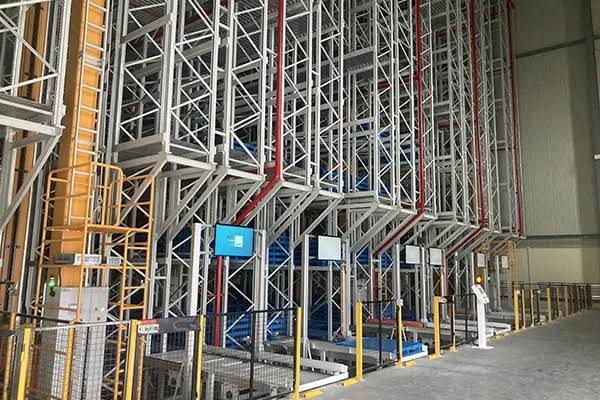
An Integrated Automated Storage and Retrieval System (ASRS) solves this challenge by combining AMR robots, RGV transfer systems, stacker cranes, conveyors, WMS, and WCS into a synchronized warehouse automation platform. Instead of optimizing individual machines, the system optimizes the entire material flow from production to storage and outbound shipping.
In many industrial applications, companies upgrading from manual warehouse operations to an integrated ASRS solution have reported throughput improvements exceeding 300%, while simultaneously reducing labor requirements, improving inventory accuracy, and increasing storage density.
This article explains where those gains come from, compares manual and automated warehouse performance, analyzes throughput bottlenecks, and demonstrates how integrated automation transforms warehouse productivity.
Technology
- An integrated ASRS system combines multiple automation technologies into one intelligent warehouse ecosystem.
- Intelligent Transportation:
- ① Autonomous Mobile Robots (AMR)
- ② Rail Guided Vehicle (RGV)
- ③ Intelligent Conveyor Network
- ④ Automatic Transfer Stations
- Automated Storage:
- ① High-Rise Stacker Crane ASRS
- ② High-Density Storage Racks
- ③ Dynamic Storage Allocation
- Intelligent Software:
- ① Warehouse Management System (WMS)
- ② Warehouse Control System (WCS)
- ③ SCADA Visualization Platform
- ④ ERP Integration
- ⑤ Intelligent Task Scheduling
- Smart Warehouse Features:
- ① Real-Time Inventory Tracking
- ② Automatic Path Optimization
- ③ Robot Fleet Management
- ④ Predictive Maintenance
- ⑤ Digital Twin Monitoring
Challenge
Many warehouses invest in additional labor or material handling equipment to increase capacity, only to find that productivity improves very little.
The reason is simple: the bottleneck is rarely one piece of equipment. It is usually the coordination of the entire warehouse workflow.
Common problems include:
① Forklifts waiting for loading instructions.
② Operators walking long distances to retrieve inventory.
③ Traffic congestion between inbound and outbound zones.
④ Idle storage equipment due to poor scheduling.
⑤ Manual inventory verification delaying shipments.
⑥ Unbalanced workflows between production, storage, and shipping.
Adding more workers often increases congestion rather than throughput.
Solution
An integrated ASRS system addresses warehouse performance as a complete logistics process rather than a collection of individual tasks.
Each automation technology is assigned a specialized function:
① AMRs transport materials flexibly between production and warehouse areas.
② RGV systems perform high-speed transfers along fixed routes.
③ Stacker cranes automate storage and retrieval with high precision.
④ WMS manages inventory and task allocation.
⑤ WCS coordinates equipment in real time.
Together, these systems eliminate unnecessary waiting, reduce manual handling, and maintain continuous material flow.
Workflow & Layout
Step ① Production Output
Finished goods are automatically identified and released from production.
Instead of waiting for forklift availability, transportation tasks are generated instantly.
↓
Step ② AMR Transportation
AMRs collect finished products directly from production lines and transport them to the warehouse buffer area.
Advantages include:
• No manual driving
• Flexible routing
• Automatic obstacle avoidance
• Continuous operation
↓
Step ③ Buffer Zone Coordination
The buffer area synchronizes production output with warehouse storage capacity.
This prevents equipment waiting time while balancing workflow fluctuations.
↓
Step ④ High-Speed RGV Transfer
RGVs move products rapidly between transfer stations and storage aisles.
Dedicated rail routes ensure predictable transportation without traffic interference.
↓
Step ⑤ Stacker Crane Storage
The stacker crane automatically stores inventory in the optimal rack location determined by the WMS.
Storage allocation considers:
• SKU type
• Inventory turnover
• Available locations
• Future retrieval efficiency
↓
Step ⑥ Retrieval & Shipping
When customer orders are released, inventory is automatically retrieved, transferred, and delivered to outbound shipping with minimal manual intervention.
Results & ROI
- 1. Before vs. After Automation
- Performance Indicator Manual Warehouse Integrated ASRS
- Material Transportation Manual Forklift AMR + RGV
- Storage Method Manual Stacker Crane ASRS
- Inventory Updates Manual Entry Real-Time WMS
- Warehouse Operation Labor Dependent Fully Coordinated
- Operation Hours Limited Shifts 24/7 Continuous
- The integrated approach significantly improves operational consistency while reducing dependence on manual labor.
- 2. Forklift vs. Automation
- Item Forklift Warehouse Integrated ASRS
- Labor Requirement High Low
- Travel Distance Long Optimized
- Traffic Congestion Frequent Minimal
- Inventory Accuracy Moderate Very High
- Operational Stability Variable Highly Stable
- Scalability Limited Excellent
- Forklifts remain valuable for certain tasks
- but integrated automation delivers far greater efficiency in high-volume warehouse environments.
- 3. Throughput Analysis
- Warehouse throughput improves because automation eliminates idle time at every stage.
- Key contributors include:
- ① Continuous transportation.
- ② Automatic task allocation.
- ③ Parallel equipment operation.
- ④ Optimized storage locations.
- ⑤ Reduced waiting between processes.
- Instead of one operator completing one task at a time
- multiple automation systems execute synchronized operations simultaneously.
- 4. Material Flow Optimization
- Traditional warehouses often experience interruptions caused by manual coordination.
- Integrated ASRS creates uninterrupted material flow:
- Production
- ↓
- AMR Pickup
- ↓
- Buffer Station
- ↓
- RGV Transfer
- ↓
- Stacker Crane Storage
- ↓
- Automatic Retrieval
- ↓
- Shipping
- This synchronized workflow minimizes bottlenecks and maintains consistent throughput throughout the day.
- 5. KPI Improvements
- Typical operational improvements include:
- KPI Typical Improvement
- Warehouse Throughput Up to 300%+
- Labor Productivity 50–80% Higher
- Inventory Accuracy Up to 99.9%
- Storage Density 30–60% Higher
- Order Processing Speed 2–5× Faster
- Equipment Utilization Significantly Improved
- Actual results depend on warehouse size
- operational complexity
- SKU characteristics
- and system configuration.
- 6. Return on Investment
- The productivity gains generated by integrated automation contribute directly to financial performance through:
- • Lower labor costs
- • Higher daily throughput
- • Faster inventory turnover
- • Reduced operational errors
- • Improved customer service
- Most projects achieve ROI within 18–36 months
- particularly in warehouses with high order volumes and multiple operating shifts.
Equipment List
- Transportation:
- ① Autonomous Mobile Robots (AMR)
- ② Rail Guided Vehicle (RGV)
- ③ Automatic Conveyors
- ④ Transfer Stations
- Storage:
- ① High-Rise Stacker Crane
- ② High-Density ASRS Racks
- ③ Intelligent Buffer Modules
- Software:
- ① WMS
- ② WCS
- ③ SCADA
- ④ ERP Interface
- Safety:
- ① Safety PLC
- ② Laser Scanners
- ③ Emergency Stop System
- ④ Fire Protection Integration
Project Overview / Opening
Warehouse throughput is determined not by the speed of individual machines, but by the efficiency of the entire logistics process.
In this integrated ASRS solution, AMRs transport products from production, RGV systems manage high-speed transfers between warehouse zones, and stacker cranes automate storage and retrieval. WMS and WCS continuously coordinate every movement, ensuring that materials flow without interruption from inbound receiving to outbound shipping.
The result is a warehouse capable of supporting significantly higher order volumes while maintaining consistent operational stability and inventory accuracy.
Key Points
- ① Throughput Depends on Workflow, Not Equipment Speed
- Purchasing faster robots does not automatically improve warehouse performance. Eliminating workflow bottlenecks delivers much greater productivity gains.
- ② Parallel Operations Multiply Capacity
- AMRs, RGVs, and stacker cranes operate simultaneously rather than sequentially, allowing transportation, storage, and retrieval to occur in parallel.
- ③ Intelligent Scheduling Eliminates Waiting
- The WCS dynamically allocates tasks based on equipment availability, reducing idle time and maximizing equipment utilization.
- ④ Real-Time Visibility Improves Decision Making
- SCADA dashboards and WMS analytics provide continuous insight into inventory status, equipment performance, and warehouse throughput.
- ⑤ Integrated Automation Supports Future Growth
- Modular architecture allows additional robots, cranes, storage aisles, and workstations to be added as business demand increases.
Implementation / Workflow
Phase ① Operational Assessment (1–2 Weeks)
Analyze warehouse processes, SKU characteristics, throughput targets, and current bottlenecks.
Phase ② System Design (2–4 Weeks)
Develop warehouse layout, transportation strategy, storage architecture, and software integration plan.
Phase ③ Manufacturing & Integration (8–16 Weeks)
Manufacture automation equipment and configure WMS, WCS, and control systems.
Phase ④ Installation & Commissioning (4–10 Weeks)
Install hardware, integrate software, conduct system testing, and validate operational performance.
Phase ⑤ Go-Live & Continuous Optimization
Monitor KPIs, optimize task scheduling, and fine-tune warehouse performance after production launch.
Customer Value / Results
Operational Benefits:
① Warehouse throughput increased by over 300%.
② Continuous 24/7 warehouse operation.
③ Reduced manual transportation.
④ Improved inventory accuracy.
⑤ Faster order fulfillment.
Financial Benefits:
① Lower labor costs.
② Reduced forklift fleet requirements.
③ Higher warehouse utilization.
④ Lower operating expenses.
⑤ Faster investment payback.
Strategic Benefits:
① Scalable automation platform.
② Improved supply chain responsiveness.
③ Better customer delivery performance.
④ Digital warehouse management.
⑤ Long-term competitive advantage.
Conclusion / Next Step
Increasing warehouse throughput is no longer about adding more forklifts or hiring more operators. Sustainable productivity improvements come from integrating transportation, storage, inventory management, and intelligent control into a single coordinated system.
By combining AMR robots, RGV transfer systems, stacker crane ASRS technology, and WMS/WCS software, companies can eliminate workflow bottlenecks, improve material flow, increase storage density, and achieve throughput improvements of 300% or more in suitable applications.
If your warehouse is struggling with congestion, labor shortages, slow order processing, or limited expansion capacity, an integrated ASRS solution can provide a scalable path toward higher efficiency and long-term operational resilience. Our engineering team can help evaluate your current warehouse, simulate throughput improvements, design an optimized material flow, and develop a turnkey automation solution tailored to your production requirements and future growth plans.
Related Blog
Start with Your Business Challenge
Tell us about your warehouse, factory, or production requirements. We'll help you explore practical automation solutions and relevant project references.