How Much Does a Complete Cartoning and Case Packing Line Cost in 2026?
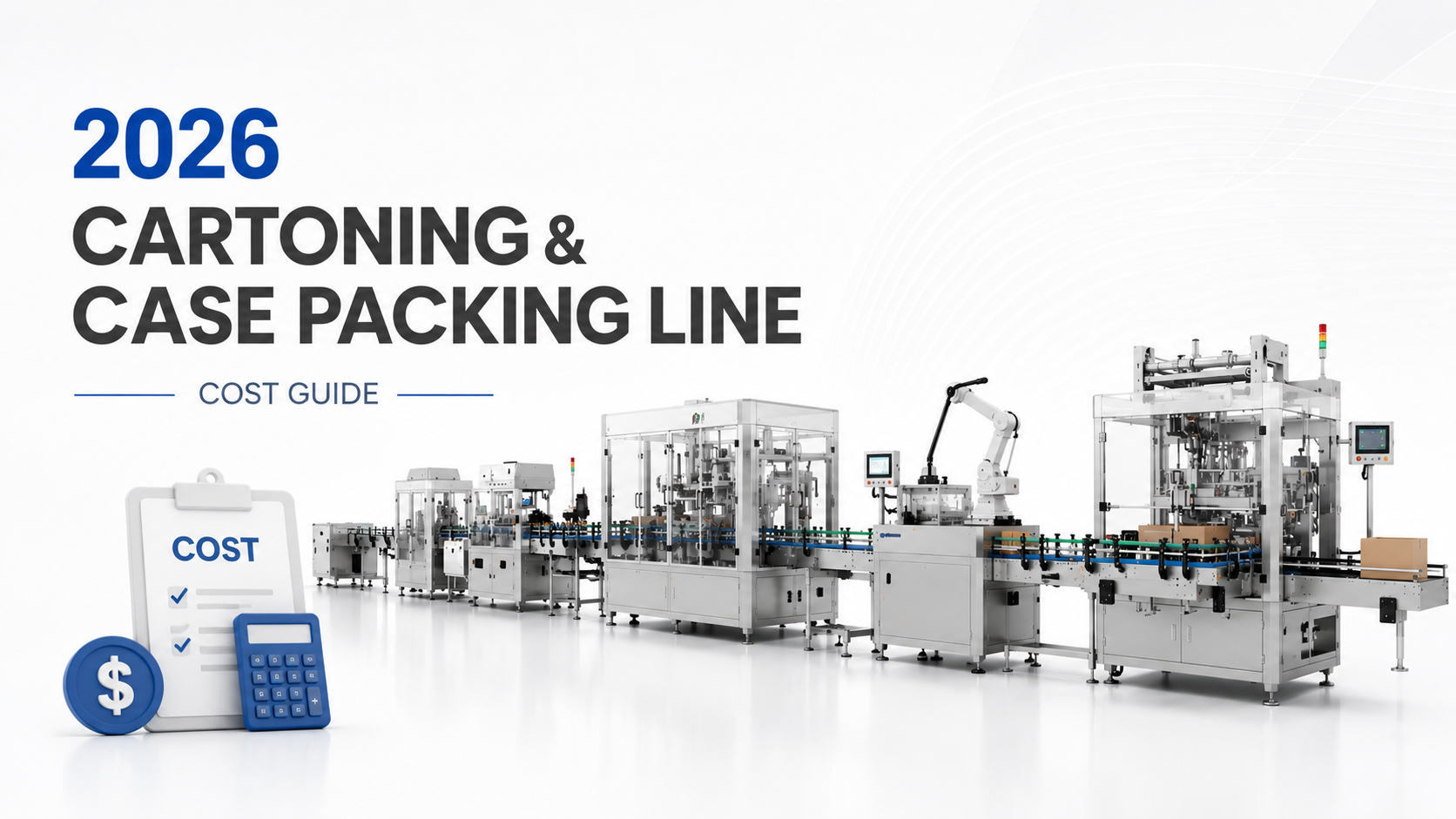
Summary
Planning to invest in a complete packaging automation system in 2026?
One of the most common questions manufacturers ask is:
“How much does a complete cartoning and case packing line actually cost?”
The answer depends on production speed, product type, automation level, software integration, and packaging complexity.
In this guide, we break down the estimated investment range, major cost drivers, ROI expectations, and how to avoid common purchasing mistakes.
Technology
- Technologies commonly used in complete packaging systems:
- Automatic Product Feeding
- Servo Cartoning Machine
- Automatic Product Grouping
- Case Packing System
- Conveyor System Integration
- PLC Control System
- HMI Touch Screen
- Vision Inspection
- Barcode Verification
- Robotic Pick-and-Place Units
- ERP/MES Integration
Challenge
Many manufacturers face uncertainty when budgeting for packaging automation projects.
Common problems include:
Equipment pricing varies significantly
Hidden installation costs
Software integration expenses
Future expansion requirements
Production speed uncertainty
Underestimating operational requirements
Difficulty calculating ROI
Without proper planning, companies often invest in systems that are either oversized or insufficient for future growth.
Solution
Instead of focusing only on machine prices, manufacturers should evaluate complete project investment requirements.
A packaging line should be designed according to:
Production output targets
Product dimensions
Packaging material requirements
Factory layout limitations
Future expansion plans
Software integration needs
A complete system approach reduces long-term operational risks.
Workflow & Layout
Typical packaging workflow:
Product Feeding
↓
Automatic Cartoning
↓
Carton Closing
↓
Product Inspection
↓
Grouping Conveyor
↓
Automatic Case Packing
↓
Case Sealing
↓
Finished Product Output
Layout recommendations:
Straight production flow
Easy maintenance access
Modular future expansion
Reduced material transportation distance
Results & ROI
- Typical estimated operational improvements:
- Labor reduction:
- 40–60%
- Packaging speed improvement:
- 30–70%
- Error reduction:
- Significantly lower
- Production consistency:
- Improved substantially
- Estimated ROI:
- 12–24 months
Equipment List
- Standard equipment:
- Product Feeding Unit
- Automatic Cartoning Machine
- Conveyor System
- Inspection System
- Product Grouping Unit
- Automatic Case Packer
- Case Sealer
- Control Cabinet
- HMI System
- Safety Protection Devices
- Optional systems:
- Vision Inspection
- Printing and Labeling
- Robot Pick-and-Place
- WMS/MES Integration
Project Overview / Opening
A complete cartoning and case packing line is no longer simply equipment installation.
It has become a strategic manufacturing investment.
Companies are increasingly moving from labor-intensive packaging processes toward intelligent automated systems to increase production efficiency and reduce long-term operational costs.
Key Points
- Key factors affecting packaging line cost:
- Production speed
- Low-speed:
- 30–60 cartons/min
- Medium-speed:
- 80–150 cartons/min
- High-speed:
- 200–400 cartons/min
- Product type
- Pharmaceutical products
- Cosmetic products
- Healthcare supplements
- Daily care products
- Automation level
- Semi-automatic
- ↓
- Fully automatic
- ↓
- Intelligent integrated system
- Software integration level
- PLC only
- MES integration
- ERP integration
- Full factory automation
Implementation / Workflow
Typical project delivery process:
Phase 1:
Requirement analysis
1–2 weeks
Phase 2:
System design
1–3 weeks
Phase 3:
Equipment manufacturing
4–8 weeks
Phase 4:
Factory testing
1 week
Phase 5:
Installation and commissioning
2–4 weeks
Estimated delivery cycle:
8–16 weeks
Customer Value / Results
Estimated investment ranges for 2026:
Basic automatic cartoning line:
USD 50,000–100,000
Cartoning + case packing line:
USD 100,000–250,000
High-speed integrated packaging system:
USD 250,000–600,000+
Smart factory integrated packaging solution:
USD 600,000–1.5M+
Benefits for manufacturers:
Reduced labor dependency
Increased packaging capacity
Better product consistency
Lower operational costs
Reduced production risk
Faster return on investment
Conclusion / Next Step
The lowest equipment price does not necessarily mean the lowest project cost.
The right packaging solution depends on production targets, future expansion plans, and operational requirements.
Before making an investment decision, manufacturers should evaluate:
✓ Production capacity
✓ Future growth plans
✓ Software integration requirements
✓ Expected ROI
✓ Factory layout limitations
If you are planning a packaging automation project, we can help you design the system and estimate your investment requirements.
Related Blog
Start with Your Business Challenge
Tell us about your warehouse, factory, or production requirements. We'll help you explore practical automation solutions and relevant project references.