Is a Fully Automated ASRS Warehouse Worth the Investment? ROI, Cost & Long-Term Benefits
Summary
Investing in a fully automated ASRS (Automated Storage and Retrieval System) is one of the most significant capital decisions a manufacturer, logistics provider, or distribution center can make. While the initial investment can range from several hundred thousand dollars to several million, the long-term operational benefits often outweigh the upfront costs.
The real question is not "How much does an ASRS cost?" but rather "How much does an inefficient warehouse cost every year?"
Manual warehouses continuously generate hidden expenses through labor shortages, forklift operations, inventory errors, inefficient space utilization, workplace accidents, and limited scalability. These operational inefficiencies accumulate year after year, reducing profitability and restricting business growth.
This guide provides a complete ROI analysis of warehouse automation, including CAPEX vs OPEX, labor savings, forklift replacement, maintenance costs, expansion value, operational risk reduction, and long-term strategic benefits. Whether you are planning a new warehouse or upgrading an existing facility, this article will help you evaluate whether a fully automated ASRS is the right investment for your business.
Technology
- A complete ASRS investment includes both automation equipment and intelligent software.
- Material Handling Equipment:
- ① Autonomous Mobile Robots (AMR)
- ② Rail Guided Vehicles (RGV)
- ③ Stacker Crane ASRS
- ④ Conveyor Systems
- ⑤ Automatic Transfer Stations
- Storage Systems:
- ① High-Density Storage Racking
- ② Pallet Storage
- ③ Tote & Bin Storage
- ④ Automated Buffer Areas
- Software Platform:
- ① Warehouse Management System (WMS)
- ② Warehouse Control System (WCS)
- ③ Robot Fleet Management
- ④ SCADA Visualization
- ⑤ ERP/MES Integration
- Safety & Control:
- ① PLC Controllers
- ② Laser Safety Systems
- ③ Fire Protection Integration
- ④ Energy Management
Challenge
Warehouse managers often hesitate to automate because they focus primarily on the initial investment.
Typical concerns include:
① High capital expenditure.
② Long payback period.
③ Complex implementation.
④ System maintenance.
⑤ Technology risks.
However, many companies overlook the ongoing costs of manual warehouse operations. Labor shortages, forklift fleets, inventory inaccuracies, inefficient storage, and operational delays create recurring expenses that continue to grow every year.
The true comparison should be between the lifetime cost of manual operations and the lifetime value of warehouse automation.
Solution
A fully integrated ASRS improves nearly every aspect of warehouse operations.
Production
↓
AMR Transportation
↓
RGV Material Transfer
↓
Stacker Crane Storage
↓
WMS Inventory Management
↓
WCS Equipment Scheduling
↓
SCADA Monitoring
↓
Automated Shipping
This integrated workflow reduces labor dependency, increases throughput, improves inventory accuracy, and creates a scalable warehouse platform capable of supporting long-term business growth.
Results & ROI
- 1. Typical Financial Impact
- Companies implementing integrated ASRS solutions commonly achieve:
- • 50–80% reduction in warehouse labor
- • Up to 99.9% inventory accuracy
- • 200–300% higher throughput
- • 30–50% better space utilization
- • Significantly lower forklift operating costs
- Actual improvements depend on warehouse size
- SKU complexity
- and operational requirements.
- 2. Example ROI Model
- Annual Benefit Estimated Contribution
- Labor Savings High
- Forklift Reduction Medium
- Inventory Accuracy Medium
- Space Utilization High
- Faster Throughput High
- Lower Product Damage Medium
- Reduced Operating Risk Medium
- The combined effect of multiple savings categories usually delivers a stronger business case than any single improvement alone.
- 3. Hidden Financial Benefits
- Warehouse automation also reduces costs that are often overlooked during investment planning.
- Examples include:
- • Lower employee turnover.
- • Reduced recruitment costs.
- • Fewer workplace injuries.
- • Better inventory visibility.
- • Reduced stock shortages.
- • Improved customer retention.
- These hidden benefits strengthen the overall return on investment over time.
- 4. Investment Timeline
- Typical implementation schedule:
- Project Planning
- ↓
- System Design
- ↓
- Equipment Manufacturing
- ↓
- Installation
- ↓
- Commissioning
- ↓
- Go-Live
- ↓
- Performance Optimization
- ↓
- ROI Recovery (Typically 18–36 Months)
- 5. Why ROI Continues to Improve
- Unlike manual warehouses
- automated systems become more valuable as order volumes increase.
- Higher throughput allows fixed software and equipment investments to be spread across more transactions
- improving cost efficiency over time.
- This creates a compounding return that supports long-term operational growth.
Equipment List
- Transportation:
- ① AMR Robots
- ② RGV Systems
- ③ Conveyor Systems
- ④ Transfer Stations
- Storage:
- ① Stacker Crane ASRS
- ② High-Density Storage Racks
- ③ Automated Buffer Systems
- Software:
- ① WMS
- ② WCS
- ③ SCADA
- ④ ERP Integration
- ⑤ MES Integration
- Safety Systems:
- ① PLC Controllers
- ② Safety PLC
- ③ Laser Scanners
- ④ Fire Protection Integration
Project Overview / Opening
A fully automated ASRS warehouse is more than a collection of robots and storage equipment. It is a strategic investment that integrates intelligent software, automated material handling, and high-density storage into one scalable logistics platform.
By reducing labor dependency, improving inventory accuracy, optimizing warehouse space, and increasing operational efficiency, the system delivers measurable financial returns while preparing businesses for long-term growth and digital transformation.
Key Points
- ① ROI Comes from Multiple Sources
- The business case for automation is built on the combined impact of labor savings, forklift reduction, inventory accuracy, space optimization, and higher throughput rather than a single cost category.
- ② CAPEX Creates Long-Term OPEX Savings
- Although automation requires higher upfront investment, it significantly lowers recurring operating costs and improves financial predictability over the system's lifecycle.
- ③ Automation Reduces Operational Risk
- Standardized processes, intelligent scheduling, and real-time monitoring minimize human error, workplace accidents, and inventory discrepancies.
- ④ Modular Systems Protect Future Investments
- Scalable architectures allow businesses to expand warehouse capacity incrementally without replacing existing infrastructure.
- ⑤ Strategic Value Extends Beyond Financial ROI
- Warehouse automation strengthens supply chain resilience, supports smart manufacturing initiatives, and enhances competitiveness in increasingly automated global markets.
Implementation / Workflow
Phase ① Business & ROI Assessment (1–2 Weeks)
Analyze current operations, identify cost drivers, and build a financial model comparing manual and automated warehouse scenarios.
Phase ② Warehouse & System Design (2–4 Weeks)
Design the automation architecture, equipment layout, storage strategy, and software integration plan.
Phase ③ Equipment Manufacturing (8–16 Weeks)
Manufacture AMRs, RGVs, stacker cranes, storage systems, and control hardware.
Phase ④ Installation & Integration (4–10 Weeks)
Install equipment, deploy WMS, WCS, PLC, and SCADA, and integrate with ERP/MES systems.
Phase ⑤ Commissioning & ROI Optimization (2–4 Weeks)
Validate performance, optimize workflows, train operators, and establish preventive maintenance programs to maximize long-term return on investment.
Customer Value / Results
Operational Value:
① Higher warehouse throughput.
② Better inventory accuracy.
③ Reduced manual handling.
④ Continuous 24/7 operations.
⑤ Greater process stability.
Financial Value:
① Lower labor costs
② Reduced forklift expenses.
③ Better warehouse utilization.
④ Predictable maintenance costs.
⑤ Faster investment recovery.
Strategic Value:
① Smart factory readiness.
② Digital supply chain integration.
③ Modular expansion capability.
④ Enhanced customer responsiveness.
⑤ Sustainable long-term competitiveness.
Conclusion / Next Step
A fully automated ASRS warehouse should be evaluated not only by its purchase price but by its lifetime contribution to operational efficiency and business growth.
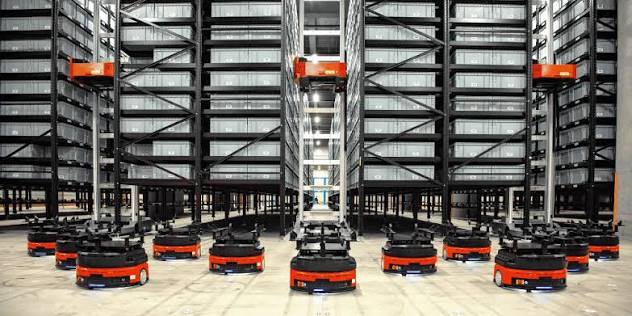
By combining AMRs for flexible transport, RGVs for high-speed material flow, stacker cranes for automated storage, and WMS/WCS for intelligent control, organizations can reduce labor dependency, replace many forklift operations, improve inventory accuracy, increase throughput, and create a scalable warehouse platform that supports future expansion.
For manufacturers, logistics providers, and distribution centers facing rising labor costs, increasing order volumes, and higher customer expectations, a well-designed ASRS is more than an automation project. It is a long-term strategic investment that delivers measurable financial returns, strengthens operational resilience, and builds a future-ready foundation for sustainable growth.
Related Blog
Start with Your Business Challenge
Tell us about your warehouse, factory, or production requirements. We'll help you explore practical automation solutions and relevant project references.