CTU Warehouse Design Guide: How to Build a High-Density Goods-to-Person System?
Summary
Designing a high-density CTU (Case Transfer Unit) Goods-to-Person warehouse is not just about adding robots—it is about building a fully optimized system combining layout engineering, storage density design, robotic routing, and software orchestration.
This guide explains how to design a scalable CTU warehouse that maximizes:
Storage density
Picking efficiency
System throughput
ROI performance
It is intended for engineering teams, warehouse planners, and automation investors evaluating CTU-based logistics systems.
Technology
- A high-density CTU warehouse system typically includes:
- CTU robotic shuttle network
- High-density shelving system (multi-level racks)
- Ergonomic Goods-to-Person picking stations
- WMS (Warehouse Management System)
- WCS (Warehouse Control System)
- SCADA visualization platform
- Intelligent task scheduling engine
- Barcode / RFID tracking system
- Conveyor or buffer zones
- Safety and collision avoidance systems
Challenge
Designing a CTU warehouse is complex because multiple constraints must be balanced simultaneously:
Maximizing storage density without reducing robot efficiency
Ensuring high throughput under peak order conditions
Avoiding congestion between CTU robots
Maintaining scalability for future expansion
Integrating software and mechanical systems seamlessly
Poor design leads to:
Bottlenecks in picking flow
Underutilized storage space
Low robot efficiency
High operational cost
Solution
A properly designed CTU warehouse uses a system-level engineering approach, integrating:
Zonal layout planning
Robot-to-rack optimization
Goods-to-person workstation balancing
Dynamic task scheduling via WMS/WCS
The goal is to create a continuous, non-blocking workflow where goods move intelligently to operators with minimal delay.
Workflow & Layout
Step 1: Inbound Receiving Zone Design
Goods arrive and are scanned into WMS
Buffer zones separate inbound flow from storage area
Standardized pallet or case entry points reduce congestion
Step 2: High-Density Storage Zone
Multi-layer rack systems maximize vertical space
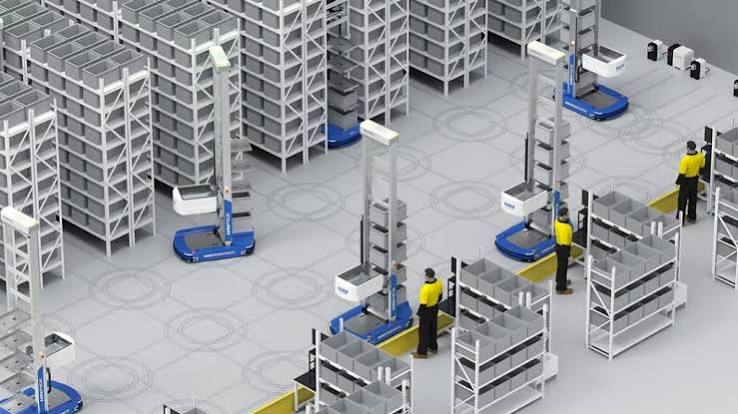
CTU robots operate within defined aisles
SKU placement optimized based on demand frequency
Step 3: CTU Robot Navigation Layer
Robots operate on structured grid pathways
Task allocation avoids route conflict
Dynamic scheduling ensures continuous flow
Step 4: Goods-to-Person Picking Zone
CTU delivers bins to operator stations
Ergonomic workstation layout reduces fatigue
Real-time verification improves accuracy
Step 5: Outbound Processing Zone
Completed orders move to packing systems
Conveyor integration ensures continuous flow
Shipping consolidation zones optimize dispatch
Results & ROI
- 1️⃣ Storage Density Optimization
- CTU systems increase storage density by:
- Eliminating wide forklift aisles
- Using vertical rack expansion
- Optimizing SKU slotting algorithms
- Typical improvement:
- 👉 2x–4x storage efficiency vs manual warehouses
- 2️⃣ Picking Efficiency Improvement
- By removing walking time:
- Workers stay at fixed stations
- Robots handle all retrieval tasks
- Parallel processing increases throughput
- Efficiency gain:
- 👉 Up to 300% picking efficiency improvement
- 3️⃣ Bottleneck Reduction Strategy
- CTU design eliminates bottlenecks through:
- Multi-station picking distribution
- Parallel robot operations
- Smart task balancing via WCS
- 4️⃣ Scalability Engineering
- CTU systems scale by:
- Adding additional robots
- Expanding rack modules
- Increasing workstation capacity
- No structural redesign required for expansion.
- 5️⃣ ROI Impact
- Proper CTU warehouse design typically achieves:
- 👉 18–36 months ROI period
- Driven by:
- Labor reduction
- Efficiency improvement
- Higher storage utilization
- Reduced error rate
Equipment List
- Core Hardware:
- CTU robotic shuttle fleet
- High-density modular rack system
- Goods-to-person picking stations
- Conveyor or buffer transfer system
- Software Systems:
- WMS warehouse management system
- WCS control system
- SCADA visualization platform
- AI task scheduling engine
- Safety Systems:
- Collision detection sensors
- Light curtain protection systems
- Emergency stop infrastructure
- System diagnostics monitoring
Project Overview / Opening
A CTU warehouse is not simply an automation upgrade—it is a fully engineered logistics ecosystem where storage, robotics, and software work as a unified system.
The goal is to eliminate inefficiencies in traditional warehouse design and replace them with a high-density, goods-to-person operational model.
Key Points
- 1️⃣ High-Density Design Principle
- Key principle:
- 👉 maximize storage while preserving robot mobility efficiency
- 2️⃣ Zonal Architecture Design
- A CTU warehouse is divided into:
- Inbound zone
- Storage zone
- Picking zone
- Outbound zone
- 3️⃣ Robot Traffic Optimization
- Efficiency depends on:
- Route planning
- Task allocation logic
- Congestion avoidance
- 4️⃣ Picking Station Design
- Critica factors:
- Ergonomics
- Speed of verification
- Parallel workstation scaling
- 5️⃣ Software Coordination Layer
- WMS/WCS ensures:
- Task scheduling
- Inventory accuracy
- System-wide optimization
Implementation / Workflow
Phase 1: Requirement Analysis (2–3 weeks)
SKU analysis
Throughput forecasting
Storage density targets
Phase 2: System Layout Design (2–4 weeks)
Zoning architecture
Rack and robot configuration
Phase 3: Engineering Integration (4–8 weeks)
Hardware installation
Software deployment (WMS/WCS/SCADA)
Phase 4: System Deployment (2–4 weeks)
Commissioning
Testing and calibration
Phase 5: Optimization (1–2 weeks)
Throughput tuning
Bottleneck elimination
Customer Value / Results
Operational Value:
High-density warehouse utilization
Stable goods-to-person workflow
Reduced manual handling dependency
Financial Value:
Lower long-term labor cost
Improved ROI efficiency
Predictable operational scaling
Strategic Value:
Future-proof warehouse architecture
Scalable automation framework
Competitive logistics advantage
Conclusion / Next Step
A well-designed CTU warehouse is the foundation of high-performance Goods-to-Person automation.
Success depends not just on robots, but on system-level design: layout, workflow, software coordination, and scalability planning.
When properly engineered, CTU systems deliver:
✓ Maximum storage density
✓ High-speed picking performance
✓ Scalable expansion capability
✓ Strong ROI within 18–36 months
If you are planning a CTU warehouse project, we can design a full system layout and simulation model based on your SKU structure, order volume, and growth strategy.
Related Blog
Start with Your Business Challenge
Tell us about your warehouse, factory, or production requirements. We'll help you explore practical automation solutions and relevant project references.