Manual Chemical Warehouse vs Automated ASRS: Which One Is More Cost Efficient?
Summary
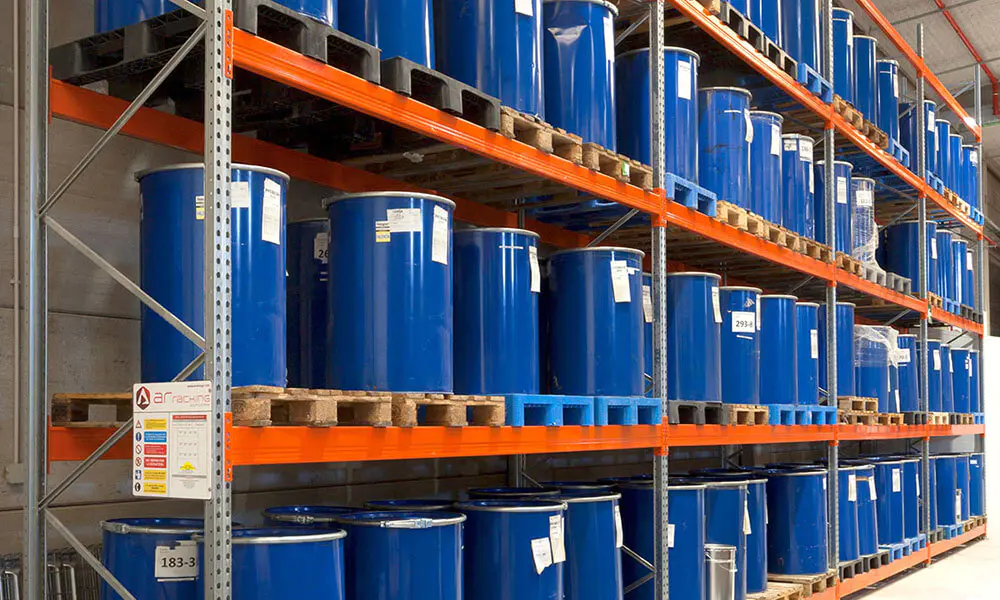
Chemical warehouses traditionally rely on manual forklift operations, human-driven storage systems, and labor-intensive processes.
However, with increasing labor costs, stricter safety regulations, and rising efficiency demands, many companies are shifting toward automated ASRS (Automated Storage and Retrieval Systems).
This article provides a deep comparison between manual forklift-based chemical warehouses and automated stacker crane ASRS systems, focusing on:
Cost structure differences
Labor vs automation efficiency
Hidden accident costs
Long-term operational performance
ROI and scalability analysis
Technology
- Manual Chemical Warehouse System:
- Forklifts for all material movement
- Manual racking and storage
- Human-driven inventory management
- Paper or basic digital tracking systems
- Automated ASRS System:
- Stacker crane automation system
- WMS (Warehouse Management System)
- WCS (Warehouse Control System)
- SCADA real-time monitoring
- Automated conveyor systems
- Sensor-based safety control
Challenge
Chemical warehouses face increasing pressure from:
Rising labor costs
High accident risk in forklift operations
Strict safety compliance requirements
Inefficient manual handling processes
Limited scalability of labor-based systems
Manual systems often appear cheaper initially but create significant long-term hidden costs.
Solution
Automated ASRS systems solve these challenges by:
Eliminating forklift dependency in storage zones
Reducing human exposure to hazardous materials
Standardizing material handling processes
Increasing warehouse efficiency and density
Improving safety compliance automatically
This transforms warehouse economics from labor-intensive cost structure → automation-driven efficiency model.
Workflow & Layout
Manual Chemical Warehouse Workflow:
Forklift picks up chemical drum pallet
Operator transports load through warehouse aisles
Manual placement into racking system
Repeated human-driven retrieval process
Inventory updated manually or semi-manually
⚠ High dependency on human accuracy and safety awareness
Automated ASRS Workflow:
WMS assigns storage location
Conveyor system transfers goods
Stacker crane executes storage automatically
System retrieves goods on demand
SCADA monitors entire operation in real time
✔ Fully automated and controlled workflow
✔ No human presence required in storage aisles
Results & ROI
- 1️⃣ Manual Forklift Warehouse Cost Structure
- Manual systems include:
- High labor cost (multiple shifts)
- Forklift maintenance and fuel/energy costs
- Training and certification costs
- Accident-related operational losses
- 2️⃣ Automation vs Labor Cost Comparison
- Manual System:
- Linear cost increase with scale
- High dependency on workforce availability
- High variability in productivity
- ASRS System:
- Fixed capital investment
- Stable operational cost
- High scalability without proportional labor increase
- 3️⃣ Accident Cost Hidden Loss
- Manual warehouses often underestimate:
- Injury compensation costs
- Insurance premium increases
- Production downtime after incidents
- Product damage and contamination risks
- These hidden costs significantly impact long-term profitability.
- 4️⃣ Efficiency Gap Analysis
- Manual Warehouse:
- Lower throughput capacity
- Higher error rate
- Slower inbound/outbound processing
- ASRS Warehouse:
- 200–400% efficiency improvement
- Stable 24/7 operation
- High accuracy and traceability
- 5️⃣ Long-Term Operational Cost Model
- Over a 5–10 year period:
- Manual System:
- Increasing labor costs
- Rising accident risks
- Higher maintenance inefficiencies
- ASRS System:
- Stable maintenance cost
- Reduced labor dependency
- Predictable operational expenses
Equipment List
- Manual Warehouse:
- Forklifts
- Manual racking systems
- Basic inventory tracking tools
- Safety equipment for operators
- ASRS Warehouse:
- Stacker crane ASRS system
- Reinforced racking system
- Conveyor transfer systems
- WMS/WCS software
- SCADA monitoring platform
- Safety sensor systems
Project Overview / Opening
Chemical warehouse operations are evolving from labor-intensive manual systems toward fully automated ASRS solutions.
The key driver is not only efficiency but also cost predictability, safety improvement, and long-term scalability.
Key Points
- 1️⃣ Manual Forklift Warehouse Cost
- Main cost drivers include:
- Labor wages
- Forklift fleet maintenance
- Safety management overhead
- 2️⃣ Automation vs Labor Cost Comparison
- Automation reduces:
- Workforce dependency
- Operational variability
- Long-term cost growth
- 3️⃣ Accident Cost Hidden Loss
- Hidden costs include:
- Downtime after accidents
- Insurance premium increases
- Legal and compliance risks
- 4️⃣ Efficiency Gap Analysis
- ASRS systems outperform manual systems in:
- Speed
- Accuracy
- Scalability
- 5️⃣ Long-Term Operational Cost Model
- Automation shifts cost structure to:
- Predictable CAPEX
- Lower OPEX over time
- Higher ROI stability
Implementation / Workflow
Phase 1: Cost & Operation Audit (2–3 weeks)
Manual workflow analysis
Cost benchmarking
Phase 2: System Design (2–4 weeks)
ASRS layout planning
Automation modeling
Phase 3: Engineering Integration (4–8 weeks)
System installation
Software deployment
Phase 4: Deployment (2–4 weeks)
Equipment commissioning
Performance tuning
Phase 5: Optimization (1–2 weeks)
Efficiency calibration
Final validation
Customer Value / Results
Operational Value:
Higher throughput efficiency
Stable automated workflow
Reduced labor dependency
Safety Value:
Lower accident risk
Reduced hazardous exposure
Improved compliance
Financial Value:
Lower long-term operating cost
Reduced hidden losses
Improved ROI predictability
Conclusion / Next Step
While manual chemical warehouses may appear cost-effective in the short term, they accumulate significant hidden costs over time.
Automated ASRS systems provide:
✓ Higher efficiency
✓ Lower long-term operational cost
✓ Improved safety performance
✓ Scalable warehouse architecture
In most industrial scenarios, ASRS becomes the more cost-efficient solution within a 3–5 year lifecycle.
If you are evaluating warehouse modernization, we can help you build a detailed cost comparison model and ASRS system design tailored to your operation.
Related Blog
Start with Your Business Challenge
Tell us about your warehouse, factory, or production requirements. We'll help you explore practical automation solutions and relevant project references.