Warehouse Automation for Chemical Industry: ROI, Cost & Safety Analysis
Summary
Chemical industry warehouse automation is no longer just an efficiency upgrade—it is a strategic investment decision involving safety, cost structure optimization, and long-term operational scalability.
This article provides a full ROI, CAPEX vs OPEX breakdown, labor savings model, and safety cost reduction analysis for chemical warehouse automation systems, especially stacker crane ASRS-based solutions.
The goal is to help decision-makers evaluate whether automation delivers measurable financial and operational returns within a typical 18–36 month payback period.
Technology
- A modern chemical warehouse automation system typically includes:
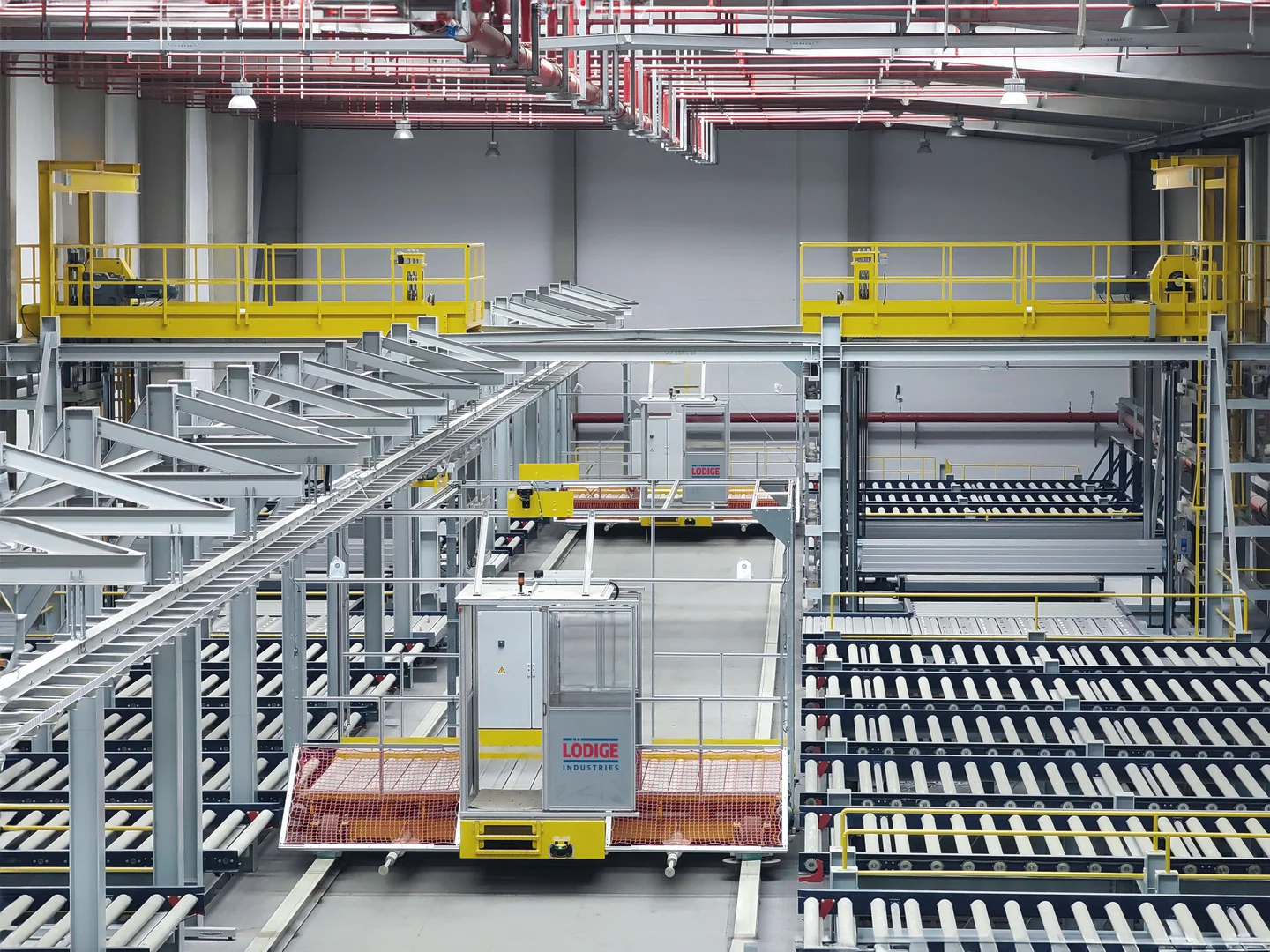
- Heavy-duty stacker crane ASRS system
- WMS (Warehouse Management System)
- WCS (Warehouse Control System)
- SCADA real-time monitoring platform
- Reinforced chemical storage racking system
- Conveyor-based automated transfer systems
- Explosion-proof electrical infrastructure
- Safety sensor and gas detection systems
- Load monitoring and tracking systems
- Industrial zoning and compliance control system
Challenge
Chemical warehouse operations face three major financial and operational challenges:
High labor dependency for forklift and manual handling
Significant accident-related cost exposure
Inefficient space and process utilization
These issues create:
Unpredictable OPEX structure
High insurance and liability costs
Limited scalability for growing demand
Without automation, long-term operational costs increase linearly with volume growth.
Solution
Warehouse automation using ASRS technology transforms the cost structure by:
Replacing manual labor with automated systems
Reducing accident-related financial exposure
Increasing storage density and throughput efficiency
Standardizing operational performance
The system shifts warehouse economics from labor-driven cost growth → capital-efficient automation model.
Workflow & Layout
Automated chemical warehouse workflow includes:
Step 1: Inbound Processing
Chemical drums or pallets are received
Data is recorded into WMS
Safety classification is assigned
Step 2: Automated Storage Assignment
WMS calculates optimal storage location
WCS executes storage instructions
Stack crane performs placement
Step 3: Storage Optimization
High-density vertical storage utilization
Hazard-based zoning separation
Continuous inventory tracking
Step 4: Retrieval & Dispatch
Automated retrieval triggered by WMS
Stack crane executes movement
Conveyor systems handle outbound flow
Results & ROI
- 1️⃣ Chemical Industry Automation ROI Model
- ROI is driven by four major factors:
- Labor cost reduction
- Safety incident cost reduction
- Space utilization improvement
- Efficiency and throughput increase
- 2️⃣ CAPEX vs OPEX Breakdown
- CAPEX (Initial Investment):
- ASRS stacker crane system
- Racking and structural engineering
- Software systems (WMS/WCS/SCADA)
- Installation and commissioning
- OPEX (Operational Cost):
- Maintenance and system support
- Electricity consumption
- Software updates
- Minimal staffing for supervision
- Compared to traditional warehouses:
- 👉 CAPEX increases
- 👉 OPEX decreases significantly
- 3️⃣ Labor Savings Model
- Automation reduces labor cost through:
- Elimination of forklift operators in storage zones
- Reduced manual handling requirements
- Lower supervision staff requirements
- Typical labor reduction:
- 👉 40%–80% depending on system scale
- 4️⃣ Safety Cost Reduction
- Safety-related savings include:
- Lower workplace accident compensation
- Reduced insurance premiums
- Reduced downtime from incidents
- Lower compliance violation risks
- 5️⃣ Payback Period (18–36 Months)
- ROI timeline depends on:
- Warehouse size
- Labor cost level
- Automation depth
- Throughput intensity
- Typical range:
- 👉 18–36 months payback period
Equipment List
- Core Hardware:
- Stacker crane ASRS system
- Industrial racking system
- Conveyor transfer system
- Buffer zone handling systems
- Software Systems:
- WMS warehouse management system
- WCS execution control system
- SCADA monitoring platform
- Inventory optimization system
- Safety Systems:
- Gas detection sensors
- Explosion-proof electrical system
- Emergency shutdown system
- Load monitoring sensors
- Fire suppression integration
Project Overview / Opening
Chemical warehouse automation represents a shift from labor-intensive operations to capital-driven intelligent systems.
The financial impact is not limited to cost reduction—it also improves:
Safety performance
Operational stability
Scalability for future expansion
Key Points
- 1️⃣ Chemical Industry Automation ROI
- ROI is driven by:
- Labor reduction
- Safety risk reduction
- Efficiency improvement
- Storage optimization
- 2️⃣ CAPEX vs OPEX Breakdown
- Key insight:
- Higher upfront investment
- Lower long-term operational costs
- 3️⃣ Labor Savings Model
- Automation significantly reduces:
- Forklift dependency
- Manual handling tasks
- Shift staffing requirements
- 4️⃣ Safety Cost Reduction
- Safety automation reduces:
- Accident probability
- Liability exposure
- Operational disruptions
- 5️⃣ Payback Period (18–36 Months)
- The system typically achieves ROI within:
- 👉 1.5 to 3 years
Implementation / Workflow
Phase 1: Financial & Operational Analysis (2–3 weeks)
Cost modeling
ROI projection
Phase 2: System Design (2–4 weeks)
Layout optimization
Automation configuration
Phase 3: Engineering Integration (4–8 weeks)
System construction
Software integration
Phase 4: Installation (2–4 weeks)
Equipment deployment
Calibration
Phase 5: Commissioning (1–2 weeks)
Performance validation
Final acceptance testing
Customer Value / Results
Operational Value:
Stable automated warehouse operations
Reduced labor dependency
Higher throughput consistency
Safety Value:
Lower accident rates
Improved compliance
Reduced risk exposure
Financial Value:
Predictable long-term cost structure
18–36 month ROI cycle
Reduced OPEX volatility
Conclusion / Next Step
Chemical warehouse automation is a strategic investment decision, not just a technical upgrade.
When properly implemented, ASRS systems deliver:
✓ Significant labor cost reduction
✓ Strong safety improvement
✓ Predictable ROI within 18–36 months
✓ Scalable operational architecture
For companies evaluating automation investment, the key is not whether to automate—but how fast automation can improve financial and safety performance.
If you are planning a chemical warehouse automation project, we can help you build a detailed ROI model and system design tailored to your operational and financial goals.
Related Blog
Start with Your Business Challenge
Tell us about your warehouse, factory, or production requirements. We'll help you explore practical automation solutions and relevant project references.