What Machines Are Required in a Tomato Paste Production Line? Complete Equipment Breakdown
Summary
This article provides a complete breakdown of all machines required in a fully automated tomato paste production line, from raw tomato receiving to washing, pulping, sterilization, filling, packaging, and warehouse storage.
It is designed for food factory investors and engineers who need a clear equipment list for plant design, procurement planning, and production line setup.
Technology
- Industrial food processing system
- Tomato washing and sorting automation system
- Crushing and pulping machinery
- Vacuum evaporation concentration system
- Sterilization (retort) processing equipment
- Aseptic filling and sealing machines
- Automatic labeling and coding systems
- Weight inspection and quality control systems
- PLC / SCADA control systems
- MES production management system
- ASRS automated warehouse system
- Robotic palletizing and logistics systems
Challenge
Food manufacturers often struggle with equipment planning due to:
Lack of complete machine list for full production line
Unclear system boundaries between processing, packaging, and logistics
Over-purchasing or missing key equipment
Poor compatibility between different machine suppliers
Inefficient factory layout due to incorrect equipment selection
Difficulty estimating total investment cost
These issues lead to inefficient plant design and production bottlenecks.
Solution
A complete tomato paste production line should be designed as an integrated system:
Raw material handling and washing systems
Core processing and concentration equipment
Sterilization and aseptic filling systems
Packaging and labeling automation
Quality inspection and control systems
Centralized PLC/MES control system
Warehouse and logistics automation (ASRS integration)
Modular and scalable factory design
This ensures full-process coordination and stable production.
Workflow & Layout
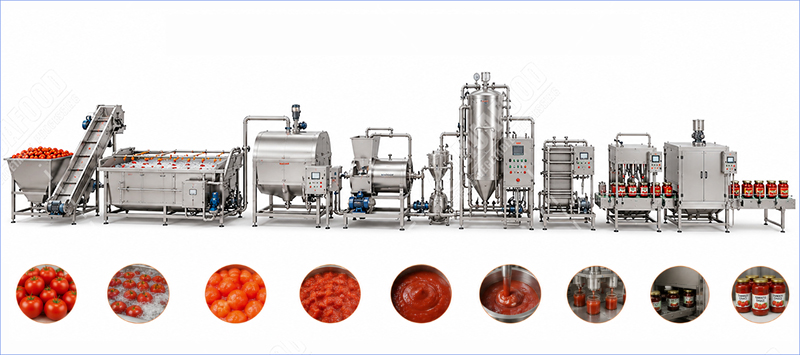
1.Tomato receiving and unloading system
2.Washing and sorting equipment
3.Crushing and pulping system
4.Pulp separation and refining system
5.Vacuum evaporation concentration system
6.Sterilization system (retort or UHT)
7.Aseptic filling machine
8.Sealing and cooling system
9.Labeling and coding system
10.Weight inspection system
11.Cartoning and packaging system
12.Robotic palletizing system
13.ASRS warehouse storage system
Results & ROI
- Production efficiency improved through system integration
- Reduced equipment mismatch and downtime
- Lower labor requirement across production stages
- Improved product consistency and quality
- Reduced food safety risks
- Higher automation level increases ROI
- Faster production scalability
- Lower long-term maintenance cost
Equipment List
- 1.Tomato washing and sorting machine
- 2.Crushing and pulping equipment
- 3.Pulp separation system
- 4.Vacuum evaporation concentration system
- 5.Sterilization and retort equipment
- 6.Aseptic filling machine
- 7.Automatic sealing machine
- 8.Cooling conveyor system
- 9.Labeling and coding machines
- 10.Quality inspection system
- 11.Cartoning machine
- 12.Palletizing robot system
- 13.ASRS automated warehouse system
- 14.PLC control system
Project Overview / Opening
A tomato paste production line is not a single machine but a complete system composed of interconnected food processing and automation equipment.
Understanding the full equipment breakdown is essential for building an efficient, scalable, and profitable food factory.
Key Points
- Production lines are system-based, not machine-based
- Equipment compatibility determines production stability
- Automation improves overall factory efficiency
- Packaging and logistics are as important as processing
- ASRS integration enhances long-term scalability
- Proper equipment selection reduces investment risk
- PLC/MES systems enable full production control
Implementation / Workflow
Equipment planning and factory setup includes:
1.Production capacity planning (tons/day)
2.Process flow design and system mapping
3.Equipment selection and supplier coordination
4.Factory layout and infrastructure planning
5.Automation system integration design
6.Installation and commissioning
7.Packaging and logistics system setup
8.Final system testing and optimization
Customer Value / Results
This equipment breakdown helps customers achieve:
Clear understanding of full production system
Reduced procurement mistakes and overinvestment
Better factory layout and planning efficiency
Improved production line stability
Lower long-term operational cost
Faster factory setup and commissioning
Stronger investment decision confidence
Scalable production expansion capability
Conclusion / Next Step
A successful tomato paste factory depends on selecting and integrating the right equipment into a complete production system.
If you are planning a food processing plant or upgrading your production line, we can support you with:
Full equipment list and configuration design
Turnkey production line setup
Factory layout planning
Automation system integration
Cost estimation and ROI analysis
Complete project execution support
Related Blog
Start with Your Business Challenge
Tell us about your warehouse, factory, or production requirements. We'll help you explore practical automation solutions and relevant project references.