Best Packaging Automation Solutions for Beauty and Cosmetic Manufacturers
Summary
The beauty and cosmetics industry is evolving rapidly.
Manufacturers face increasing pressure from shorter product life cycles, frequent SKU changes, rising labor costs, and higher customer expectations for packaging quality.
Traditional packaging operations often struggle to support high product variety and growing production demand.
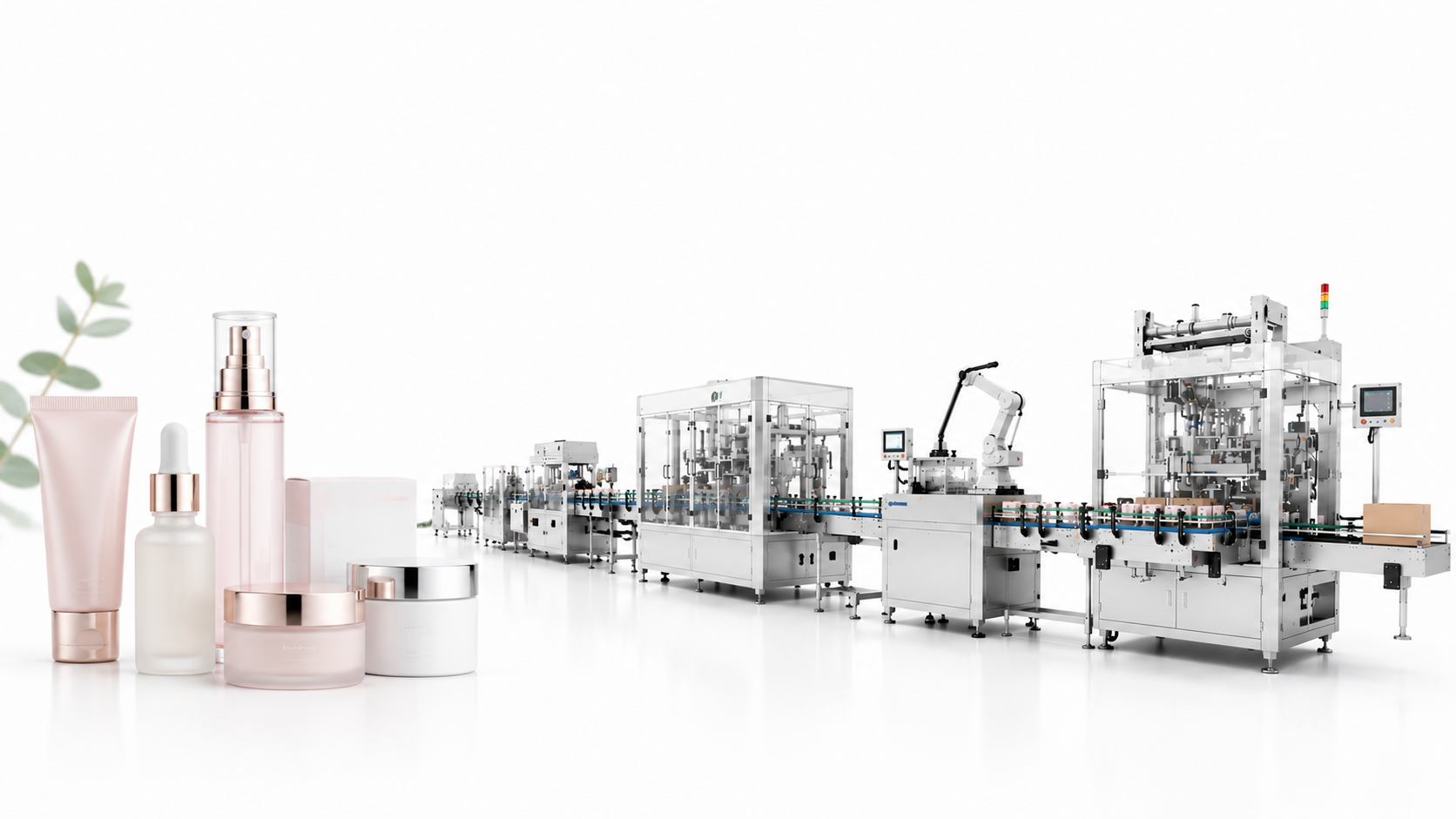
This guide explores the best packaging automation solutions for beauty and cosmetic manufacturers and explains how integrated packaging systems improve efficiency, flexibility, and long-term profitability.
Technology
- Core technologies commonly used in cosmetic packaging systems:
- Automatic Product Feeding System
- Servo Cartoning Machine
- Bottle Filling System
- Tube Filling & Sealing System
- Product Grouping Conveyor
- Automatic Case Packing System
- Vision Inspection
- Barcode Verification
- PLC Control System
- HMI Touchscreen Interface
- Robotic Pick-and-Place
- MES / ERP Integration
Challenge
Beauty and cosmetic manufacturers commonly face unique packaging challenges:
Frequent new product launches
Large numbers of SKUs
Small-batch production requirements
Frequent packaging changes
Rising labor costs
High appearance quality standards
Delicate product handling requirements
Seasonal demand fluctuations
Manual packaging systems often become difficult to scale efficiently.
Solution
An integrated cosmetic packaging automation system allows manufacturers to handle multiple product types while maintaining production efficiency.
Recommended solution features:
Fast product changeover
Modular equipment design
Flexible handling systems
Intelligent product tracking
Stable product transportation
High-speed packaging capability
Automation helps manufacturers improve productivity while maintaining premium packaging quality.
Workflow & Layout
Typical cosmetic packaging workflow:
Raw Product Input
↓
Bottle / Tube / Container Filling
↓
Product Inspection
↓
Automatic Cartoning
↓
Barcode Printing
↓
Product Grouping
↓
Automatic Case Packing
↓
Case Sealing
↓
Finished Product Output
Layout design recommendations:
Compact footprint
Linear product movement
Flexible expansion area
Easy maintenance access
Reduced operator movement
Results & ROI
- Typical performance improvements:
- Labor cost reduction:
- 40–65%
- Packaging efficiency increase:
- 30–80%
- Packaging quality consistency:
- Significantly improved
- Product handling errors:
- Reduced substantially
- Estimated ROI:
- 12–24 months
Equipment List
- Primary packaging systems:
- Bottle Filling Machine
- Tube Filling Machine
- Sachet Packaging Machine
- Product Feeding Unit
- Secondary packaging systems:
- Automatic Cartoning Machine
- Conveyor System
- Product Grouping Unit
- Automatic Case Packer
- Case Sealing Machine
- Control systems:
- PLC Control Cabinet
- HMI System
- Vision Inspection System
- Barcode Verification
- Optional systems:
- Robot Pick-and-Place
- Label Printing System
- MES Integration
- AGV Material Transport
Project Overview / Opening
Modern beauty manufacturers are increasingly shifting from labor-intensive packaging operations toward intelligent packaging systems.
Packaging automation is no longer only about increasing speed.
Manufacturers now require systems that can support:
Multiple product formats
Rapid market changes
Premium packaging standards
Flexible future expansion
Key Points
- Common Beauty Product Types
- Typical applications:
- Lipstick products
- Skincare bottles
- Cream containers
- Facial masks
- Cosmetic tubes
- Beauty kits
- Health and wellness products
- Critical Packaging Requirements
- Product appearance protection
- Packaging damage directly affects customer perception.
- Flexible SKU management
- Many beauty manufacturers manage dozens or hundreds of product variations.
- Fast changeover capability
- Typical target:
- 5–15 minutes changeover time
- Production scalability
- Recommended strategy:
- Current demand
- 20–30% future capacity reserve
Implementation / Workflow
Typical project process:
Phase 1
Requirement analysis
Duration:
1–2 weeks
Phase 2
Packaging system design
Duration:
2–3 weeks
Phase 3
Equipment manufacturing
Duration:
4–8 weeks
Phase 4
Factory Acceptance Test
Duration:
1 week
Phase 5
Installation and commissioning
Duration:
2–4 weeks
Phase 6
Training and production startup
Duration:
1 week
Estimated complete delivery cycle:
8–16 weeks
Customer Value / Results
Operational benefits:
Reduced labor dependency
Increased packaging output
Better packaging consistency
Reduced product damage
Faster production planning
Strategic benefits:
Easier new product launches
Better market responsiveness
Higher manufacturing flexibility
Improved competitiveness
Financial benefits:
Reduced operational cost
Lower packaging cost per product
Faster investment recovery
Conclusion / Next Step
The best packaging automation solution for beauty manufacturers depends on more than machine speed.
Companies should evaluate:
✓ Product variety
✓ Packaging requirements
✓ Production targets
✓ Future expansion plans
✓ Changeover requirements
✓ Expected ROI
A well-designed packaging system improves production efficiency while supporting future brand growth.
If you are planning a cosmetic packaging automation project, we can help design a complete packaging solution tailored to your manufacturing requirements.
Related Blog
Start with Your Business Challenge
Tell us about your warehouse, factory, or production requirements. We'll help you explore practical automation solutions and relevant project references.