Top 5 Warehouse Problems Solved by CTU Goods-to-Person Automation
Summary
Modern warehouses—especially in e-commerce, retail distribution, and high-SKU logistics environments—face increasing operational pressure from labor shortages, inefficiency, and rising fulfillment expectations.
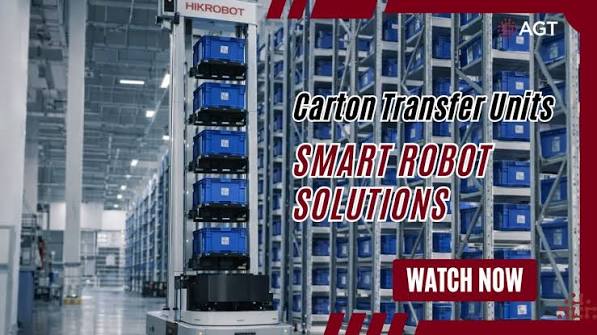
CTU (Case Transfer Unit) Goods-to-Person systems directly solve the most critical warehouse bottlenecks by transforming manual picking into a fully automated, robot-driven fulfillment model.
This article highlights the top 5 warehouse problems and explains how CTU automation resolves each one with measurable operational and financial impact.
Technology
- A CTU Goods-to-Person system typically includes:
- CTU robotic shuttle units
- High-density storage rack system
- Picking workstation modules
- WMS (Warehouse Management System)
- WCS (Warehouse Control System)
- SCADA monitoring system
- Barcode / RFID scanning system
- Intelligent task scheduling engine
- Conveyor or buffer transfer system
- Safety and collision avoidance sensors
Challenge
Traditional warehouses struggle with structural inefficiencies such as:
Increasing labor cost and workforce shortages
High picking error rates in manual operations
Inefficient walking and travel time
Poor space utilization
Limited scalability during peak demand
These problems directly reduce profitability and limit warehouse growth.
Solution
CTU Goods-to-Person automation solves these challenges by:
Removing manual walking entirely
Automating goods retrieval via robotic shuttles
Delivering items directly to operators
Optimizing storage and picking workflows
Enabling scalable robotic operations
This shifts warehouse operations from labor-driven systems → automation-driven logistics ecosystems.
Workflow & Layout
Step 1: Order Processing
Orders are received via ERP/WMS
System converts orders into picking tasks
Prioritization rules applied automatically
Step 2: CTU Task Execution
WCS assigns tasks to CTU robots
Robots retrieve required storage bins
Goods are transported to picking stations
Step 3: Goods-to-Person Picking
Operators receive items at workstation
Barcode/RFID scanning ensures accuracy
System validates each picking action
Step 4: Order Completion
Orders are packed and dispatched
Inventory updated in real time
Results & ROI
- 1️⃣ Problem: Labor Shortage
- CTU Solution:
- Reduces dependency on manual labor
- Enables stable 24/7 operations
- Reduces hiring pressure during peak seasons
- 2️⃣ Problem: Picking Errors
- CTU Solution:
- Barcode/RFID verification
- System-guided picking
- Eliminates human search errors
- 3️⃣ Problem: Low Space Utilization
- CTU Solution:
- High-density rack systems
- Narrow aisle design
- Vertical storage optimization
- 4️⃣ Problem: Slow Order Processing
- CTU Solution:
- Parallel robot operations
- Eliminates walking time
- Continuous workflow execution
- 5️⃣ Problem: Scalability Limitations
- CTU Solution:
- Modular system expansion
- Add robots or stations easily
- No structural redesign required
Equipment List
- Core Hardware:
- CTU robotic shuttle system
- High-density storage racks
- Goods-to-person picking stations
- Conveyor/buffer systems
- Software Systems:
- WMS warehouse management system
- WCS control system
- SCADA monitoring platform
- Task optimization engine
- Safety Systems:
- Collision detection sensors
- Emergency stop modules
- Light curtain protection systems
- System diagnostics tools
Project Overview / Opening
Warehouse inefficiencies are no longer isolated problems—they are systemic bottlenecks affecting cost, speed, and scalability.
CTU Goods-to-Person automation directly targets the five most critical operational pain points in modern logistics environments.
Key Points
- 1️⃣ Labor Shortage Problem
- Automation reduces dependency on:
- Forklift operators
- Manual pickers
- Shift-based staffing
- 2️⃣ Picking Accuracy Problem
- CTU systems ensure:
- System-controlled picking
- Real-time verification
- Reduced human error
- 3️⃣ Space Utilization Problem
- High-density design enables:
- More SKUs per square meter
- Reduced aisle width
- Vertical expansion
- 4️⃣ Speed Bottleneck Problem
- CTU eliminates:
- Walking time
- Manual searching
- Sequential workflow delays
- 5️⃣ Scalability Problem
- System grows by:
- Adding robots
- Expanding racks
- Increasing stations
Implementation / Workflow
Phase 1: Warehouse Analysis (2–3 weeks)
Identify bottlenecks
Evaluate SKU structure
Phase 2: System Design (2–4 weeks)
Layout optimization
Robot density planning
Phase 3: Engineering Integration (4–8 weeks)
Installation
Software integration (WMS/WCS)
Phase 4: Deployment (2–4 weeks)
Testing
Commissioning
Phase 5: Optimization (1–2 weeks)
Throughput tuning
Efficiency balancing
Customer Value / Results
Operational Value:
Eliminates core warehouse bottlenecks
Improves workflow efficiency
Stabilizes operations
Financial Value:
Reduces labor costs
Improves accuracy
Enhances ROI performance
Strategic Value:
Enables scalable warehouse growth
Supports high SKU complexity
Builds future-ready logistics infrastructure
Conclusion / Next Step
CTU Goods-to-Person systems solve the most critical warehouse problems that limit modern logistics performance.
By addressing labor shortages, picking errors, space inefficiency, slow processing, and scalability limitations, CTU systems deliver a complete operational transformation.
When properly implemented, CTU automation provides:
✓ Major efficiency improvements
✓ Significant labor reduction
✓ High-density storage optimization
✓ Scalable warehouse architecture
If you are evaluating warehouse automation, we can help map your current pain points into a CTU system design with a clear ROI model and implementation plan.
Related Blog
Start with Your Business Challenge
Tell us about your warehouse, factory, or production requirements. We'll help you explore practical automation solutions and relevant project references.