What Should You Consider Before Investing in an Automated Packaging Line
Summary
Investing in an automated packaging line is not simply a machine purchase.
It is a long-term manufacturing decision that affects production efficiency, operating costs, scalability, and return on investment.
Many manufacturers focus only on machine price and production speed. However, hidden factors such as layout design, labor structure, product variation, and future expansion often have a much greater impact on project success.
This guide explains the most important considerations before investing in a packaging automation system.
Technology
- Core technologies commonly used in automated packaging systems:
- Automatic Product Feeding System
- Servo Cartoning Machine
- Product Grouping Conveyor
- Automatic Case Packing System
- PLC Control System
- HMI Interface
- Vision Inspection
- Barcode Verification
- Robotic Pick-and-Place
- MES / ERP Integration
- Serialization System
- AGV Material Handling
Challenge
Many packaging projects fail to achieve expected performance because investment decisions are made using incomplete information.
Common problems include:
Selecting equipment based only on price
Underestimating future production demand
Ignoring factory layout limitations
Poor workflow design
Incompatible equipment integration
Unexpected operating costs
Difficult future expansion
As production requirements change, these issues often create additional costs and operational risks.
Solution
Instead of evaluating individual machines, manufacturers should analyze packaging systems from a complete operational perspective.
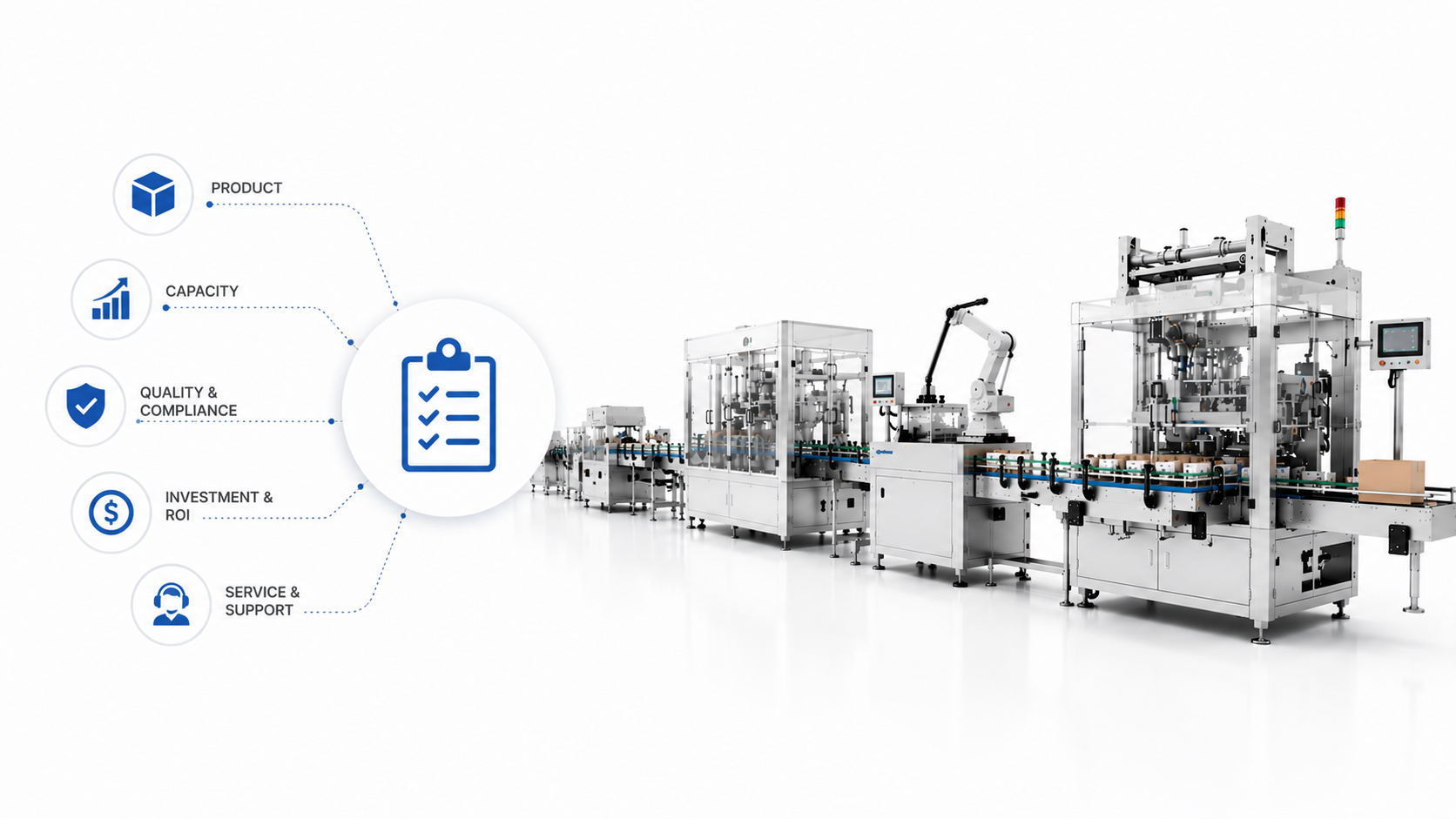
Recommended evaluation areas:
Production requirements
Product characteristics
Packaging process flow
Labor structure
Automation level
Future expansion needs
Financial return expectations
This approach reduces project risk and improves long-term performance.
Workflow & Layout
Typical complete packaging workflow:
Product Input
↓
Automatic Product Feeding
↓
Automatic Cartoning
↓
Product Inspection
↓
Grouping System
↓
Automatic Case Packing
↓
Case Sealing
↓
Finished Product Output
Layout planning recommendations:
Linear production flow
Reduced transportation distance
Maintenance access areas
Flexible expansion zones
Material movement optimization
Results & ROI
- Typical estimated improvements after implementation:
- Labor reduction:
- 40–70%
- Packaging efficiency increase:
- 30–80%
- Packaging error reduction:
- 50–90%
- Production stability:
- Significantly improved
- Estimated ROI:
- 12–24 months
Equipment List
- Typical packaging line components:
- Product Feeding Unit
- Automatic Cartoning Machine
- Product Conveyor System
- Product Inspection Unit
- Product Grouping System
- Automatic Case Packer
- Case Sealing Machine
- PLC Control Cabinet
- HMI Interface
- Safety Protection Devices
- Optional systems:
- Vision Detection
- Robot Pick-and-Place
- Serialization System
- MES / ERP Integration
- AGV Material Transport
Project Overview / Opening
Modern manufacturers increasingly use packaging automation as a strategic investment rather than simply replacing labor.
The goal is no longer:
“Buy faster machines.”
The goal becomes:
“Build a more efficient and scalable production system.”
Understanding investment requirements before purchasing equipment helps avoid costly mistakes.
Key Points
- 1. Production Capacity Requirements
- Questions to evaluate:
- Current production volume?
- Future production targets?
- Peak production requirements?
- Recommended strategy:
- Current demand
- 20–30% growth capacity reserve
- 2. Product Characteristics
- Key considerations:
- Product size
- Product shape
- Packaging materials
- Product fragility
- Product variations
- Different products often require different system designs.
- 3. Factory Layout
- Typical questions:
- Available floor space?
- Material flow direction?
- Utility requirements?
- Future expansion space?
- Poor layout planning creates long-term operational inefficiencies.
- 4. Automation Level
- Typical options:
- Semi-automatic
- ↓
- Fully automatic
- ↓
- Smart integrated systems
- Selection should match production goals.
- 5. ROI Analysis
- Key financial considerations:
- Initial investment
- Operating cost
- Maintenance cost
- Labor savings
- Future expansion cost
Implementation / Workflow
Typical project implementation process:
Phase 1
Production analysis
Duration:
1–2 weeks
Phase 2
Packaging workflow design
Duration:
2–3 weeks
Phase 3
Equipment manufacturing
Duration:
4–8 weeks
Phase 4
Factory Acceptance Test
Duration:
1 week
Phase 5
Installation and commissioning
Duration:
2–4 weeks
Estimated complete project cycle:
8–16 weeks
Customer Value / Results
Operational benefits:
Higher production output
Better packaging consistency
Reduced labor dependency
Lower downtime
Easier production management
Strategic benefits:
Easier future expansion
Higher manufacturing flexibility
Improved competitiveness
Financial benefits:
Lower operating cost
Reduced cost per product
Faster ROI
Conclusion / Next Step
Before investing in an automated packaging line, manufacturers should evaluate more than machine specifications.
Key decision factors include:
✓ Production requirements
✓ Product characteristics
✓ Factory layout
✓ Automation level
✓ Future scalability
✓ Financial ROI
A successful packaging automation project creates long-term operational value rather than simply increasing machine speed.
If you are planning a packaging automation investment, we can help evaluate your requirements and estimate your expected return.
Related Blog
Start with Your Business Challenge
Tell us about your warehouse, factory, or production requirements. We'll help you explore practical automation solutions and relevant project references.